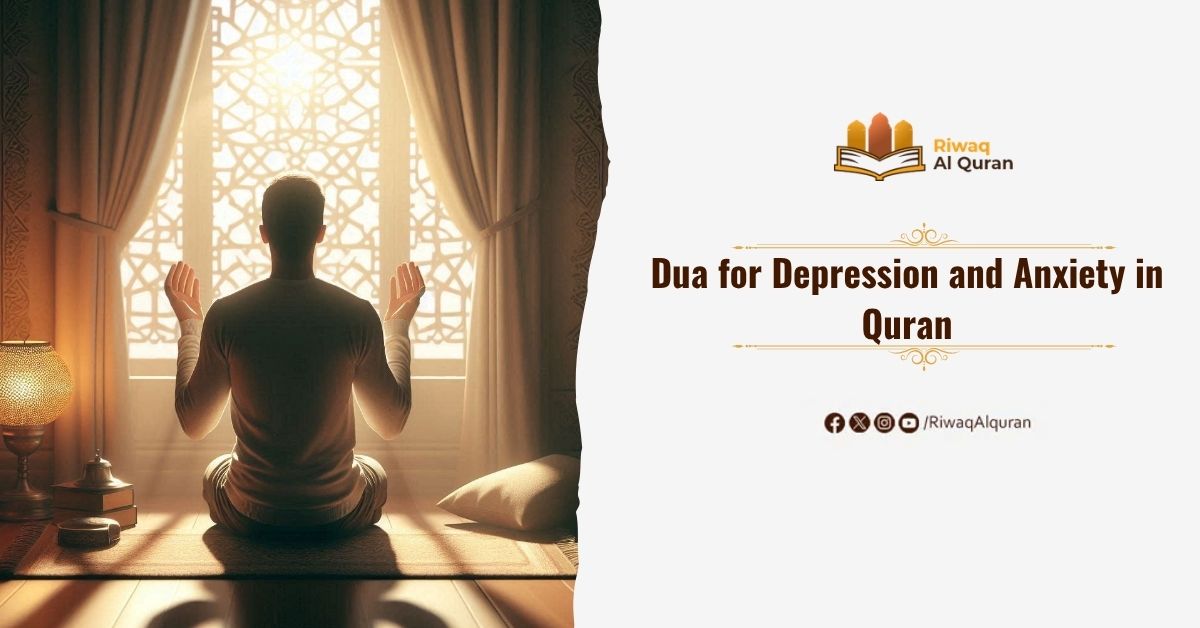
Depression and anxiety are not signs of weak faith. Allah Himself records the anguish of His prophets — Yunus ﷺ in the darkness of the whale’s belly, Ayyub ﷺ after years of illness, and Muhammad ﷺ during the painful silence of the Fatra.
The dua for depression and anxiety in the Quran is not a last resort — it is the first and most powerful tool a believer holds.
When you recite them with understanding, you are joining a chain of those who brought their brokenness before Allah and were answered. That context matters deeply.
Table of Contents
Dua for Depression and Anxiety in Quran
The Holy Quran offers a profound spiritual anchor for those navigating the heavy clouds of depression and anxiety, providing specific supplications that restore hope and inner peace. These divinely inspired words serve as a bridge between human vulnerability and Divine mercy, addressing every layer of emotional and mental distress.
1. The Dua of Prophet Yunus ﷺ for Relief from Distress
The dua of Prophet Yunus ﷺ is one of the most authenticated Quranic supplications for distress. Recited in the depths of the whale’s belly — total darkness, total helplessness — it was answered.
Classical scholars of Tafsir, including Ibn Kathir, consistently identify this verse as a direct model for the believer in crisis.
لَّا إِلَٰهَ إِلَّا أَنتَ سُبْحَانَكَ إِنِّى كُنتُ مِنَ ٱلظَّٰلِمِينَ
La ilaha illa anta subhanaka inni kuntu minaz-zalimin
“There is no deity except You; exalted are You. Indeed, I have been of the wrongdoers.” (Al-Anbiya 21:87)
This dua carries three layers simultaneously: Tawhid (affirming Allah’s oneness), Tasbih (declaring His perfection), and Tawbah (acknowledging personal shortcoming). It does not demand relief — it surrenders completely. That surrender is precisely why it works spiritually.
The Prophet ﷺ said regarding this dua: “No Muslim ever calls upon Allah with these words in any matter, except that Allah will respond to him.” (Sunan al-Tirmidhi 3505)
In our sessions at Riwaq Al Quran, students who study the Tafsir context of this verse — not just its transliteration — report a noticeably different relationship with it during moments of personal hardship. Understanding why Yunus ﷺ said these specific words changes how you say them.
Connect with our Azhari tutors to learn Quran with Tafseer

2. Surah Ad-Duha Addresses Feelings of Abandonment and Grief
Surah Ad-Duha is the Quran’s direct answer to the Prophet’s ﷺ experience of grief, confusion, and the feeling of divine silence. When revelation paused for a period and his opponents mocked him, Allah revealed this surah. Every person who has felt spiritually abandoned needs to know this context.
وَٱلضُّحَىٰ وَٱلَّيْلِ إِذَا سَجَىٰ مَا وَدَّعَكَ رَبُّكَ وَمَا قَلَىٰ
Wad-duha. Wal-layli iza saja. Ma wadda’aka rabbuka wa ma qala.
“By the morning brightness. And by the night when it covers with darkness. Your Lord has not taken leave of you, nor has He detested you.” (Ad-Duha 93:1-3)
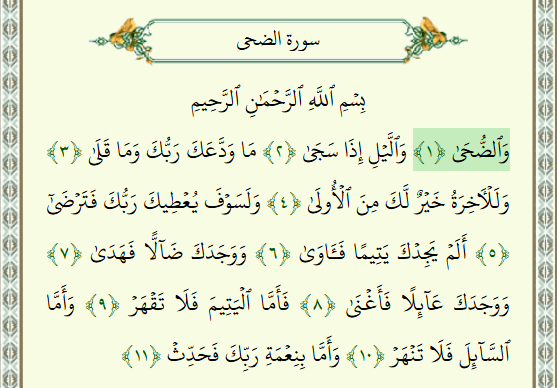
This surah is not technically a “dua” in the supplication format — but Azhari scholars classify it as a direct divine address to the grieving heart, making its recitation an act of receiving comfort from Allah Himself.
Recite it when you feel invisible to Allah. Its function, as Al-Qurtubi notes in his Tafsir, is to restore the believer’s certainty of divine care after periods of spiritual or emotional difficulty. Pair it with Surah Ash-Sharh (94) immediately after — they are thematically and textually inseparable.
To understand these surahs at their full depth, Riwaq Al Quran’s Online Quran Tafseer Course offers structured study with Azhari-certified scholars who teach the historical context, linguistic nuance, and spiritual application of every surah.
Enroll Now in Riwaq’s Tafseer Course with a FREE trial
3. The Dua of Prophet Ayyub ﷺ for Prolonged Suffering
Prophet Ayyub ﷺ endured years of severe illness and loss. His supplication is short — a single sentence — yet it encapsulates the complete posture of the believer who suffers without losing trust in Allah’s mercy.
وَأَيُّوبَ إِذْ نَادَىٰ رَبَّهُۥٓ أَنِّى مَسَّنِىَ ٱلضُّرُّ وَأَنتَ أَرْحَمُ ٱلرَّٰحِمِينَ
Wa ayyuba iz nada rabbahu anni massaniyad-durru wa anta arhamur-rahimin.
“And [mention] Job, when he called to his Lord, ‘Indeed, adversity has touched me, and you are the Most Merciful of the merciful.'” (Al-Anbiya 21:83)
Notice what Ayyub ﷺ does not say. He does not say “remove this from me.” He simply states his condition and reminds himself — and Allah — of the divine attribute of mercy. This is tawassul through Allah’s Names, a legitimate and authenticated form of supplication in classical Islamic scholarship.
For those facing chronic anxiety, depression, or ongoing illness, this dua is a model of dignified suffering — neither denying pain nor surrendering to despair.
Experience Riwaq Al Quran Classes
Watch real moments from our live sessions at Riwaq Al Quran and see how we bring learning to life. These clips highlight our interactive, student-focused approach designed to keep learners engaged, motivated, and actively involved in every step of their educational journey.
4. The Dua of Complete Reliance on Allah When Fear Overwhelms You
When anxiety stems from fear of people, circumstances, or outcomes beyond your control, the Quran offers a declaration that shifts the believer’s entire orientation — away from the source of fear and entirely toward Allah.
حَسْبُنَا اللَّهُ وَنِعْمَ الْوَكِيلُ
Hasbunallahu wa ni’mal-wakil.
“Sufficient for us is Allah, and He is the best Disposer of affairs.” (Aal Imran 3:173)
This phrase was spoken by the companions when they were told a great army was gathering against them — and they responded not with panic, but with this declaration. The Quran records it as the model response to overwhelming threat.
Al-Wakil is one of Allah’s Most Beautiful Names, meaning the One who handles all affairs on behalf of those who entrust them to Him. Reciting this is not passive resignation — it is the active act of tafwid: consciously placing your affairs in the most capable hands in existence.
The Prophet ﷺ himself recited this phrase, as did Ibrahim ﷺ when he was thrown into the fire. That shared usage across two of the greatest prophets signals its universal application to any moment of helplessness or fear.

5. The Quranic Dua of Prophet Musa ﷺ for Relief from Anxiety and Difficulty
Before Prophet Musa ﷺ faced Pharaoh — one of the most daunting tasks assigned to any human being — he did not ask for power or victory. He asked Allah to open his chest and ease his matter. That request is preserved in the Quran as a model for anyone facing a burden that feels too heavy to carry.
رَبِّ ٱشْرَحْ لِى صَدْرِى ﴿٢٥﴾ وَيَسِّرْ لِىٓ أَمْرِى
Rabbi ishrah li sadri. Wa yassir li amri.
“My Lord, expand for me my breast and ease for me my task.” (Ta-Ha 20:25-26)
Sharh al-sadr — the opening or expansion of the chest — is the Quran’s own language for the opposite of anxiety.
In Surah Ash-Sharh, Allah uses the same root word to describe what He did for the Prophet ﷺ:
“Alam nashrah laka sadrak” — “Did We not expand for you your breast?” The linguistic echo is deliberate.
This dua is particularly relevant for anxiety tied to a specific task, responsibility, or confrontation you are dreading.
Musa ﷺ named his difficulty precisely and asked for two things: inner capacity (expanded chest) and outer facilitation (eased matter). Both dimensions of anxiety — internal and external — are addressed in a single, short supplication.
In our experience at Riwaq Al Quran, students preparing for Quran memorization evaluations or recitation assessments often find this dua the most personally relevant of all Quranic supplications — because it speaks directly to the anxiety of facing something significant and feeling unequal to it.
Connect with our Azhari tutors to learn Quran with Tafseer

6. The Dua of Surrendering Your Affairs to Allah in Moments of Helplessness
There are moments when anxiety does not come from a specific threat or task — it comes from the sheer weight of not knowing what will happen, and feeling powerless to change it. The Quran records the words of a believer in Pharaoh’s court who, when threatened for his faith, responded with complete surrender.
وَأُفَوِّضُ أَمْرِىٓ إِلَى ٱللَّهِ ۚ إِنَّ ٱللَّهَ بَصِيرٌۢ بِٱلْعِبَادِ
Wa ufawwidu amri ilallah. Innallaha baseerun bil-‘ibad.
“And I entrust my affair to Allah. Indeed, Allah is Seeing of His servants.” (Ghafir 40:44)
The word tafwid — entrusting or delegating one’s affair completely — is considered by Sufi scholars and mainstream Islamic scholars alike as one of the highest stations of reliance on Allah. It differs from tawakkul (reliance) in that tafwid involves actively handing the outcome over, with full acceptance that Allah sees what you cannot.
The phrase “Baseerun bil-‘ibad” — “Seeing of His servants”
— is the spiritual anchor of this dua. The anxiety of uncertainty is rooted in the fear that no one with power is paying attention to your situation. This declaration directly answers that fear: Allah sees. Completely. Always.
Recite this when you have done everything within your capacity and the outcome remains unknown. It is the Quranic prescription for the specific anxiety of loss of control — perhaps the most common form of anxiety in modern life.
For those who want to study the stations of the heart — tawakkul, tafwid, sabr, and shukr — within their full Islamic theological framework, Riwaq Al Quran’s Best Islamic Studies Online Course covers ‘Aqidah and Islamic spirituality with Azhari-certified instructors in a structured, accessible curriculum.
Begin your Islamic Studies with a FREE trial lesson
Read Also: Dua for Patience in the Quran
7. Quranic Verse That Promises Relief After Hardship
One of the most cited verses for anxious hearts is the divine promise repeated twice in Surah Ash-Sharh — not once, but emphatically doubled. Classical scholars explain that in Arabic, when a definite noun is repeated, it refers to the same hardship; when an indefinite noun is repeated, it multiplies.
فَإِنَّ مَعَ ٱلْعُسْرِ يُسْرًا ٦ إِنَّ مَعَ ٱلْعُسْرِ يُسْرًا
Fa-inna ma’al-‘usri yusra. Inna ma’al-‘usri yusra.
“For indeed, with hardship will be ease. Indeed, with hardship will be ease.” (Ash-Sharh 94:5-6)
The Arabic word “ma’a” means with — not after. The ease is simultaneous with the hardship, not a reward waiting on the other side of it. That is a profound distinction for someone in the middle of suffering.
Read Also: Dua for Spouse in Quran
8. The Last Two Verses of Surah Al-Baqarah Function as Protection from Anxiety
The final two verses of Surah Al-Baqarah — known as Al-Ayatan — hold a unique status in authenticated Sunnah. The Prophet ﷺ said:
“Whoever recites the last two verses of Surah Al-Baqarah at night, they will suffice him.” (Sahih al-Bukhari 5009)
ءَامَنَ ٱلرَّسُولُ بِمَآ أُنزِلَ إِلَيْهِ مِن رَّبِّهِۦ وَٱلْمُؤْمِنُونَ ۚ كُلٌّ ءَامَنَ بِٱللَّهِ وَمَلَٰٓئِكَتِهِۦ وَكُتُبِهِۦ وَرُسُلِهِۦ
The supplication embedded within these verses
— “Rabbana la tu’akhizna in nasina aw akta’na”
— lists seven specific requests for divine relief from burden, accountability, and overpowering hardship.
These are not general requests. They address the precise anxieties of being human: forgetfulness, mistakes, unbearable weight.
| Request in the Dua | Spiritual Function |
| “Do not hold us accountable if we forget or make error” | Relieves performance anxiety before Allah |
| “Do not place upon us a burden like those before us” | Acknowledges human limitation honestly |
| “Do not burden us with what we have no ability to bear” | Permission to acknowledge one’s breaking point |
| “Pardon us, forgive us, have mercy upon us” | Tri-layered request: ‘Afw, Maghfirah, Rahmah |
Reciting these verses nightly — especially when anxiety peaks before sleep — creates a consistent spiritual anchor. The sufficiency the Prophet ﷺ mentioned is understood by scholars to include sufficiency against shaytan, against grief, and against the harm of the night.
Read Also: Dua for Parents in Quran
Why Students Love Learning with Riwaq Al Quran
Hear directly from our students about how Riwaq Al Quran Academy has transformed their connection with the Book of Allah. Their experiences reflect the dedication, care, and quality that guide every step of our teaching.
What Is the Dua for Anxiety and Grief Taught Directly by the Prophet ﷺ?
While this article focuses on Quranic duas, one prophetic supplication is so closely tied to Quranic language and the Quran’s names that Azhari scholars treat it as inseparable from this topic. The Prophet ﷺ taught a specific dua for ghamm (grief) and hamm (anxiety) that uses Allah’s greatest Names.
The Prophet ﷺ said: “No one is afflicted with anxiety or grief and says: Allahumma inni ‘abduka wa ibnu ‘abdika wa ibnu amatika, nasiyati bi yadika, madin fiyya hukmuka, ‘adlun fiyya qada’uka, as’aluka bi kulli ismin huwa laka, sammayta bihi nafsaka, aw ‘allamtahu ahadan min khalqika, aw anzaltahu fi kitabika, aw ista’tharta bihi fi ‘ilmil-ghaybi ‘indaka, an taj’alal-Qur’ana rabi’a qalbi, wa nura sadri, wa jala’a huzni, wa dhahaba hammi — except that Allah will remove his anxiety and grief and replace it with joy.” (Musnad Ahmad)
This hadith explicitly requests that the Quran itself become the cure — “the spring of my heart, the light of my chest, the departure of my sadness.” That framing is profoundly significant. The Quran is not merely a text you recite for relief — it is the relief itself, when internalized deeply.
Students in our Online Quran Memorization Course at Riwaq Al Quran consistently report that memorization of longer surahs — particularly those dealing with prophetic hardship — produces a qualitative change in how they experience their own difficulties. The Quran literally restructures your relationship with suffering when you carry it in your chest.
Start your Hifz journey with a Free Trial
Read Also: Quranic Duas The Most Powerful Dua in the Quran
Begin Your Healing with the Quran at Riwaq Al Quran
The Quran was sent as shifa — a healing — for what is in the hearts. These duas are not folklore. They are authenticated, contextually understood, and practically applicable today.
Riwaq Al Quran connects you with Azhari-certified tutors who teach not just recitation, but understanding — so the words you recite carry their full spiritual weight. Since 2017, we have helped thousands of non-Arabic speaking Muslims build a living relationship with the Quran.
- ✅ One-on-one sessions with Al-Azhar graduates
- ✅ Flexible scheduling — 24/7, worldwide
- ✅ 2 free trial classes — no commitment required
- ✅ 100% Money-Back Guarantee
Book your free trial today and begin studying the Quran with the depth it deserves.
We offer courses in Online Quran & Tajweed Classes, Arabic Language, and Islamic Studies.
- Online Quran Memorization Course
- Tafseer Course
- Tajweed Classes
- Online Quran Classes for Kids.
- Ijazah Program.
- Arabic Language Classes.
- Islamic Studies Courses.
Enroll now for 2 Free Trial Classes and Begin Learning Islam and Quran Today
Frequently Asked Questions About Dua for Depression and Anxiety in the Quran
Is There a Specific Dua for Depression Mentioned Directly in the Quran?
Several Quranic verses function as duas for depression and anxiety. The dua of Yunus ﷺ in Al-Anbiya 21:87, the dua of Ayyub ﷺ in Al-Anbiya 21:83, and the closing verses of Surah Al-Baqarah are all Quranic supplications authenticated for use in states of grief and distress. Each addresses a different dimension of emotional and spiritual suffering.
How Many Times Should I Recite the Dua of Yunus ﷺ for It to Be Effective?
There is no authenticated number of repetitions specified in the Sunnah for the dua of Yunus ﷺ. Scholars recommend reciting it with presence of heart and understanding of its meaning, consistently — not in a single marathon session. Quality of attention in supplication is weighted more heavily than quantity in classical Islamic scholarship.
What Is the Best Quranic Surah to Recite for Anxiety Relief?
Surah Ad-Duha (93) and Surah Ash-Sharh (94) are most consistently recommended by scholars for feelings of anxiety, abandonment, and grief — because they were revealed in direct response to the Prophet’s ﷺ own emotional distress. Surah Al-Baqarah’s final verses are recommended specifically for nighttime anxiety due to the authenticated hadith in Sahih al-Bukhari regarding their sufficiency.
How Can I Learn the Meaning of These Duas More Deeply?
The most effective method is structured Tafsir study with a qualified teacher who explains the historical context, linguistic nuance, and scholarly interpretation of each verse. Riwaq Al Quran’s Online Quran Tafseer Course covers these surahs and duas with Azhari-certified instructors in one-on-one sessions designed for non-Arabic speaking students.