
Surah Taghabun carries a name that most non-Arabic speakers have never encountered before — At-Taghabun, meaning “mutual loss and gain.” That name alone tells you this surah arrives with weight. It speaks directly to the moments in life when loss feels overwhelming and certainty feels distant.
The surah’s benefits are rooted in its meanings — not in ritual repetition counts. Reciting it with understanding fortifies iman, reframes hardship through the lens of divine decree, and corrects the soul’s relationship with dunya.
Table of Contents
1. Surah Taghabun Grounds Your Faith in the Reality of Divine Sovereignty
Surah Taghabun opens by establishing that everything in the heavens and earth glorifies Allah alone — and that complete dominion and all praise belong exclusively to Him. This is not a passive theological statement.
It is a foundation that the rest of the surah builds on, and for the believer who internalizes it, it becomes a constant anchor against anxiety and despair.
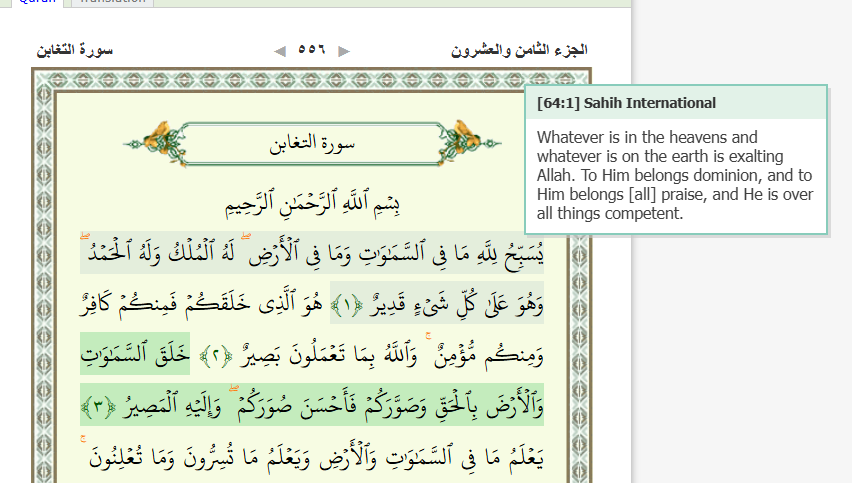
يُسَبِّحُ لِلَّهِ مَا فِى ٱلسَّمَٰوَٰتِ وَمَا فِى ٱلْأَرْضِ ۖ لَهُ ٱلْمُلْكُ وَلَهُ ٱلْحَمْدُ ۖ وَهُوَ عَلَىٰ كُلِّ شَىْءٍ قَدِيرٌ ﴿١﴾ هُوَ ٱلَّذِى خَلَقَكُمْ فَمِنكُمْ كَافِرٌ وَمِنكُم مُّؤْمِنٌ ۚ وَٱللَّهُ بِمَا تَعْمَلُونَ بَصِيرٌ ﴿٢﴾ خَلَقَ ٱلسَّمَٰوَٰتِ وَٱلْأَرْضَ بِٱلْحَقِّ وَصَوَّرَكُمْ فَأَحْسَنَ صُوَرَكُمْ ۖ وَإِلَيْهِ ٱلْمَصِيرُ ﴿٣﴾
Whatever is in the heavens and whatever is on the earth is exalting Allah. To Him belongs dominion, and to Him belongs [all] praise, and He is over all things competent. (1) It is He who created you, and among you is the disbeliever, and among you is the believer. And Allah, of what you do, is Seeing. (2) He created the heavens and earth in truth and formed you and perfected your forms; and to Him is the [final] destination. (At-Taghabun 64:1-3)
Nothing in your life, no loss, no illness, no broken relationship, falls outside Allah’s knowledge and will. For students going through difficulty, this opening alone is worth returning to daily.
2. Addressing Human Disbelief and Its Consequences
One of the consistent benefits of reciting Surah Taghabun is the way it confronts the human tendency toward heedlessness. Verses 5 through 7 recount how previous nations disbelieved and suffered the consequences, then describe how some people today believe they will not be resurrected.
ذَٰلِكَ بِأَنَّهُۥ كَانَت تَّأْتِيهِمْ رُسُلُهُم بِٱلْبَيِّنَٰتِ فَقَالُوٓا۟ أَبَشَرٌ يَهْدُونَنَا فَكَفَرُوا۟ وَتَوَلَّوا۟ ۚ وَّٱسْتَغْنَى ٱللَّهُ ۚ وَٱللَّهُ غَنِىٌّ حَمِيدٌ
Dhālika bi-annahu kānat ta’tīhim rusuluhum bil-bayyināt, faqālū a-basharun yahdūnanā
“That is because their messengers used to come to them with clear evidences, but they said, “Shall human beings guide us?” and disbelieved and turned away. And Allah dispensed [with them]; and Allah is Free of need and Praiseworthy.'” (At-Taghabun 64:6)
Reading this verse regularly reactivates gratitude. It reminds the believer of the gift of guidance — something millions have rejected or never received. That awareness naturally deepens commitment to the Quran itself.
3. True Loss Belongs Only to Those Who Reject Faith
The word taghabun itself appears in verse 9, describing the Day of Judgment as Yawm ut-Taghabun — the Day of Mutual Loss and Gain. On that day, it becomes clear who truly lost by choosing the dunya over Allah, and who gained by choosing faith over comfort.
يَوْمَ يَجْمَعُكُمْ لِيَوْمِ ٱلْجَمْعِ ۖ ذَٰلِكَ يَوْمُ ٱلتَّغَابُنِ
Yawma yajmaʿukum li-Yawmil-Jamʿ, dhālika Yawmut-Taghabun
“The Day He will assemble you for the Day of Assembly — that is the Day of Mutual Loss and Gain.” (At-Taghabun 64:9)
Classical scholars of Tafsir have noted that the word taghabun implies a transaction — as if one party discovers they sold something precious for almost nothing. The believer who recites and reflects on this verse is reminded to recalibrate their investments in this life with full awareness of that reckoning.
For deeper engagement with Quranic meaning beyond surface recitation, our Online Quran Tafseer Course at Riwaq Al Quran guides students through classical and contemporary Tafsir tradition with Azhari-certified instructors.
Enroll Now in Riwaq’s Tafseer Course with a FREE trial

4. Building Genuine Tawakkul During Hardship and Illness
One of the most practically powerful benefits of Surah Taghabun is its direct instruction on responding to hardship with faith rather than grief. Verse 11 states clearly that no calamity strikes except by Allah’s permission — and that whoever believes in Allah, He will guide their heart.
مَآ أَصَابَ مِن مُّصِيبَةٍ إِلَّا بِإِذْنِ ٱللَّهِ ۗ وَمَن يُؤْمِنۢ بِٱللَّهِ يَهْدِ قَلْبَهُۥ
Mā aṣāba min muṣībatin illā bi-idhnillāh, wa man yu’min billāhi yahdi qalbah
“No disaster strikes except by permission of Allah. And whoever believes in Allah — He will guide his heart.” (At-Taghabun 64:11)
Ibn Kathir, in his Tafsir, commented on this verse noting that the guided heart accepts the decree of Allah and finds peace in it, rather than collapsing into grief. This is not passive resignation — it is active faith that redirects the heart’s energy toward Allah rather than despair.
For those experiencing illness, the benefit of this surah lies not in a prescribed number of recitations but in genuinely understanding and accepting the message of verse 11. A heart that truly grasps “man yu’min billāhi yahdi qalbah” carries a medicine that no dua formula alone provides.
| Verse | Theme | Practical Benefit for the Reciter |
| 64:1 | Divine sovereignty | Reduces anxiety by affirming Allah’s complete control |
| 64:9 | Day of Mutual Loss | Reframes worldly sacrifice as long-term gain |
| 64:11 | Calamity by permission | Builds tawakkul during illness and loss |
| 64:14 | Family as trial | Warns believers to maintain balance in attachment |
| 64:16 | Taqwa and generosity | Guides practical spiritual action |
Experience Riwaq Al Quran Classes
Watch real moments from our live sessions at Riwaq Al Quran and see how we bring learning to life. These clips highlight our interactive, student-focused approach designed to keep learners engaged, motivated, and actively involved in every step of their educational journey.
5. Warning Believers That Family Love Can Become a Spiritual Trial
Surah Taghabun is one of the most direct Quranic passages on the subject of family dynamics and their potential to distract from Allah. Verse 14 states explicitly that among your spouses and children are enemies to you — meaning people whose love for them leads some believers away from obligations, sacrifices, and religious duties.
يَـٰٓأَيُّهَا ٱلَّذِينَ ءَامَنُوٓا۟ إِنَّ مِنْ أَزْوَٰجِكُمْ وَأَوْلَـٰدِكُمْ عَدُوًّا لَّكُمْ فَٱحْذَرُوهُمْ
Yā ayyuhalladhīna āmanū inna min azwājikum wa awlādikum ʿaduwwan lakum faḥdharūhum
“O you who have believed, indeed, among your wives and your children are enemies to you, so beware of them.” (At-Taghabun 64:14)
Scholars have clarified that this verse does not encourage hostility toward family. Rather, it warns against the kind of excessive attachment that leads a person to compromise their deen for family approval or financial provision.
The surah immediately follows with verse 15, describing children and wealth as fitnah — a trial — before reminding believers that the reward with Allah is greater.
For those asking about Surah Taghabun benefits for marriage, the authentic benefit lies here: this surah prompts both spouses to reflect on whether their relationship is bringing them closer to Allah or drawing them away. That honest reflection, backed by Quranic guidance, is the real gift this surah offers to married couples.
6. Surah Taghabun Commands Taqwa, Listening, and Spending in Allah’s Way
The surah’s closing section delivers three actionable instructions that serve as a practical framework for the believer’s life: fear Allah as much as you are able, listen and obey, and spend in His way. These are not general reminders — they are a complete life orientation.
فَٱتَّقُوا۟ ٱللَّهَ مَا ٱسْتَطَعْتُمْ وَٱسْمَعُوا۟ وَأَطِيعُوا۟ وَأَنفِقُوا۟ خَيْرًا لِّأَنفُسِكُمْ
Fattaqullāha mastataʿtum wasmaʿū wa aṭīʿū wa anfiqū khayran li-anfusikum
“So fear Allah as much as you are able and listen and obey and spend [in the way of Allah]; it is better for your souls.” (At-Taghabun 64:16)
The phrase mastataʿtum — as much as you are able — is a mercy in itself. It acknowledges human limitation while still calling toward effort.
For students of the Quran, this verse is a realistic call to continuous improvement. You are not asked for perfection; you are asked for sincerity and capacity.
To understand these commands within their full Quranic context, structured study matters. Our Best Islamic Studies Online Course connects students with Azhari-certified tutors who teach Quranic ethics and Islamic practice together — not as separate disciplines.
Begin your Islamic Studies with a FREE trial lesson
What Authentic Sources Actually Say About Surah Taghabun Benefits in Hadith?
Regarding Surah Taghabun benefits hadith, it is important to be honest: there is no authenticated hadith in the major collections — Bukhari, Muslim, Tirmidhi, Abu Dawud, Ibn Majah, or Nasa’i — that assigns specific rewards exclusively to Surah Taghabun by name.
The general category of reward for reciting the Quran is well-established. The Prophet ﷺ said:
“Whoever recites a letter from the Book of Allah will receive one good deed, and the good deed is multiplied by ten. I do not say that Alif Lam Mim is a letter, but rather Alif is a letter, Lam is a letter, and Mim is a letter.” (Sunan At-Tirmidhi 2910)
This hadith covers Surah Taghabun as it covers every chapter of the Quran — through the general excellence of recitation.
Any claim of specific rewards for Surah Taghabun that cannot be traced to an authenticated source should not be attributed to the Prophet ﷺ.
Fabricating or passing on fabricated merits for specific surahs is a documented problem in Islamic scholarship, and authentic teachers are obligated to flag it.
Why Students Love Learning with Riwaq Al Quran
Hear directly from our students about how Riwaq Al Quran Academy has transformed their connection with the Book of Allah. Their experiences reflect the dedication, care, and quality that guide every step of our teaching.
The Claim of Surah Taghabun 41 Times Benefits Has No Verified Basis
The practice of reciting Surah Taghabun 41 times for specific outcomes — whether for protection, fulfilling needs, or curing illness — circulates widely in popular Islamic content. However, no authenticated hadith from the canonical Hadith collections establishes this practice.
In Islamic jurisprudence, acts of worship require a basis in the Quran or authenticated Sunnah. Assigning a specific number to a recitation without that basis falls under the category of bid’ah — innovation in worship — which the majority of scholars have consistently warned against.
The correct position, as indicated by mainstream Sunni scholarship, is to recite Surah Taghabun without a prescribed number, with the sincere intention of understanding its meaning and acting upon it. The benefit then comes from the sincerity, comprehension, and application — not from a number.
For students wanting to engage authentically with the Quran, structured memorization and Tafsir study are far more beneficial than numerically-prescribed recitations without basis.
Our Online Quran Memorization Course at Riwaq Al Quran pairs students with Azhari Hafiz instructors who teach the Quran with both accuracy and proper aqeedah foundations.
Start your Hifz journey with a Free Trial
| Category | Claim | Status |
| General recitation reward | 10 rewards per letter recited | Authenticated — Tirmidhi 2910 |
| Specific reward for Surah Taghabun by name | Unique merit beyond general recitation | No authenticated hadith found |
| 41-times recitation for specific outcomes | Numerically specified ritual benefit | No authenticated hadith — treat with caution |
Start Learning the Quran with Depth and Authenticity at Riwaq Al Quran
Surah Taghabun’s benefits are real — but they are rooted in understanding its verses, reflecting on its themes, and acting on its commands. At Riwaq Al Quran, our Azhari-certified instructors teach the Quran exactly that way — with depth, context, and authenticity.
Why students choose Riwaq Al Quran:
- Al-Azhar University–trained instructors with Ijazah certification
- One-on-one personalized sessions scheduled around your life, 24/7
- 2 free trial classes — no commitment required
- 100% Money-Back Guarantee
- Programs for children, adults, beginners, and advanced students
Explore our Online Quran Tafseer Course,Best Islamic Studies Online Course, or Online Quran Memorization Course — and begin your first free class today, Insha’Allah.
We offer courses in Online Quran & Tajweed Classes, Arabic Language, and Islamic Studies.
- Online Quran Memorization Course
- Tafseer Course
- Tajweed Classes
- Online Quran Classes for Kids.
- Ijazah Program.
- Arabic Language Classes.
- Islamic Studies Courses.
Enroll now for 2 Free Trial Classes and Begin Learning Islam and Quran Today
Frequently Asked Questions About Surah Taghabun Benefits
Is There an Authentic Hadith Specifically About Surah Taghabun Benefits?
No specific, authenticated hadith about Surah Taghabun’s individual merits has been confirmed in the major canonical collections. The surah shares in the general reward for Quranic recitation established in Tirmidhi 2910, where every letter carries tenfold reward. Scholars caution against accepting unverified narrations that assign unique, specific benefits to individual surahs without a traceable, authenticated source.
What Are the Real Benefits of Reciting Surah Taghabun for Someone Facing Illness?
The authentic benefit for someone facing illness lies in internalizing verse 64:11: “No disaster strikes except by permission of Allah — and whoever believes in Allah, He will guide his heart.” Consistent recitation with understanding builds genuine tawakkul, which classical scholars describe as an active state of heart that accepts divine decree without collapsing. This psychological and spiritual grounding is the surah’s most valuable gift to someone suffering.
Does Surah Taghabun Have Specific Benefits for Marriage?
The surah does not offer a ritual prescription for marriage problems. However, verse 64:14 directly addresses the reality that family relationships can become a spiritual trial. Reflecting on this verse helps both spouses evaluate whether their bond strengthens or weakens their commitment to Allah. This honest Quranic framework — not a recitation formula — is the genuine benefit Surah Taghabun provides for married Muslims.
Is Reciting Surah Taghabun 41 Times an Authenticated Islamic Practice?
No. Reciting Surah Taghabun 41 times for specific outcomes has no authenticated basis in the canonical Hadith collections. Assigning a specific number to a recitation without Quranic or Sunnah basis is considered bid’ah by the majority of Sunni scholars. The recommended approach is to recite the surah sincerely, reflect on its meanings, and act upon its guidance — without attaching numerically prescribed rituals that lack scholarly verification.
How Can I Deepen My Understanding of Surah Taghabun Beyond Simple Recitation?
Engaging with classical Tafsir — such as Ibn Kathir’s interpretation of this surah’s key verses — is the most reliable path to depth. Studying the surah’s themes of divine sovereignty, the Day of Judgment, family trials, and taqwa within a structured Islamic education setting ensures that understanding is accurate and grounded. Resources like the tafsir meaning article on Riwaq Al Quran’s blog and our Online Quran Tafseer Course offer structured, authenticated guidance for this goal.