
Learning to recite the Quran with Tajweed is a beautiful journey, and for kids, this journey should be filled with wonder, engagement, and a sense of accomplishment. Tajweed worksheets, charts, and pictures are the perfect tools to transform complex pronunciation rules from a challenging task into an exciting adventure.
Below, we will explore various Tajweed tools that use pictures, flashcards, charts, and posters, such as memory games, drill sessions, and active learning exercises. Then, we will explore Tajweed worksheets as a powerful tool for teaching Tajweed for kids, with two examples of them. Finally, we will give some practical tips for using Tajweed flashcards and worksheets effectively.
Table of Contents
Tajweed Pictures, Flashcards, And Charts
For kids, the rules of Tajweed can seem abstract and complex. Tajweed pictures, flashcards, and charts serve as essential visual bridges, transforming intricate pronunciation rules from difficult concepts into clear, engaging, and memorable lessons. They are the keys to making the science of Tajweed accessible, effective, and even fun.
These tools cater to different learning styles—visual and kinesthetic—by providing a multi-sensory approach that pure text cannot. They facilitate a variety of engaging methods, such as using memory cards, participating in drill sessions, and other active learning exercises. Let’s see a breakdown of these three methods for fun Tajweed learning for kids.
1- Memory Games:
Memory Games are a brilliantly simple yet powerful tool that transforms the essential, but sometimes dry, rules of Quranic recitation into an exciting and effective adventure. By tapping into a child’s natural love for games and challenge, we can make the rules of pronunciation unforgettable. Below is an example of a Memory Game for kids.
Matching a letter with its rule or Makhraj:
A teacher can put the letter “ط” on a flashcard and the letter “ب” on another flashcard, then prepare two flashcards with the words “Qalqala [قلقة]” and “Iqlab [إقلاب]”, and ask kids to tell them the correct rule for each letter. The number of flashcards for letters and rules can be increased for older children.
To make this activity more challenging, the number of flashcards for letters can be fewer than that of the Tajweed rules. This way, a kid exerts more effort to align the letter with the correct rule. This activity is more suitable for older children.
2- Drill Sessions:
A drill session is a structured, repetitive exercise designed to reinforce knowledge or a skill through consistent practice. In studying Tajweed, kids are much better in the visual mode than in the oral/aural mode. Their “eye memory” seems ever so much more reliable than their “mouth and ear memory”.
A Suggested Activity Of A Drill Session:
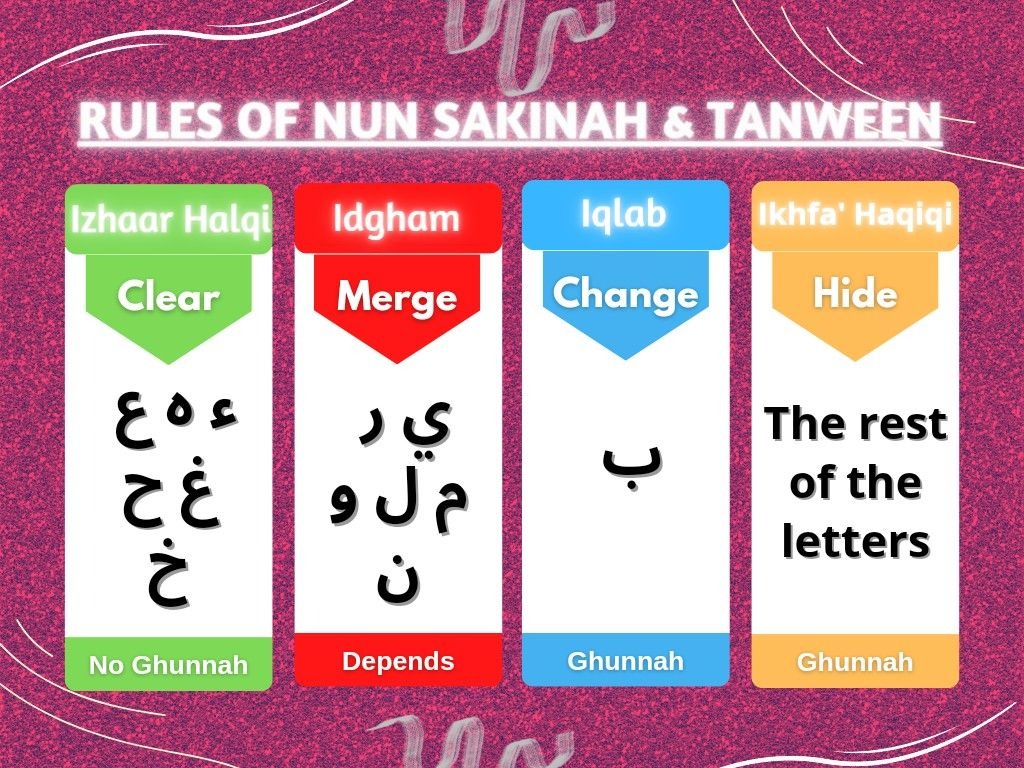
Using flashcards, a teacher holds up a card with the letter “ب” (ba). The child must quickly say its Makhraj (point of articulation) and its rule (is it a heavy or a light letter? And is it a Qalqala letter or not?). This is repeated for 10-15 different letters.
Please see the pictures below as an example for this exercise [Noon Sakinah].
3- Active Learning:
For a kid, being told to “sit still and repeat” can turn the beautiful science of Tajweed into a tedious chore. Active Learning flips this script entirely. It is a powerful teaching philosophy that moves kids from being passive listeners to becoming active participants in their own learning journey.
Instead of merely hearing about the rules, they do, move, create, and play with them, transforming abstract pronunciation guidelines into an unforgettable, hands-on experience. Below are two examples of active learning activities for kids.
The Makhraj (Articulation Point) Treasure Hunt:
This game turns children into “Quranic detectives” on a mission to discover where sounds come from. It is highly active, engaging, and makes abstract concepts tangible.
Learning Objective:
To help kids physically feel and visualize the correct Makhraj (point of articulation) for different Arabic letters.
Materials Needed:
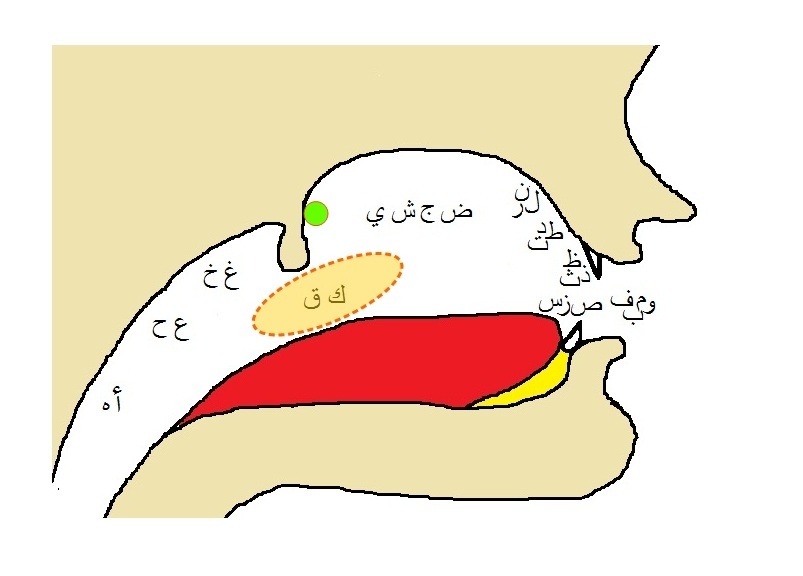
- A large, blank poster or drawing of a face profile (showing the mouth, tongue, throat, and lips).
- Velcro dots or sticky tack.
- A set of cards or stickers with Tajweed letters written on them (e.g., س, ص, ق, ل, غ).
Activity Steps:
Step 1: The Detective Briefing
Gather the kids and introduce the mission: “Today, we are Quranic detectives! Our mission is to find the exact “home” or ‘treasure spot’ where each Arabic letter sound is born. Every sound has a special place in our mouth, and we are going to map them all!”
Step 2: The “Sound Test” And Discovery
1. Hold up a letter card, for example, “ق (Qaf)”.
2. Demonstrate: Pronounce the letter slowly and exaggeratedly, “Qqqqaaaaf.” Ask the kids, “Where do you feel that sound? Is it on your lips? Your tongue? Deep in your throat?”
3. Let Them Experiment: Have all the kids try to say the sound themselves, paying close attention to the physical sensation in their mouths.
4. Guide Their Discovery: Ask guiding questions: “Does it feel deep, like it is coming from the very back of your mouth? Does your tongue feel like it is touching the top of your mouth?”
Step 3: Place the Treasure on the Map
Once the detectives have consensus (e.g., “It is in the back!”), a kid gets to place the “ق” card on the correct spot on the large face profile poster. They would place it at the very back of the throat/soft palate area.
Step 4: Compare and Contrast
Now, make the learning even deeper by introducing a contrasting letter.
- Hold up the letter “ك” (Kaf).
- Have them say “ق” and then immediately say “ك”. Ask, “Are they the same? Do they come from the same spot?”
- They will feel that “ك” is produced further forward in the mouth than “ق”. They then place the “ك” card in its correct, more forward position.
Please see the poster below. You can use a similar one with letters on it for your quick reference and use another one after removing the letters from it for kids to manage.
Experience Riwaq Al Quran Classes
Watch real moments from our live sessions at Riwaq Al Quran and see how we bring learning to life. These clips highlight our interactive, student-focused approach designed to keep learners engaged, motivated, and actively involved in every step of their educational journey.
Tajweed Worksheets For Kids
Learning the proper rules of Quranic recitation is a beautiful and essential journey for every Muslim child. However, explaining abstract concepts like the “heavy” quality of a letter or the “hiding” of a sound can be challenging for young minds. This is where Tajweed worksheets become an invaluable tool.
They are more than just pieces of paper; they are bridges that transform complex rules into fun, manageable, and hands-on activities. Here are two concrete examples of Tajweed worksheets designed for kids, showing the style and objective of each activity.
1- Heavy vs. Light Letter Sort:
The Heavy vs. Light Letter Sort activity is a foundational and hands-on exercise that introduces kids to the critical concept of Tafkheem (making heavy) and Tarqeeq (making light). Please see below some aspects of this exercise.
Objective:
To teach the concept of Tafkheem (heavy) and Tarqeeq (light) letters through a writing activity.
Worksheet Design:
- Layout: A table with two columns, one with a picture of an anchor (for “Heavy”) and one with a picture of a feather (for “Light”).
- Activity: At the bottom of the page is a box with mixed-up letters (e.g., خ, ص, س, ل, غ, ك).
- Instructions: Say to the kids: “Write the letters below in the correct column. Put the HEAVY letters under the anchor and the LIGHT letters under the feather. You have to erase each letter from the box after putting it in the correct columns”.
This provides a clear, visual, and tactile way to learn the classification. Please see the following worksheet for inspiration:
Heavy letters (have Tafakheem) | Light letters (have Tarqeeq) |
| ص – ع – ف – ق – ل – ك – غ – س – م – ن – ض – ط – ظ – خ – ح – ت – ث – ب – هـ – د – ذ – ش | |
2- Madd Maze:
Madd Maze is a basic and hands-on exercise that introduces kids to the vital issue of Madd in Tajweed. Please see below some aspects of this exercise.
The maze has words in the pathways. The instructions are: “Help your friend, Zayd (who is at the “Start” point in the Maze below) reach the Mosque (which is at the “End” point)! You can only follow the path of words that contain a Madd letter.” The kid must trace a path only through words that have an Alif (ا), Waw (و), or Yaa (ي), acting as a Madd letter.
This turns drill into a fun puzzle. Please see the Maze below as a reference. You should put words that have Madd letters in the correct path and words that do not have Madd letters in the wrong paths of the Maze.

Tips for Using Tajweed Flashcards and Worksheets Effectively
Tajweed flashcards and worksheets are powerful resources for kids, but their true potential is unlocked not just by using them, but by how they are used. Here is a summary of core strategies to ensure your flashcards and worksheets are as effective as possible:
1- Focus on One Goal:
Tajweed Flashcards and Worksheet should target a single, specific objective (e.g., memorizing the letters of Qalqala, perfecting the pronunciation of the letter “Ayn”, or quickly identifying the Madd symbol).
2- Learning Session Should Be Fast-Paced:
Keep sessions short and sweet: A focused 10-15 minute session is often more effective than a long, forced lesson for maintaining a kid’s interest. The goal is often speed and accuracy, moving quickly from one item to the next.
3- Learning should be Brief and Intensive:
Drill sessions are typically short (5-15 minutes) to maintain focus and effectiveness.
4- Praise the Effort:
Celebrate kid’s attempt and excitement. This positive reinforcement fuels their love for learning and builds confidence.
5- Connect to Recitation:
After completing a worksheet on a specific rule, open the Quran and find a simple example together. This helps bridge the gap between theory and beautiful, practical application.
Read Also: Learn Tajweed for Kids
Why Students Love Learning with Riwaq Al Quran
Hear directly from our students about how Riwaq Al Quran Academy has transformed their connection with the Book of Allah. Their experiences reflect the dedication, care, and quality that guide every step of our teaching.
Learn Quran, Arabic And Islamic Studies Online With The Best Native Tutors
Riwaq Al Quran is a comprehensive online platform that offers personalized Quran, Arabic and Islamic Studies Online classes for individuals of all ages and backgrounds.
Their experienced instructors use a structured curriculum to cover Tajweed, Tafsir, and Memorization, providing easy and effective access to learning the Quran.
The advanced online classes allow for seamless communication and interaction between students and teachers. Join Riwaq Al Quran for a deeper connection with the Quran.
We offer several courses such as:
- Online courses for kids.
- Online Quran classes for kids and adults.
- Online Arabic courses
- Online Ijazah courses
- Online Islamic Studies courses.
Here are a sample of our set of Quran Courses that will be helpful for you:
- Online Tafseer Course: Delve into Quranic meanings with our insightful online Tafseer course.
- Noorani Qaida Online: Learn Quranic basics efficiently through our Noorani Qaida online program.
- Online Quran Recitation Course: Enhance Quranic recitation skills through our expert-led online course.
- Online Tajweed Classes: Master Tajweed rules for beautiful Quranic recitation in online classes.
- Quran Memorization Online Course: Memorize the Quran effectively with our specialized online memorization course.
- Online Qirat Course: Explore diverse Qirat styles with our comprehensive online Qirat course.
- Online Quran Classes for Kids: Nurture a love for the Quran in kids through interactive online classes.
Conclusion
For kids, the path to Tajweed mastery can—and should—be filled with play. By making Tajweed learning fun and interactive, we help kids build a loving and positive relationship with the Quran from an early age. Simply calling it a “game” changes the entire mindset. These kinds of activities transform a passive lesson into an unforgettable, hands-on investigation.
This technique helps kids internalize the rules of Tajweed, building a strong, physical foundation for their Tajweed journey. As a teacher, remember that Tajweed is inherently a physical skill—it is about training the mouth, tongue, and throat to produce specific sounds. It is a blessed journey of both skill and soul of those little hearts.