Learning a new letter in Arabic is not just about memorizing a shape — it is about training your mouth, eyes, and memory to work together. The Arabic letter tha ث is one that many beginners overlook, yet it appears in everyday words and throughout the Quran with remarkable frequency.
Mastering tha ث means understanding how to articulate a sound that does not naturally exist in most learners’ native languages, how to recognize its three written forms, and how to connect it to real Arabic vocabulary. This guide walks you through each step with precision.
Table of Contents
What Is the Arabic Letter Tha ث?
The Arabic letter tha ث is the fourth letter of the Arabic alphabet, following ta ت. It belongs to the same visual family as ba ب and ta ت, sharing the same base shape but distinguished by three dots placed above it.
In Modern Standard Arabic (Fusha) and Classical Arabic, tha ث represents a distinct consonant sound used in nouns, verbs, and Quranic vocabulary. It is not an optional or rare letter — it carries full phonemic weight in Arabic grammar and meaning.
If you are starting your Arabic learning path, Riwaq Al Quran’s Online Arabic Course offers structured alphabet instruction guided by qualified teachers who ensure you build accurate foundations from the very first letter.
Book Your FREE Trial in Riwaq’s Arabic Classes

How the Arabic Letter Tha ث Is Written in All Its Forms?
Arabic letters change shape depending on their position within a word. Tha ث has four positional forms, all sharing the same three-dot marker above the base shape.
The base structure of tha ث is identical to ba ب and ta ت. The only distinguishing feature is the three dots (thalath nuqat) positioned above, never below.
| Position | Form | Example Word | Notes |
| Isolated | ث | — | Full base shape visible |
| Initial (word beginning) | ثـ | ثَمَر (thamar) | Connects to the right |
| Medial (word middle) | ـثـ | مَثَل (mathal) | Connected on both sides |
| Final (word end) | ـث | حَديث (hadith) | Tail extends to the left |
One practical writing tip: beginners sometimes misplace the three dots, writing them below the letter or reducing them to two. Always confirm three dots, always above. This distinction separates tha ث from ba ب (one dot below) and ta ت (two dots above).
How to Pronounce the Arabic Letter Tha ث Correctly?
The Arabic letter tha ث is pronounced as the English “th” in the word “think” or “three” — a voiceless interdental fricative. Place the tip of your tongue lightly between your upper and lower front teeth, then push air through without vibrating your vocal cords.
This is its makhraj (articulation point): the tip of the tongue touching the edges of the upper front teeth. In classical Arabic phonetics, this is called the interdental position, shared with the letters dhal ذ and dha ظ, though each carries different phonetic attributes.
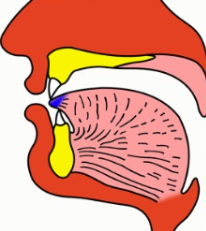
The sifat (phonetic attributes) of tha ث include:
- Hams (whispered): the vocal cords do not vibrate during its production
- Rakhawa (continuous airflow): the sound does not stop suddenly — air flows continuously
- Istifal (lowness): the tongue remains low, with no emphasis or heaviness
| Phonetic Feature | Description |
| Makhraj | Tip of tongue between upper front teeth (interdental) |
| Airflow | Continuous (Rakhawa) |
| Emphasis | None (Istifal — light sound) |
| English Equivalent | “th” as in “think,” “three,” “throw” |
This table summarizes the core phonetic identity of tha ث. Every detail here aligns with classical Arabic linguistics as established in texts like Tuhfat Al-Atfal and the Al-Jazariyyah.
For parents teaching their children Quranic Arabic, and for adult learners connecting with the Quran, Riwaq Al Quran’s Online Tajweed Classes provide letter-by-letter recitation training with qualified instructors who guide correct makhraj from the start.
Enroll Now in the Best Online Tajweed Classes

Common Pronunciation Mistakes English Speakers Make with Tha ث
Many learners mispronounce tha ث in one of two predictable ways. Understanding these errors precisely will help you correct them faster.
1. Replacing Tha ث with the Letter Sa س
The most frequent mistake is substituting tha ث with letter sa س, producing a “s” sound instead of “th.” This happens because some Arabic dialects — Egyptian Arabic in particular — do pronounce tha ث as “s” in informal speech.
However, in Fusha (Modern Standard Arabic) and Quranic recitation, this substitution is incorrect and changes meaning.
2. Replacing Tha ث with Ta ت
Some beginners, especially younger learners, confuse tha ث with ta ت because both letters look similar. Pronouncing tha ث as a hard “t” is a significant articulation error.
The tongue position is entirely different: ta ت is produced at the tip of the tongue touching the upper gum ridge, while tha ث requires the tongue between the teeth.
| Error Type | What Learners Say | Correct Production |
| Sa substitution | سَلاثَة (thalatha → salatha) | Tongue between teeth, not behind them |
| Ta substitution | تَلاتَة (thalatha → talata) | Tongue must exit between front teeth |
| Voiced “th” error | As in “that” or “this” | Tha ث is voiceless — no vocal cord vibration |
Awareness of these three error patterns allows teachers and self-learners to target corrections efficiently rather than practicing blindly.
Experience Riwaq Al Quran Classes
Watch real moments from our live sessions at Riwaq Al Quran and see how we bring learning to life. These clips highlight our interactive, student-focused approach designed to keep learners engaged, motivated, and actively involved in every step of their educational journey.
Common Arabic Words That Contain the Arabic Letter Tha ث
Building vocabulary around a new letter is one of the most effective reinforcement strategies in alphabet pedagogy. Below are frequently used Arabic words containing tha ث in different positions within words.
Words Where Arabic Letter Tha ث Appears at the Beginning
- ثَلاثَة (thalatha) — three
- ثَمَر (thamar) — fruit
- ثَوب (thawb) — garment/robe
- ثَقيل (thaqeel) — heavy
- ثَعلَب (tha’lab) — fox
Words Where Arabic Letter Tha ث Appears in the Middle
- مَثَل (mathal) — example/proverb
- كَثير (katheer) — many/much
- أَثَر (athar) — trace/effect
Words Where Arabic Letter Tha ث Appears at the End
- حَديث (hadith) — speech/narration
- تُراث (turath) — heritage
- بَعث (ba’th) — sending/resurrection
| Word Position | Arabic Word | Transliteration | Meaning |
| Initial | ثَلاثَة | Thalatha | Three |
| Initial | ثَوب | Thawb | Garment |
| Medial | كَثير | Katheer | Many / Much |
| Medial | مَثَل | Mathal | Example / Proverb |
| Final | حَديث | Hadith | Speech / Narration |
| Final | تُراث | Turath | Heritage |
Studying tha ث through real vocabulary — not isolated drills alone — accelerates both recognition and retention significantly.


Step-by-Step Pronunciation Practice for the Arabic Letter Tha ث
Follow this structured sequence to build accurate tha ث production from scratch.
Step One — Isolate the Tongue Position
Stand in front of a mirror. Place the tip of your tongue gently between your upper and lower front teeth. Do not bite down. Push a light stream of air through. You should hear a soft “th” sound as in “think.” Repeat this ten times before attaching any vowel.
Step Two — Add Short Vowels to Tha ث
Practice tha ث with each of the three Arabic short vowels:
- ثَ (tha + fatha) — as in ثَمَر (thamar)
- ثِ (tha + kasra) — as in ثِقَل (thiqal)
- ثُ (tha + damma) — as in ثُمَّ (thumma)
Repeat each combination five times, checking your tongue placement in the mirror each time.
Step Three — Practice with Full Words
Move from syllable drills to full words. Start with two-syllable words before longer ones. Use the vocabulary list from the earlier section. Say each word slowly, then at natural speed.
Practical Exercises to Master the Arabic Letter Tha ث
These exercises are designed for both children and adult learners. Children benefit from visual and verbal repetition, while adults benefit from connecting sounds to written forms simultaneously.
Exercise 1 — Identification Drill
Look at the following Arabic letters and circle every tha ث you see:
ب — ث — ت — ث — ن — ث — ب — ت — ث
Exercise 2 — Fill in the Missing Letter
Complete each word by inserting tha ث in the correct position:
- _َمَر (fruit)
- كَـ_ير (many)
- حَديـ_ (narration)
Exercise 3 — Writing Practice
Write tha ث in all four positional forms ten times each. Pay special attention to placing exactly three dots above the base shape. Trace lightly first, then write independently without looking at a model.
Exercise 4 — Listening and Repetition
Read the following word pairs aloud, noticing the difference in meaning caused by changing tha ث to other letters:
- ثَمَر (fruit) vs. سَمَر (evening chat) — note how ث vs. س changes the word entirely
- كَثير (many) vs. كَسير (broken) — the same position, two completely different meanings
This exercise builds phonemic awareness, which is critical for both reading and speaking.
For kids learning Arabic, Riwaq Al Quran’s Online Arabic Classes for Kids use interactive, age-appropriate methods that turn letter exercises like these into engaging activities with qualified teachers who specialize in young learners.
Enroll Your Kid in Riwaq’s Arabic Classes for Kids with a FREE trial

Read Also: Learn The Arabic Letter Ba (ب)
How to Distinguish Tha ث from Ba ب and Ta ت When Reading Arabic?
The three letters ب، ت، ث share the exact same base shape. The only difference is the number and position of their dots. Confusing these three is one of the most common reading errors for beginners, and addressing it directly is essential.
| Letter | Name | Dots | Position of Dots | Sound |
| ب | Ba | 1 dot | Below the base | “b” as in “book” |
| ت | Ta | 2 dots | Above the base | “t” as in “top” |
| ث | Tha | 3 dots | Above the base | “th” as in “think” |
The practical rule: one dot below = ba, two dots above = ta, three dots above = tha. Training your eye to count the dots instantly — rather than reading the letter shape — is the fastest path to fluency in early Arabic reading.
Read Also: Learn The Arabic Letter Alif (ا / أ)
Why Students Love Learning with Riwaq Al Quran
Hear directly from our students about how Riwaq Al Quran Academy has transformed their connection with the Book of Allah. Their experiences reflect the dedication, care, and quality that guide every step of our teaching.
Start Learning Arabic Letters with Expert Instructors at Riwaq Al Quran
The Arabic letter tha ث is a perfect example of why precise instruction matters from the beginning. One misplaced dot or one incorrect tongue position creates entirely different words.
At Riwaq Al Quran, our expert instructors help you build accurate Arabic from day one:
- Al-Azhar-certified instructors with specialization in Arabic phonetics
- Structured alphabet programs for both children and adults
- Flexible scheduling for learners in any time zone
- Interactive one-on-one and group sessions
- Free trial lesson — no commitment required
Book your free trial lesson today and let a qualified teacher guide your pronunciation of every Arabic letter, including tha ث, with the precision it deserves.
Beyond Arabic, we offer courses in Online Tajweed Classes, Arabic Language, and Islamic Studies.
- Online Quran Memorization Course
- Tajweed Classes
- Online Quran Classes for Kids.
- Ijazah Program.
- Arabic Language Classes.
- Islamic Studies Courses.
Enroll now for 2 Free Trial Classes and Begin Learning Arabic or Memorizing Quran Today

Conclusion
The Arabic letter tha ث carries a unique articulation point — the interdental position — that requires deliberate tongue training. Its three phonetic attributes (Hams, Rakhawa, and Istifal) define a light, continuous, voiceless sound that distinguishes it from every neighboring letter in the alphabet.
Recognizing tha ث across its four written forms and in real vocabulary — from ثَلاثَة (three) to حَديث (narration) — builds both reading fluency and listening comprehension simultaneously. The more vocabulary you encounter with this letter, the more natural its recognition becomes.
Consistent practice, whether through the exercises in this guide or with a qualified teacher, is what moves a letter from unfamiliar to automatic. Insha’Allah, with steady effort and the right guidance, tha ث will become one of the letters you recognize and pronounce with full confidence.