Ten days. Thirty Juz’. Six hundred and four pages. Completing the Quran in 10 days can feel like a goal reserved for scholars or people with unlimited free time — but with the right daily structure, it’s achievable for a committed adult without turning your day into a marathon reading session. The key isn’t longer sessions; it’s smarter distribution across the five daily prayers.
This guide walks through the exact daily page target, how to spread it across your prayer times, the recitation pace that keeps Tajweed intact, and the specific mistakes that cause most 10-day plans to collapse by day four.
What You’ll Learn in This Article
- The exact number of pages you need to recite daily to finish in 10 days.
- How to distribute that target across the five daily prayers without exhausting yourself.
- Which recitation pace (Hadr) is appropriate, and the Tajweed minimums you still need to maintain.
- What Islamic teaching actually says about reciting the Quran quickly.
- The specific challenges non-Arabic speakers face during intensive recitation, and how to prevent them.
Table of Contents
How Many Pages Per Day Do You Need to Complete the Quran in 10 Days?
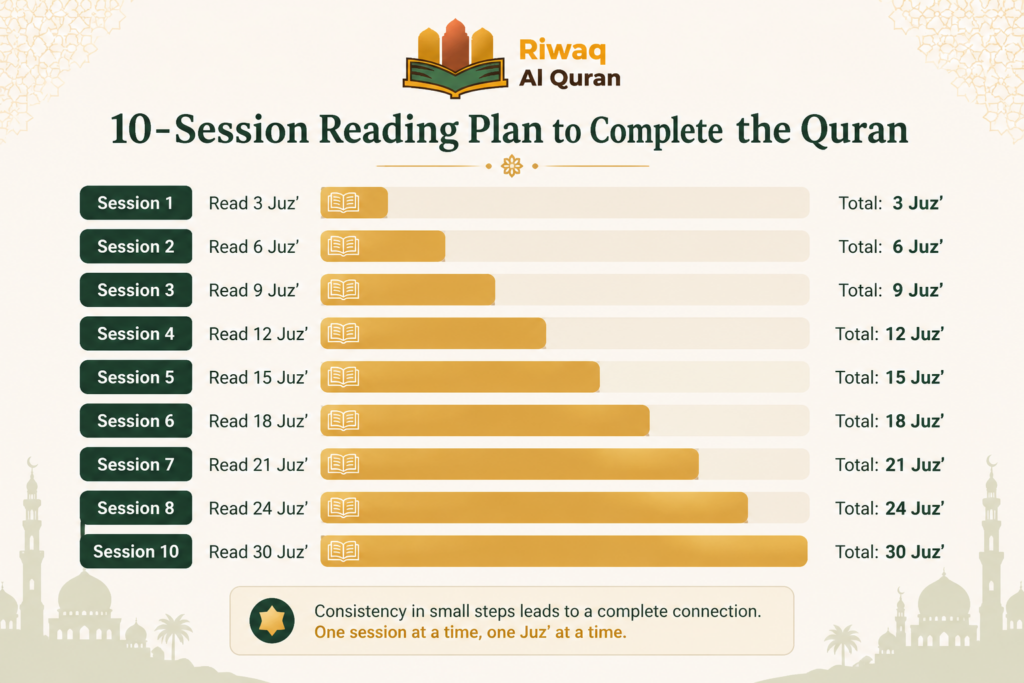
To complete the Quran in 10 days, you need to recite approximately 60 pages, or 3 Juz’, every single day. The standard Mushaf contains 604 pages across 30 Juz’, and dividing 604 by 10 gives just over 60 pages daily — a demanding but realistic target for a committed adult reader. The table below breaks that target down day by day, so you can see exactly where you should be at any point in the plan.
| Day | Juz’ to Complete | Approximate Pages | Cumulative Juz’ Completed |
| Day 1 | Juz’ 1–3 | Pages 1–60 | 3 |
| Day 2 | Juz’ 4–6 | Pages 61–120 | 6 |
| Day 3 | Juz’ 7–9 | Pages 121–180 | 9 |
| Day 4 | Juz’ 10–12 | Pages 181–240 | 12 |
| Day 5 | Juz’ 13–15 | Pages 241–300 | 15 |
| Day 6 | Juz’ 16–18 | Pages 301–360 | 18 |
| Day 7 | Juz’ 19–21 | Pages 361–420 | 21 |
| Day 8 | Juz’ 22–24 | Pages 421–480 | 24 |
| Day 9 | Juz’ 25–27 | Pages 481–540 | 27 |
| Day 10 | Juz’ 28–30 | Pages 541–604 | 30 ✓ |
Each day’s 3 Juz’ is your non-negotiable minimum. Missing a single day means covering 6 Juz’ the next day — a strain that collapses most plans entirely, which is why the distribution method below matters as much as the daily total itself.
Connect with our Azhari tutors to learn and memorize the Quran

How Should You Distribute Recitation Across the Five Daily Prayers?
The most sustainable way to cover 3 Juz’ a day is spreading it across all five Salahs — reciting one Hizb (half a Juz’, roughly 10 pages) after each prayer. This avoids the exhaustion of one long session and keeps your connection to the Quran constant throughout the day rather than concentrated into a single sitting. The table below shows exactly how that daily total splits across each prayer.
| Prayer Time | Recitation Target | Pages Covered |
|---|---|---|
| Before Fajr | 1 Hizb | ~10 pages |
| After Fajr | 1 Hizb | ~10 pages |
| After Dhuhr | 1 Hizb | ~10 pages |
| After Asr | 1 Hizb | ~10 pages |
| After Maghrib | 1 Hizb | ~10 pages |
| After Isha | 1 Hizb | ~10 pages |
| Daily Total | 3 Juz’ | ~60 pages |
The Fajr session deserves particular attention — reciting right after Fajr, when the mind is rested and distractions are minimal, consistently produces the clearest, most focused recitation. If any single session needs to run longer than the others, let it be this one.
If you’re not sure whether this pace fits your schedule, Riwaq Al Quran’s tutors can help build a personalized plan around your actual daily availability, rather than a generic template.
What Recitation Pace Should You Use?
For a 10-day plan, Hadr — the fastest of the three accepted recitation speeds — is the appropriate pace, provided Tajweed rules aren’t abandoned in the process. The two sections below cover what Hadr actually means, and the specific technical standards you still need to hold yourself to while reciting at that speed.
a. The Hadr Pace and Why It Fits a 10-Day Plan
Hadr is faster than Tarteel and Tadwir, but it still requires correct pronunciation, proper Madd lengths, and essential Ghunnah — it is not reckless rushing. The Prophet ﷺ tied the merit of recitation to effort as much as proficiency:
(الْمَاهِرُ بِالْقُرْآنِ مَعَ السَّفَرَةِ الْكِرَامِ الْبَرَرَةِ، وَالَّذِي يَقْرَأُ الْقُرْآنَ وَيَتَتَعْتَعُ فِيهِ وَهُوَ عَلَيْهِ شَاقٌّ لَهُ أَجْرَانِ)
“The one who is proficient in reciting the Quran is with the honorable, obedient scribes (angels), and the one who recites it while finding it difficult, stumbling through it, will have a double reward.” (Sahih Muslim 798)
This hadith affirms that even a student reciting at Hadr pace while genuinely working at it earns real reward — sincere effort, not flawless delivery, is the condition. That’s worth sitting with specifically for a 10-day plan: you’re not disqualified from reward by being a slower, non-native reader, provided the effort behind each page is genuine.
b. The Tajweed Minimums You Still Need to Maintain
Mispronouncing letters due to excessive speed can genuinely distort meaning, so maintain at minimum:
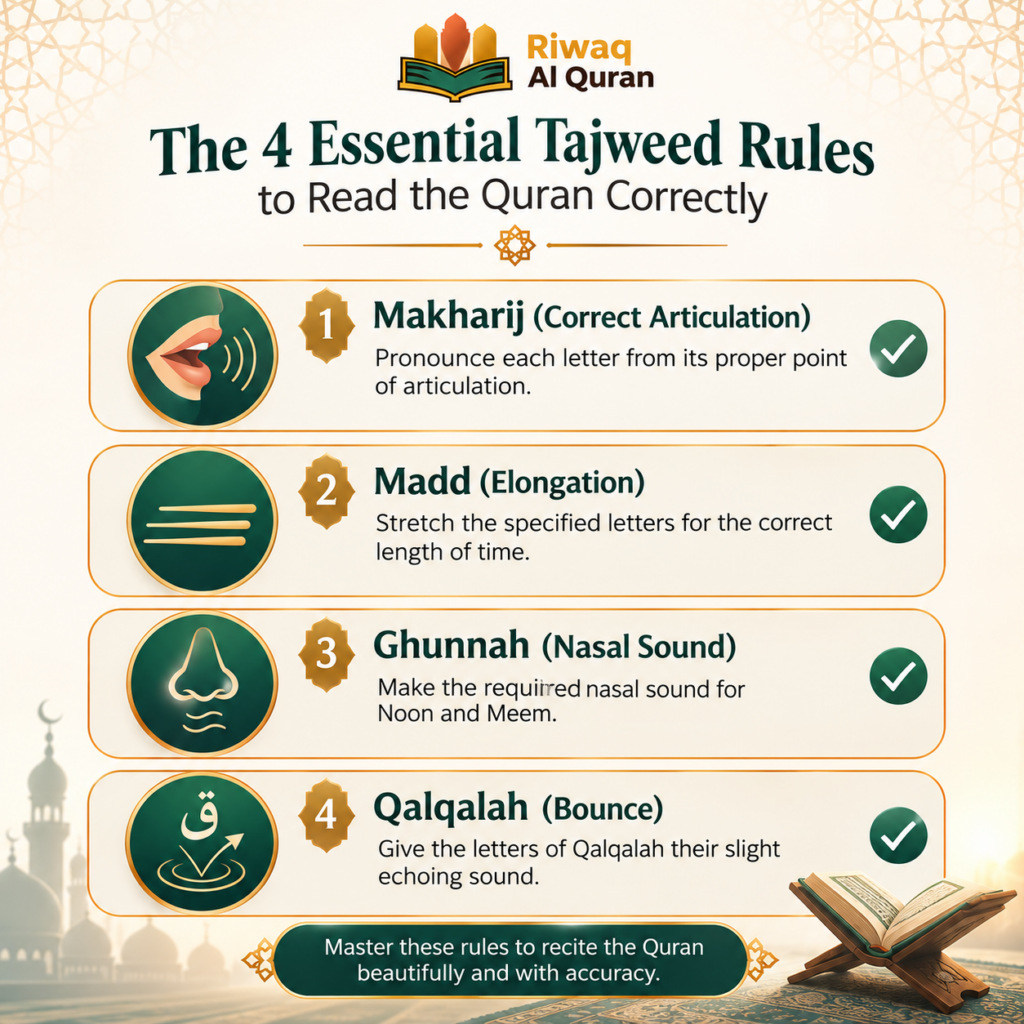
- Correct Makhraj (articulation point) for every letter — this is what separates Hadr from simply reading fast.
- Madd lengths of at least two counts where required — a shortened Madd changes the rhythm of the verse, even if the letter itself is right.
- Ghunnah on Noon and Meem with Shaddah — this nasal sound is easy to drop entirely under time pressure.
- Qalqalah on the five echoing letters (ق ط ب ج د) when they carry Sukoon — the bounce on these letters is often the first thing lost at speed.
These four points cover the standards to hold — here’s a quick look at the specific mistakes that tend to break them under time pressure.
If you need to build this Tajweed foundation before attempting Hadr pace, Riwaq Al Quran’s online Tajweed classes give you structured, one-on-one sessions with a qualified instructor first.
Is It Permissible to Complete the Quran Every Day?
Completing the Quran in less than three days is not recommended, based on a direct instruction the Prophet ﷺ gave to a companion who wanted to recite faster than that. The two parts below walk through the exchange itself, then the specific reasoning scholars draw from it.
a. What the Hadith Says About Reciting Too Quickly?
Abdullah ibn Amr asked the Prophet ﷺ how many days he should take to complete a full recitation:
(فَقَالَ فِي شَهْرٍ فَقُلْتُ إِنِّي أَجِدُ قُوَّةً فَلَمْ يَزَلْ يُرَخِّصُ لِي حَتَّى قَالَ فَاقْرَأْهُ فِي سَبْعٍ وَلاَ تَزِدْ عَلَى ذَلِكَ)
“He replied: ‘In one month.’ I said: ‘I am able to do better than that.’ He kept easing the period for me until he said: ‘Then read it once every seven days, and do not exceed that.'” (Sahih al-Bukhari 5054; Sahih Muslim 1159)
Notice the shape of this exchange: Abdullah ibn Amr kept pushing for a faster pace, and the Prophet ﷺ kept accommodating him — down to a point, then stopping. A separate, related narration through the same companion adds the specific caution behind where that stopping point sits:
(مَنْ قَرَأَ الْقُرْآنَ فِي أَقَلَّ مِنْ ثَلاَثٍ لَمْ يَفْقَهْهُ)
“Whoever recites the Quran in less than three days does not understand it.” (Sunan Abi Dawud 1390, graded authentic by Al-Albani)
b. Why Three Days Is the Scholarly Floor?
Together, these narrations establish seven days as what the Prophet ﷺ settled on for regular practice, with three days as the outer limit even for someone who had explicitly asked for more, not less.
The reasoning scholars draw from this is that reciting faster than three days typically prevents proper tadabbur (reflection on meaning) — a distinct instruction, and itself a Quranic command:
(أَفَلَا يَتَدَبَّرُونَ الْقُرْآنَ)
“Then do they not reflect upon the Quran?” (Surah An-Nisa, 4:82)
A 10-day plan sits comfortably above this three-day floor while still maintaining a pace intensive enough for genuine, focused engagement — the balance point classical scholars have generally regarded as sound for occasional, intensive recitation, distinct from year-round daily practice.
This is also why a 10-day plan is best treated as a periodic undertaking — Ramadan, a gap in your schedule, a specific personal goal — rather than the pace you sustain every month of the year.
What Are the Virtues of Reciting the Quran That Make This Worthwhile?
The virtues tied to Quran recitation are extensively documented, which is part of why a 10-day Khatm (completion) is treated as a genuine act of worship rather than simply a personal achievement. Each letter recited carries its own individual, multiplied reward. The Prophet ﷺ said:
(مَنْ قَرَأَ حَرْفًا مِنْ كِتَابِ اللَّهِ فَلَهُ بِهِ حَسَنَةٌ وَالْحَسَنَةُ بِعَشْرِ أَمْثَالِهَا)
“Whoever recites a letter from the Book of Allah will be credited with a good deed, and the good deed is multiplied by ten.” (Jami’ at-Tirmidhi 2910)
This reward is counted letter by letter rather than word by word, meaning a full 604-page Khatm represents a genuinely substantial, cumulative act of worship — not because of the achievement of finishing, but because of what every single page along the way is quietly accumulating.
Correct Tajweed matters directly here too: giving each letter its full articulation is what ensures the reward described in this hadith is actually being earned as intended, not an approximate version of it, which is exactly why the Tajweed minimums covered earlier aren’t a separate concern from the reward itself — they’re the mechanism that delivers it in full.
Beyond the letter-by-letter reward, consistent recitation is also described as purifying the heart and deepening a reader’s relationship with Allah’s speech — a benefit distinct from, but compounding alongside, the specific numerical reward tied to each letter.
Reciting the Quran in 10 Days During Ramadan
Completing the Quran within 10 days holds particular significance during Ramadan specifically, since Ramadan is the month in which the Quran itself was revealed:
(شَهْرُ رَمَضَانَ الَّذِي أُنزِلَ فِيهِ الْقُرْآنُ)
“The month of Ramadan is that in which was revealed the Quran.” (Surah Al-Baqarah, 2:185)


Many scholars recommend aiming for at least one full Khatm during Ramadan, often timed to the first, middle, or last ten nights. During Ramadan specifically, the structure can shift slightly: Taraweeh prayers offer an additional built-in recitation window, and many mosques cover roughly one Juz’ nightly during Taraweeh.
A student attending Taraweeh regularly can reasonably reduce their personal daytime target to 2 Juz’, using the Taraweeh recitation as partial credit toward the day’s total — though personal, active recitation still carries its own distinct reward beyond listening, which is why this adjustment is a practical accommodation, not a substitute for your own recitation entirely.
Prepare Your Recitation Environment Before You Start
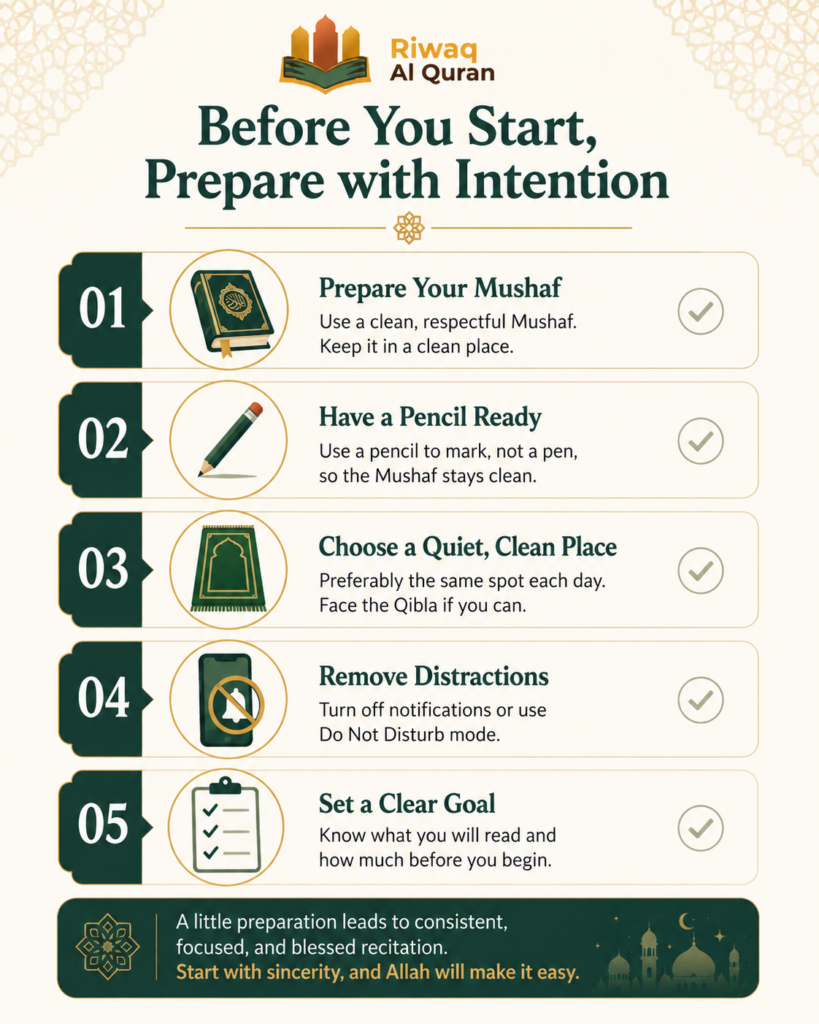
Completing the Quran in 10 days works best when treated as a structured commitment from day one, not an occasional intention adjusted as you go. A few practical steps make the difference between finishing and stalling around day four:
- Use one fixed Mushaf throughout — familiarity with the page layout genuinely speeds up reading over the ten days.
- Mark your daily checkpoints lightly in pencil at the start of each Juz’, so progress stays visually trackable.
- Recite in a clean, quiet space, in wudu — treating the setting with some reverence sharpens focus noticeably.
- Remove phone notifications during recitation sessions — even brief interruptions during a 10-page session break your flow and extend how long it takes to finish.
- Track completion daily with a simple tick sheet per Hizb — visible progress provides real psychological motivation to keep going.
Read more about: How to Finish the Quran in 30 Days?
How Can a Non-Arabic Speaker Maintain Recitation Quality Over 10 Days?
Non-Arabic speakers face a specific challenge during Hadr-pace recitation: maintaining correct pronunciation without slipping into substitution patterns, particularly in longer Surahs where familiar landmarks are less frequent. The two parts below cover the specific mistake to watch for, and the practices that prevent it.
a. The Most Common Pronunciation Mistake
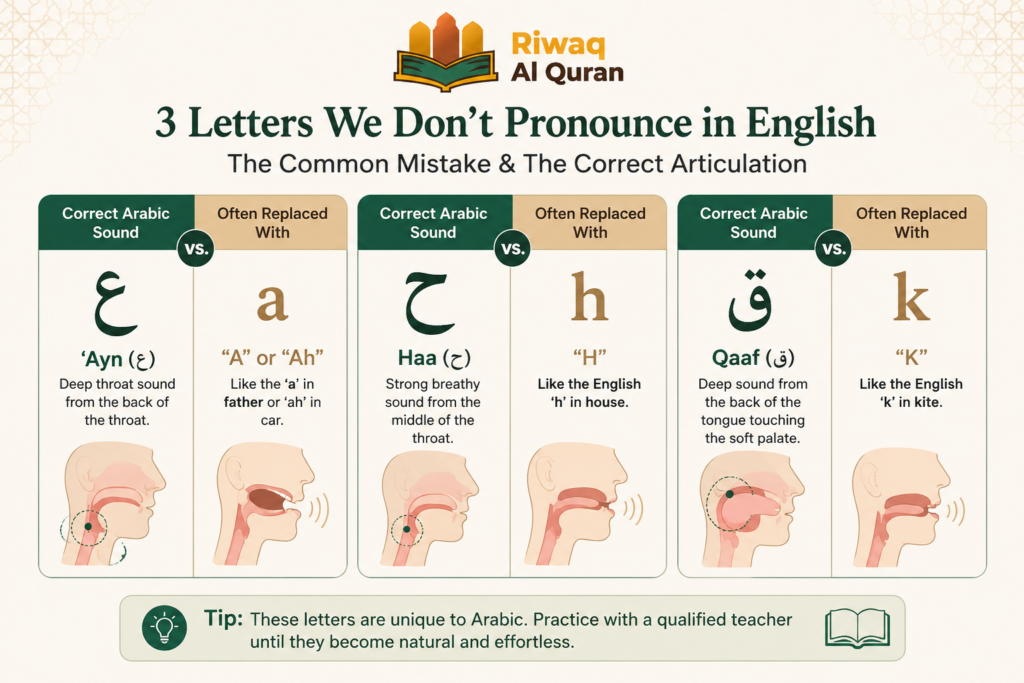
The most consistent error non-Arabic speaking adults make during intensive plans is substituting difficult letters — especially ع (Ayn), ح (Ha), and ق (Qaf) — with phonetically similar English sounds under time pressure.
The reason this matters more during a 10-day plan than during slower, everyday recitation is repetition volume: a pronunciation slip repeated across 60 pages a day compounds into a genuine habit far faster than the same slip made occasionally during a normal, unhurried reading pace.
b. Three Practices That Prevent It
- Record and listen back to one page daily — the ear often catches errors the reciting mouth doesn’t notice in the moment.
- Flag your three most difficult letters before starting, and give them five minutes of deliberate practice before each Fajr session specifically.
- Recite with a qualified tutor at least twice during the 10 days — a trained teacher catches systematic errors before they become entrenched habits that are much harder to unlearn later.
Riwaq Al Quran’s Recitation course pairs students with certified, native-speaking tutors for one-on-one sessions specifically structured around pace and pronunciation management during intensive plans like this one
Build Your Personalized Recitation Plan With Riwaq Al Quran
A 10-day Khatm is one of the more demanding but rewarding goals you can set for yourself with the Quran — and having a tutor check your pace and pronunciation along the way makes the difference between finishing strong and losing momentum halfway through.
Riwaq Al Quran is a comprehensive online platform that offers personalized Quran, Arabic, and Islamic Studies online classes for individuals of all ages and backgrounds.
Their experienced instructors use a structured curriculum to cover Tajweed, Tafsir, and Memorization, providing easy and effective access to learning the Quran, with advanced online classes that allow for seamless communication and interaction between students and teachers. Join Riwaq Al Quran for a deeper connection with the Quran.
Here’s what that kind of structured commitment can lead to — one of our students placing first in Juz’ memorization.
Why students choose Riwaq Al Quran:
- Tutors hold Al-Azhar University Ijazah certification.
- Flexible scheduling built around your prayer times.
- A free trial class before you commit to anything.
- Affordable plans designed to fit different budgets.
We offer courses in Online Quran & Tajweed Classes, Arabic Language, and Islamic Studies.
- Online Quran Memorization Course
- Recitation Course
- Tafseer Course
- Tajweed Classes
- Online Quran Classes for Kids.
- Ijazah Program.
- Qirat Course.
- Arabic Language Classes.
- Islamic Studies Courses.

Conclusion
Ten days breaks down into three numbers worth holding onto: 60 pages a day, 10 pages after each prayer, and never fewer than three days for the whole Mushaf, no matter how energetic you feel.
The math is simple, 604 pages divided across 10 days is 3 Juz’ daily — nothing more complicated than that. What breaks most plans isn’t the total, it’s trying to hit it in one sitting instead of five.
The pace has a floor, not just a ceiling. Hadr is fast, but it isn’t rushed — and the Prophet ﷺ drew a specific line at three days for a reason:
(مَنْ قَرَأَ الْقُرْآنَ فِي أَقَلَّ مِنْ ثَلاَثٍ لَمْ يَفْقَهْهُ)
“Whoever recites the Quran in less than three days does not understand it.” (Sunan Abi Dawud 1390)
Ten days sits well clear of that floor — intensive, but never at the cost of the reflection this hadith is protecting.
And the reward doesn’t wait for perfection, Whether you’re fluent or still stumbling over a difficult letter, the Prophet ﷺ described both as earning something real:
(الْمَاهِرُ بِالْقُرْآنِ مَعَ السَّفَرَةِ الْكِرَامِ الْبَرَرَةِ، وَالَّذِي يَقْرَأُ الْقُرْآنَ وَيَتَتَعْتَعُ فِيهِ وَهُوَ عَلَيْهِ شَاقٌّ لَهُ أَجْرَانِ)
“The one proficient in the Quran is with the noble, obedient scribes, and the one who reads it with difficulty has two rewards.” (Sahih Muslim 798)
Ten days, five prayers, sixty pages. The structure is already built for you — the only thing left to bring is the ten days themselves.
FAQs
The questions below cover the specific, practical details that come up most often once someone has committed to a 10-day plan and started running into real scheduling or pronunciation questions along the way.
How many pages is 3 Juz’ of the Quran?
Three Juz’ equals approximately 60 pages in the standard 604-page Mushaf, since each Juz’ averages roughly 20 pages — reciting 10 pages after each of the five daily prayers completes exactly this target each day.
How long does it take to recite 3 Juz’ in a day?
Reciting 3 Juz’ at a moderate Hadr pace typically takes 60 to 90 minutes total, split into five sessions of roughly 12 to 18 minutes each after every prayer — this pace usually improves noticeably by day three or four as familiar passages start to recur.
Is a 10-day plan better than a 30-day plan?
Neither is inherently superior — a 10-day plan builds intensive, sustained connection and allows multiple completions across a year, while a 30-day plan (one Juz’ daily) leaves more room for tadabbur and reflection on meaning.
What should you do if you miss a day in a 10-day plan?
If you miss a full day, rather than attempting a full 6-Juz’ catch-up session the next day, add one extra Juz’ to each of your remaining days instead — this spreads the deficit without collapsing your recitation quality all at once.
Can children take part in a Quran completion plan?
Yes, with an age-appropriate daily target — typically one Juz’ a day rather than three, aiming for a 30-day rather than 10-day completion, using the same prayer-anchored structure to build the habit early.