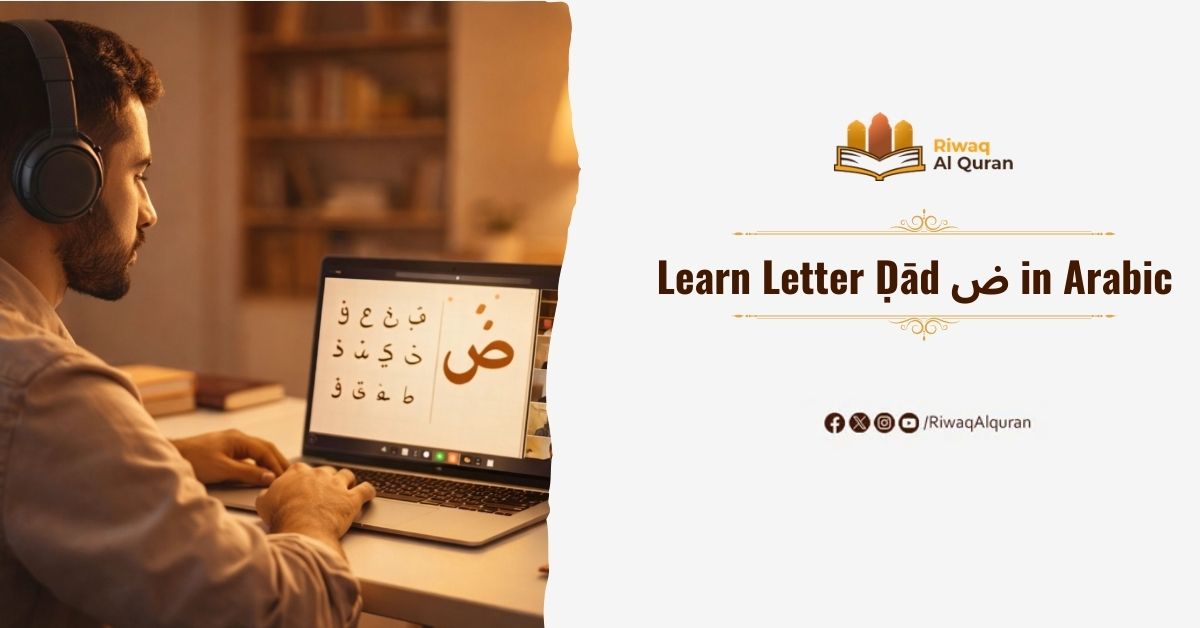
The Arabic letter ض (Ḍād) carries a reputation that even Arab linguists acknowledge — it is one of the most phonetically distinctive sounds in any human language. Classical Arabic scholars called their language Lughatu al-Ḍād (the language of Ḍād), a title that reflects just how central and unique this letter truly is.
Mastering ض is achievable for any dedicated learner, whether you are a child discovering Arabic for the first time or an adult building toward Quranic recitation. This guide walks you through the letter’s shape, sound, common vocabulary, and practical exercises — everything you need in one place.
Table of Contents
What the Arabic Letter Ḍād Looks Like in All Its Written Forms?
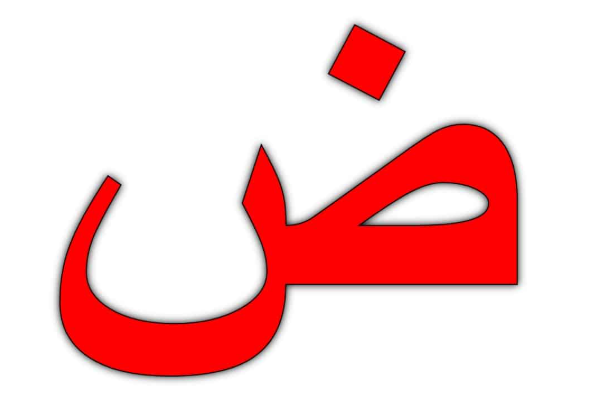
Recognizing ض across a word is the first skill every learner must develop. The letter changes shape depending on its position, but its identifying feature — a small dot above the body — always remains visible.
| Position | Arabic Form | Example Word | Meaning |
| Isolated | ض | ض | The letter itself |
| Initial | ضـ | ضَرَبَ | He struck |
| Medial | ـضـ | فَضْل | Grace / Favor |
| Final | ـض | بَيْض | Eggs |
The base shape of ض resembles an elongated bowl or curved stroke. In its isolated and final forms, the full curve is visible. In initial and medial positions, it connects to the following letter through a short joining stroke on the right side.
A common mistake beginners make is confusing ض with ص (Ṣād). Both share a similar bowl-like base — the critical difference is that ض always carries one dot above, while ص has no dot at all.
How to Teach the Letter Ḍād to Children in a Simple and Effective Way?
Children learn best through association, movement, and fun repetition. The abstract phonetic science above is for adults — for children, a different approach works better.
Use Visual Associations for Young Learners
Connect the shape of ض to something familiar. The letter looks like a small boat with a dot floating above it. Say to the child: “Draw a little boat, then put one raindrop above it — that’s ض!” This image sticks far better than abstract shape descriptions for young minds.
Teach Children Through Familiar Words First
Start with words children use in real life: ḍaḥika (laughed), bayḍ (eggs), ḍaw’ (light), rawḍa (garden). When a child connects the letter to things they experience daily, retention improves dramatically.

Repetition Through Short Sentences
Have children repeat simple sentences containing ض:
- Al-ḍaw’u jamīl — الضَّوْءُ جَمِيل — “The light is beautiful.”
- Al-ḍayfu karīm — الضَّيْفُ كَرِيم — “The guest is generous.”
Short, meaningful sentences build reading and pronunciation together. For a complete structured program, Riwaq Al Quran’s Online Arabic Classes for Kids offer child-friendly curriculum taught by patient, experienced instructors who specialize in teaching non-native young learners.
Enroll Your Kid in Riwaq’s Arabic Classes for Kids with a FREE trial

Common Arabic Words Containing the Letter Ḍād for Everyday Vocabulary
Before moving into Quranic use, it helps enormously to meet ض through familiar, everyday Arabic words. Recognizing this letter in common vocabulary builds both reading speed and phonetic confidence.
Words with Ḍād at the Beginning
| Arabic Word | Transliteration | Meaning |
| ضَوْء | Ḍaw’ | Light |
| ضَحِكَ | Ḍaḥika | He laughed |
| ضَرَبَ | Ḍaraba | He struck / He hit |
| ضَعِيف | Ḍa’īf | Weak |
| ضَيْف | Ḍayf | Guest |
Words with Ḍād in the Middle or at the End
| Arabic Word | Transliteration | Meaning |
| فَضْل | Faḍl | Grace / Favor |
| رَضِيَ | Raḍiya | He was pleased |
| أَرْض | Arḍ | Earth / Land |
| فَرَض | Faraḍa | He obligated |
| مَرَض | Maraḍ | Illness / Disease |
| حَضَرَ | Ḥaḍara | He attended / was present |
| رَوْضَة | Rawḍa | Garden / Meadow |
| بَيْض | Bayḍ | Eggs |
Learning words like arḍ (earth) and faḍl (grace) is particularly rewarding — these appear frequently in the Quran and in daily Islamic conversation. If you are helping children learn, words like bayḍ (eggs) and ḍayf (guest) are concrete, relatable, and easy to remember.
Experience Riwaq Al Quran Classes
Watch real moments from our live sessions at Riwaq Al Quran and see how we bring learning to life. These clips highlight our interactive, student-focused approach designed to keep learners engaged, motivated, and actively involved in every step of their educational journey.
How to Pronounce the Arabic Letter Ḍād Correctly as a Non-Native Speaker?
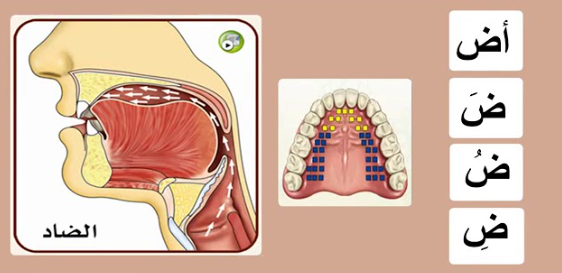
The ض sound does not exist in English, which is precisely why it requires dedicated practice. It is a voiced emphatic sound produced from a specific point deep in the mouth.
The makhraj (articulation point) of ض is the side edge of the tongue — specifically, one or both lateral edges of the tongue — pressing against the upper back molars and the inner side of the upper cheek. This contact creates the characteristic “heaviness” of the sound.
Why Ḍād Is Called an Emphatic Letter?
ض belongs to a group of Arabic letters called al-Ḥurūf al-Mufakhkhama (emphatic or velarized letters). This emphatic quality means the back of the tongue rises toward the soft palate while the sound is produced, giving it a deep, full resonance.
The Key Difference Between Ḍād and the English “D”
English speakers instinctively substitute a regular “d” for ض, but this is incorrect. The English “d” is a plain dental stop produced at the front of the mouth. The Arabic ض is produced further back, with lateral tongue contact and full emphasis. Saying a plain “d” in Quranic recitation where ض is required changes the meaning and affects the recitation.
| Feature | English “D” | Arabic ض |
| Place of articulation | Alveolar (front) | Lateral sides of tongue / back molars |
| Voiced | Yes | Yes |
| Emphatic quality | No | Yes (Mufakhkhama) |
| Effect on surrounding vowels | None | Deepens and heavies surrounding vowels |
| Equivalent in English | “D” in “dog” | No equivalent |
Practice this sound by placing your tongue so its side edges touch your upper back teeth, then voicing a “d”-like sound while pushing air over the sides. The surrounding vowels should sound noticeably deeper when you get it right.
Book Your FREE Trial in Riwaq’s Arabic Classes

Practice Exercises to Help You Read and Write the Letter Ḍād
Practice is where real learning happens. The following exercises are designed for both children and adult beginners and can be done with a pen, notebook, and focused repetition.
Exercise 1 — Letter Recognition Practice
Look at the following letters and circle every ض you find:
ص، ض، س، ض، ط، ض، ص، ض، ظ، ض
This exercise trains your eye to distinguish ض from visually similar letters like ص and ظ — a skill that directly supports Quran reading accuracy.
Exercise 2 — Tracing and Writing Practice
Write the letter ض in all four positions ten times each. Follow this sequence:
- Isolated: ض
- Initial: ضـ
- Medial: ـضـ
- Final: ـض
Focus on keeping the dot clearly above the letter body. Consistent dot placement is essential — missing or misplacing the dot produces a different letter entirely.
Exercise 3 — Word Completion Practice
Fill in the missing ض to complete each word:
- أَرْ__ (Earth)
- __يْف (Guest)
- فَ__ْل (Grace)
- مَرَ__ (Illness)
- __حِكَ (He laughed)
Check your answers: 1. أَرْض 2. ضَيْف 3. فَضْل 4. مَرَض 5. ضَحِكَ
Read Also: The Letter D in Arabic د
Exercise 4 — Pronunciation Drill
Say each of these words aloud five times slowly, focusing on the depth and heaviness of the ض sound in each:
أَرْض — ضَوْء — فَضْل — ضَيْف — مَرَض
Record yourself if possible and compare your pronunciation to a qualified Arabic teacher or native speaker. Consistent audio feedback is the fastest way to correct emphatic letter errors.
Read Also: The Letter Dha ظ in Arabic
Why Students Love Learning with Riwaq Al Quran
Hear directly from our students about how Riwaq Al Quran Academy has transformed their connection with the Book of Allah. Their experiences reflect the dedication, care, and quality that guide every step of our teaching.
How the Letter Ḍād Appears in the Quran and Why Its Pronunciation Matters?
The Quran contains the letter ض in many significant words and verses. Mispronouncing ض in recitation is not merely a linguistic error — in several cases, it changes the meaning of the word entirely, which is why Tajweed scholars treat this letter with special attention.
One of the most frequently recited Quranic passages containing ض is Surah Al-Fātiḥah, which every Muslim recites in every unit of prayer. The final two verses include the word al-maghḍūbi and the root word ḍāllīn — though note that ض and ظ are distinct letters and must never be confused in recitation.
A beautiful Quranic example containing ض in the word faḍl (grace/bounty):
يَخْتَصُّ بِرَحْمَتِهِۦ مَن يَشَآءُ ۗ وَٱللَّهُ ذُو ٱلْفَضْلِ ٱلْعَظِيمِ
yakhtaṣṣu biraḥmatihī man yashā’ wallāhu dhū al-faḍli al-‘aẓīm
“But Allah selects for His mercy whom He wills, and Allah is the possessor of great bounty.”
The word al-faḍl — الْفَضْل — contains ض in medial position. The emphatic quality of ض affects how the surrounding vowels sound, giving the word its characteristic depth in recitation.
Correct pronunciation of ض in this word honors the meaning it carries. Riwaq Al Quran’s Online Tajweed Classes are designed specifically to help non-native speakers master these emphatic letters under the guidance of qualified instructors, Insha’Allah.
Enroll Now in the Best Online Tajweed Classes

Learn the Letter Ḍād with Riwaq Al Quran’s Expert Arabic Instructors
Mastering ض takes more than reading about it — it takes guided practice with qualified teachers who can correct your pronunciation in real time.
At Riwaq Al Quran, established in 2017, we specialize in Arabic and Quran education for non-native speakers worldwide. Here is why learners choose us:
- Al-Azhar-certified instructors with deep expertise in Arabic phonetics and Tajweed
- Online Arabic Classes for Kids tailored to young learners
- Online Arabic Course for adults at all levels
- Online Tajweed Classes focused on correct letter pronunciation
- Flexible scheduling to suit any time zone
- Free trial lesson — no commitment required
Book your free trial lesson today at Riwaq Al Quran and take your first real step toward confident Arabic reading, Insha’Allah.
Beyond Arabic, we offer courses in Online Tajweed Classes, Arabic Language, and Islamic Studies.
- Online Quran Memorization Course
- Tajweed Classes
- Online Quran Classes for Kids.
- Ijazah Program.
- Arabic Language Classes.
- Islamic Studies Courses.
Enroll now for 2 Free Trial Classes and Begin Learning Arabic or Memorizing Quran Today

Conclusion
The letter ض stands apart from every other Arabic letter because of its Istitāla attribute — the unique lateral tongue contact that no other letter in Arabic shares. Understanding this phonetic reality helps learners stop approximating and start producing the sound correctly.
Reading ض across its four positional forms — isolated, initial, medial, and final — becomes natural with consistent writing practice. The dot above the letter body is your constant anchor for recognition, and words like faḍl, arḍ, and ḍayf give you immediate, practical vocabulary to practice with.
Connecting ض to its Quranic presence adds meaning to every practice session. When a learner correctly pronounces faḍl in a Quranic verse, they are not just reading a letter — they are honoring the language in which the Quran was revealed, one sound at a time.