Learning the Arabic letter د opens a door to hundreds of everyday words used across the Arab world. This single letter appears in words you will encounter from your very first Arabic lesson, making it one of the most practical letters to master early in your studies.
The letter د (Dal) is a non-connector, carries a clean articulation point, and holds firm rules in Tajweed recitation. Understanding its shape, sound, and behavior across word positions gives both children and adult learners a strong, confident foundation in reading and writing Arabic.
Table of Contents
What the Letter D in Arabic Looks Like and How It Functions in Writing?
The Arabic letter د is called Dal (دَال). It belongs to the group of non-connecting letters in Arabic script, meaning it connects to the letter before it but never to the letter that follows it on the left side.
This is a critical scripting rule that beginners frequently overlook. Unlike most Arabic letters that connect on both sides, Dal always “breaks” the connection to the following letter, causing the next letter to begin in its isolated or initial form.
| Position | Form | Notes |
| Isolated | د | Stands alone, full form |
| Initial | دَ | Connects to next letter on its left only when the following letter allows it |
| Medial | ـد | Receives connection from the right; breaks connection to the left |
| Final | ـد | Receives connection from the right; ends the word |
Notice that the medial and final forms of Dal are identical. Because Dal never connects forward, it only has two visual forms: the isolated/initial form (د) and the connected-from-right form (ـد). This makes Dal visually simpler than many other Arabic letters.
If you are introducing Arabic to children, this non-connecting nature of Dal is actually helpful — it simplifies the number of forms a child needs to memorize for this letter.
How to Pronounce the Letter D in Arabic Correctly as a Non-Native Speaker?
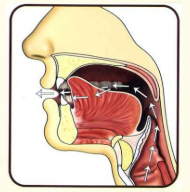
The Arabic Dal (د) is an apico-dental voiced stop. This means you produce it by pressing the tip of your tongue against the back of your upper front teeth — slightly more forward than the English “d” sound.
The English letter “d” is typically produced with the tongue touching the alveolar ridge (the bumpy area just behind your upper teeth). Arabic Dal, by contrast, is dental — the tongue tip touches the teeth themselves, not the ridge behind them.
| Feature | Arabic Dal (د) | English “D” |
| Articulation Point (Makhraj) | Tip of tongue against upper front teeth (dental) | Tongue tip against alveolar ridge |
| Voicing | Voiced | Voiced |
| Manner | Plosive (stop) | Plosive (stop) |
| Emphasis (Tafkheem) | No — light (muraqqaq) | N/A |
| Nasality | None | None |
The result of placing your tongue at the teeth rather than the ridge is a slightly softer, more forward “d” sound. English speakers who use the alveolar English “d” for Arabic Dal will produce a sound that Arabic listeners detect as subtly foreign.
Practice tip: Place a clean finger horizontally just behind your upper front teeth. Touch the tip of your tongue to your finger as you produce the sound. That dental contact is your correct Dal target.
Achieving accurate Dal pronunciation in Quranic recitation matters because imprecise articulation can blur the distinction between Dal and other letters like Dhaal (ذ) or even the emphatic letters. Online Tajweed Classes at Riwaq Al Quran specifically train learners to distinguish these articulation points with structured, supervised practice.
Enroll Now in the Best Online Tajweed Classes

Common Words Containing the Letter Dal in Arabic for Everyday Use
One of the best ways to internalize a letter is to meet it inside real, useful vocabulary. Dal appears in a remarkable range of common Arabic words that adult learners and children encounter early in their studies.
Everyday Nouns with Dal (د)
| Arabic Word | Transliteration | Meaning |
| دَار | Dār | House / Home |
| دَرْس | Dars | Lesson |
| دُكَّان | Dukkān | Shop / Store |
| دَجَاج | Dajāj | Chicken |
| دِيك | Dīk | Rooster |
| دَم | Dam | Blood |
| دُود | Dūd | Worms |
| دُنْيَا | Dunyā | World / Life (this world) |
| دَلِيل | Dalīl | Evidence / Guide |
| دِرَاسَة | Dirāsah | Study / Studies |
These words cover domestic life, school, animals, and abstract concepts — all areas a beginner encounters quickly. Children learning through Online Arabic Classes for Kids at Riwaq Al Quran will meet many of these Dal words in their earliest lessons.
Enroll Your Kid in Riwaq’s Arabic Classes for Kids with a FREE trial

Common Verbs with Dal (د)
| Arabic Word | Transliteration | Meaning |
| دَخَلَ | Dakhala | He entered |
| دَرَسَ | Darasa | He studied |
| دَفَعَ | Dafa’a | He pushed / He paid |
| دَعَا | Da’ā | He called / He prayed (supplication) |
| دَلَّ | Dalla | He pointed / He indicated |
Verbs like dakhala (entered) and darasa (studied) appear in beginner Arabic conversations constantly. Recognizing Dal at the start of these verbs helps learners read faster and process meaning more efficiently.


How to Distinguish the Letter Dal from Similar Arabic Letters?
Several Arabic letters look or sound similar to Dal, causing confusion for new learners. Identifying these differences early prevents persistent errors.
Dal (د) vs. Dhaal (ذ)
Dal (د) and Dhaal (ذ) share the exact same base shape. The only visual difference is that Dhaal carries a dot above the curve, while Dal has no dot. In terms of sound, Dal is a stop (plosive), while Dhaal is a fricative — produced by placing the tongue between the teeth and allowing air to flow, similar to the English “th” in “that.”
| Feature | Dal (د) | Dhaal (ذ) |
| Dot | No dot | One dot above |
| Sound Type | Plosive (stop) | Fricative |
| English Nearest | “d” in “door” | “th” in “that” |
| Voicing | Voiced | Voiced |
This is one of the most commonly confused letter pairs in early Arabic study. The visual cue — simply checking for the dot — is the fastest correction tool for beginner readers.
Dal (د) vs. Raa (ر)
The letter Raa (ر) also shares a similar curved base shape with Dal, particularly when handwritten. Dal’s curve is more cupped and angular, while Raa flows into a longer tail that curves below the baseline. At normal reading speed, these can confuse learners who have not yet built strong visual recognition.
Consistent writing practice, reading real Arabic text daily, and working through structured drills with a qualified teacher all accelerate visual discrimination. The Online Arabic Course at Riwaq Al Quran includes script recognition training specifically designed to address these common confusion points.
Book Your FREE Trial in Riwaq’s Arabic Classes

Step-by-Step Guide to Writing the Letter Dal in Arabic Correctly
Writing Dal correctly requires understanding its basic stroke sequence. Unlike multi-stroke letters, Dal is drawn in essentially one flowing motion.
Step 1: Begin with a small diagonal stroke going slightly upward and to the right from your starting point. This forms the “lip” or peak of the letter.
Step 2: Curve down and to the left, forming the open curved body of the letter. The curve opens toward the right side of the letter.
Step 3: End the stroke along the baseline, allowing a slight tail that extends to the right. This right-extending tail is what receives a connecting stroke from the preceding letter when Dal appears in medial or final position.
The isolated Dal should sit clearly on the baseline with its open cup facing right and its peak at the top left. Avoid making the curve too deep (it begins to look like Waw) or too flat (it loses its distinctiveness from Raa).
Experience Riwaq Al Quran Classes
Watch real moments from our live sessions at Riwaq Al Quran and see how we bring learning to life. These clips highlight our interactive, student-focused approach designed to keep learners engaged, motivated, and actively involved in every step of their educational journey.
Practice Exercises for the Letter Dal in Arabic
Deliberate, varied practice is the fastest route to letter mastery. Work through these exercises in sequence for best results.
Exercise 1: Recognition Practice
Read the following words and identify which ones contain the letter Dal (د). Circle or mark each Dal you find:
دَرَسَ — كَتَبَ — دَار — سَلَام — دُنْيَا — قَلَم — دِيك — كِتَاب — دَجَاج — مَدْرَسَة
Answer key: Words containing Dal are: دَرَسَ، دَار، دُنْيَا، دِيك، دَجَاج، مَدْرَسَة
Note that in مَدْرَسَة (school), Dal appears in medial position, receiving a connection from the Meem before it.
Exercise 2: Writing Practice
Trace and then independently write each of the following Dal words five times each, paying attention to the letter’s position (initial, medial, or final) in each word:
دَار — مَدِينَة — وَلَد — دَرْس
As you write, say each word aloud. Connecting the written form to the spoken sound builds faster recognition during reading.
Exercise 3: Pronunciation Drilling
Practice the following minimal sound contrast. Say each pair clearly, focusing on the dental placement for Dal and the fricative flow for Dhaal:
دَار (Dār — house) / ذَار — not a real word, but use it to feel the contrast.
Ask a native speaker or your Arabic teacher to confirm your Dal sounds clean and distinct from both Dhaal and the English alveolar “d.”
Exercise 4: Fill in the Letter
Complete the following words by inserting Dal in the correct position:
- مَـ_ِينَة (city)
- _َرَسَ (he studied)
- وَلَـ_ (boy)
- _ُكَّان (shop)
This exercise builds both recognition and active recall of Dal’s visual forms across positions.
Read Also: Learn Letter Ḍād ض in Arabic
Why Students Love Learning with Riwaq Al Quran
Hear directly from our students about how Riwaq Al Quran Academy has transformed their connection with the Book of Allah. Their experiences reflect the dedication, care, and quality that guide every step of our teaching.
Learn the Letter Dal in Arabic with Expert Instructors at Riwaq Al Quran
Mastering Dal is one confident step toward reading Arabic fluently and reciting the Quran correctly. At Riwaq Al Quran, certified instructors guide learners of all ages through every Arabic letter with precision and care.
- Al-Azhar-certified Arabic instructors with proven non-native teaching experience
- Online Arabic Course for adults — structured, progressive, practical
- Online Arabic Classes for Kids — engaging, age-appropriate letter learning
- Online Tajweed Classes — precise articulation and Quranic recitation training
- Flexible scheduling to fit any time zone
- Free trial lesson — no commitment required
Book your free trial lesson today at Riwaq Al Quran and start building real Arabic reading skills, Insha’Allah.
Beyond Arabic, we offer courses in Online Tajweed Classes, Arabic Language, and Islamic Studies.
- Online Quran Memorization Course
- Tajweed Classes
- Online Quran Classes for Kids.
- Ijazah Program.
- Arabic Language Classes.
- Islamic Studies Courses.
Enroll now for 2 Free Trial Classes and Begin Learning Arabic or Memorizing Quran Today

Conclusion
The Arabic letter Dal, with its dental articulation and non-connecting script behavior, is among the most rule-consistent letters in the Arabic alphabet. Understanding these properties early prevents the pronunciation and writing errors that slow learners down over time.
Recognizing Dal across its two primary visual forms and distinguishing it cleanly from Dhaal and Raa are the two practical skills that most directly accelerate reading speed. Both skills develop through structured repetition, not passive exposure.
Every Arabic letter you master, including Dal, builds toward the larger goal of reading the Quran as it was revealed — with accurate, dignified pronunciation. Each small step taken consistently, Alhamdulillah, carries its own reward.