
Among Arabic’s 28 letters, few carry as much phonetic weight as the letter ط (Ta). It belongs to a class of emphatic consonants that fundamentally shape the character of Arabic sound — and mastering it correctly separates fluent readers from those who merely recognize letters on a page.
Understanding ط means more than memorizing its shape. It means training your mouth to produce a sound English simply does not have, recognizing all four of its written forms, and confidently reading it in everyday Arabic words and Quranic verses. This guide takes you through every step, with exercises included.
Table of Contents
What Is the Arabic Letter ط Ta?
The letter ط (Ta) is the sixteenth letter of the Arabic alphabet. It is an emphatic, voiceless stop consonant, meaning it belongs to the group of letters that profoundly affect the surrounding vowels, giving them a deeper, more resonant quality.
For parents teaching their children Arabic, and for adult learners starting from scratch, ط is one of the letters you cannot afford to approximate. Mispronouncing it consistently undermines Quranic recitation and general Arabic comprehension.
The letter ط represents a sound unique to Arabic (and a few other Semitic languages). English has no equivalent, which is precisely why deliberate practice matters from the very beginning.
If you are serious about building a solid foundation, exploring Riwaq Al Quran’s Online Arabic Course early in your studies will give you structured, expert-guided instruction on exactly these kinds of phonetically demanding letters.
Book Your FREE Trial in Riwaq’s Arabic Classes

How to Recognize the ط Ta Letter in All Its Written Forms in Arabic?
One of the first challenges learners face is that Arabic letters change shape depending on their position within a word. The letter ط is no exception, though its shape remains relatively recognizable across all positions.
The following table shows all four positional forms of ط with clear descriptions:
| Position | Form | Description |
| Isolated | ط | Full bowl shape with a vertical stroke rising from the right |
| Initial (start of word) | طـ | Bowl shape with stroke, open on the left for connection |
| Medial (middle of word) | ـطـ | Compressed bowl connected on both sides |
| Final (end of word) | ـط | Bowl shape connected on the right, closed on the left |
The distinctive feature of ط in all its forms is the oval or bowl-shaped base with a vertical line (often described as a stroke or mast) rising from within or beside it. Once you recognize that base shape, you will identify ط even in unfamiliar words.
How ط Differs Visually from Similar Arabic Letters?
Learners sometimes confuse ط with letter ظ (Dha), because both share the same bowl-and-stroke base. The only difference is that ظ carries a dot above the stroke. Keeping this distinction sharp is essential for both reading and writing accuracy.
Experience Riwaq Al Quran Classes
Watch real moments from our live sessions at Riwaq Al Quran and see how we bring learning to life. These clips highlight our interactive, student-focused approach designed to keep learners engaged, motivated, and actively involved in every step of their educational journey.
How to Pronounce the Arabic Letter ط Ta Correctly Using Its Makhraj and Sifat?
The pronunciation of ط is one of the most critical skills to develop correctly, and it requires understanding two classical Arabic phonetic sciences: makhraj (articulation point) and sifat (phonetic attributes).
The Makhraj of ط Ta in Arabic Phonetic Science
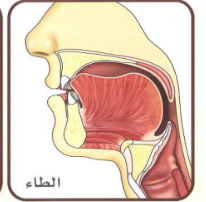
The makhraj of ط is the tip of the tongue pressing firmly against the upper front teeth and the gum ridge just above them (the alveolar-dental region).
This is the same basic contact point used for the letter ت (Ta with three dots), but with one critical difference — ط is an emphatic letter.
The Sifat of ط Ta and What They Mean for Pronunciation
The phonetic attributes of ط according to classical Arabic linguistics are as follows:
| Attribute (Sifat) | Classification | Explanation |
| Emphasis | Emphatic (Isti’la + Itbaq) | Tongue rises toward palate, producing a deep, resonant quality |
| Stop | Plosive (Shadda) | Airflow is completely blocked then released |
| Openness | Closed (Itbaq) | Tongue roof contact seals the oral cavity |
The emphatic quality — called Tafkheem — is what makes ط sound fundamentally different from the English letter “T.”
When you produce ط, the back of your tongue rises toward the soft palate, the vowels surrounding it become deeper, and the entire sound takes on a fuller, darker resonance.
Step-by-Step Pronunciation Guide for ط Ta
To produce ط correctly, follow these steps one at a time and practice each before moving to the next:
Step 1: Open your mouth slightly and raise the back of your tongue toward your soft palate. Hold this raised position — this activates the Tafkheem (emphasis).
Step 2: While maintaining that raised back-tongue position, press the tip of your tongue firmly against your upper front teeth and gum ridge.
Step 3: Build up air pressure behind this seal, then release it in a short, crisp burst. That release is the ط sound.
Step 4: Notice how the vowel immediately after ط sounds deeper and darker than a regular “T” sound. That depth is the sign that your emphasis is correct.


Common Pronunciation Mistakes English Speakers Make with Arabic ط Ta
English speakers consistently make two predictable errors with ط, and knowing them in advance helps you correct them before they become habits.
The most common mistake is substituting the plain English “T” sound for ط. This produces ت (Ta with three dots) instead of ط, which in Arabic creates a completely different letter — and in some words, a completely different meaning.
| Error Type | What the Learner Produces | What They Should Produce |
| Plain English “T” substitution | ت sound (non-emphatic) | ط sound (emphatic, with Tafkheem) |
| Forgetting back-tongue elevation | Flat tongue position | Raised back tongue toward soft palate |
| Releasing too softly | Weak consonant sound | Crisp, firm stop with full release |
The second common error is releasing ط too gently. In Arabic, ط is a strong consonant — the stop and release should be deliberate and confident. Practicing in front of a mirror to observe tongue and jaw position is an effective self-correction technique for adult learners.
For children learning through Riwaq Al Quran’s Online Arabic Classes for Kids, qualified instructors use audio-visual feedback techniques specifically designed to correct these emphatic consonant errors in young learners at the earliest stage.
Enroll Your Kid in Riwaq’s Arabic Classes for Kids with a FREE trial

Common Arabic Words That Contain the Letter ط Ta with Examples
Building vocabulary around ط helps learners internalize its sound through real-word exposure. The following are frequently used Arabic words containing ط across different positions.
Words Where ط Ta Appears at the Beginning
| Arabic Word | Transliteration | Meaning |
| طَالِب | Taalib | Student |
| طَعَام | Ta’aam | Food |
| طَرِيق | Tareeq | Road / Way |
| طَيِّب | Tayyib | Good / Kind |
| طَبِيب | Tabeeb | Doctor |
Words Where ط Ta Appears in the Middle or End
| Arabic Word | Transliteration | Meaning |
| مَطَر | Matar | Rain |
| خَطَأ | Khata’ | Mistake |
| فِطْر | Fitr | Breaking fast (as in Eid Al-Fitr) |
| قِطَّ | Qitt | Cat |
| بَطَل | Batal | Hero |
Reading these words aloud — paying careful attention to the emphatic quality of ط in each — is one of the most effective early practice methods.
Say each word three times: once slowly identifying where ط appears, once at normal speed, and once focusing on maintaining Tafkheem throughout.
How the Arabic Letter ط Ta Appears in the Quran with a Practical Example?
The letter ط holds a particularly significant place in Quranic Arabic. It opens several chapters — including Surah Ta-Ha (Chapter 20), whose name consists entirely of the letters ط and ه as individual letter-names (Huroof Muqatta’at).
In Surah Ta-Ha, Allah addresses Prophet Musa (peace be upon him) with profound tenderness.
Before encountering these verses in recitation, ensure you have trained your mouth on the Tafkheem quality of ط — because mispronouncing an emphatic letter in Quranic recitation is a Tajweed error that affects the quality of your reading.
طه مَا أَنزَلْنَا عَلَيْكَ ٱلْقُرْءَانَ لِتَشْقَىٰٓ
Ta-Ha. Ma anzalna ‘alayka al-Qur’ana litashqa
“Ta, Ha. We have not sent down to you the Qur’an that you be distressed.” (Ta-Ha 20:1–2)
The ط here is a Huroof Muqatta’ah — a disconnected letter recited by its letter-name “Taa.” Its Tafkheem must be maintained even when reciting individual letter-names in Tajweed.
For anyone committed to reciting the Quran with proper articulation, Riwaq Al Quran’s Online Tajweed Classes provide structured instruction in exactly these emphatic letters and their rules in a live, interactive format.
Enroll Now in the Best Online Tajweed Classes

Practice Exercises to Help You Master the Arabic Letter ط Ta
Consistent practice is what moves ط from a recognized letter to a naturally produced sound. Work through these exercises in sequence.
Exercise 1: Shape Recognition Practice for ط Ta
Write the following sequence and identify every occurrence of ط:
ت ـط ظ طـ ـطـ ط ـظ ت ـط
Exercise 2: Reading Practice with Common ط Words
Read each word aloud three times, focusing on the emphatic quality of ط:
طَالِب — مَطَر — طَرِيق — خَطَأ — طَبِيب — فِطْر — طَعَام — بَطَل
As you read, check: Is the vowel after ط sounding deeper and darker than usual? If yes, your Tafkheem is working correctly.
Exercise 3: Minimal Pair Discrimination for ط and ت
These word pairs differ only in whether the letter is ط (emphatic) or ت (non-emphatic). Practice distinguishing them clearly:
| With ط | With ت | Meaning Difference |
| طَلَب (Talab) | تَلَب | Request vs. not a standard word |
| طَار (Taar) | تَارَ | He flew vs. he took revenge |
| طين (Teen) | تَي | Clay vs. figs |
This minimal-pair exercise trains your ear and mouth simultaneously — an essential technique for overcoming the English “T” substitution error.
Exercise 4: Writing Practice for All Four Forms of ط
In a notebook, write each form of ط five times:
Isolated: ط — Initial: طـ — Medial: ـطـ — Final: ـط
Then write these complete words from memory: طَالِب، مَطَر، فِطْر، بَطَل
Read Also: The Letter D in Arabic د
Why Students Love Learning with Riwaq Al Quran
Hear directly from our students about how Riwaq Al Quran Academy has transformed their connection with the Book of Allah. Their experiences reflect the dedication, care, and quality that guide every step of our teaching.
Learn the Arabic Letter ط Ta with Expert Instructors at Riwaq Al Quran
Mastering emphatic Arabic letters like ط requires more than reading guides — it needs live correction from a qualified teacher who can hear your pronunciation in real time.
Riwaq Al Quran has been providing structured online Arabic and Quran education since 2017, with certified instructors trained in classical Arabic phonetics and Tajweed science. Here is what makes learning with us effective:
- Al-Azhar-certified Arabic instructors with deep phonetics expertise
- Personalized one-on-one sessions for adults and children
- Structured Online Arabic Classes for Kids with proven learning outcomes
- Online Tajweed Classes covering emphatic letters in full Quranic context
- Flexible scheduling across global time zones
- Free trial lesson with no commitment required
Book your free trial today and start building correct Arabic pronunciation from the very first lesson, Insha’Allah.
Beyond Arabic, we offer courses in Online Tajweed Classes, Quran Memorization, and Islamic Studies.
- Online Quran Memorization Course
- Tajweed Classes
- Online Quran Classes for Kids.
- Ijazah Program.
- Arabic Language Classes.
- Islamic Studies Courses.
Enroll now for 2 Free Trial Classes and Begin Learning Arabic or Memorizing Quran Today

Conclusion
The letter ط stands apart from most Arabic consonants because its emphasis quality actively shapes the vowels around it — meaning one mispronounced ط affects the entire word’s sound, not just a single consonant.
Recognizing all four positional forms of ط, and understanding the classical makhraj and sifat that govern its production, gives learners a precise, replicable method for achieving accurate pronunciation rather than relying on approximation.
With consistent practice using real vocabulary, minimal-pair exercises, and Quranic examples, both children and adults can build genuine confidence with ط — one of Arabic’s most phonetically powerful letters.