
Every surah in the Quran carries a purpose. Surah Al-Kafirun carries a declaration — six verses that draw a line so clear, so permanent, that the Prophet ﷺ recited it in Fajr and Witr as a matter of consistent practice.
The benefits of Surah Al-Kafirun touch belief, identity, psychological clarity, and protection from confusion in faith. Understanding what this surah actually says — and why it was revealed — unlocks a depth that most students first encounter only when they begin serious Quranic study.
Table of Contents
1. Surah Al-Kafirun Establishes the Foundation of Tawhid
Surah Al-Kafirun’s primary benefit is the purification of monotheistic belief. The surah opens with a direct command:
قُلْ يَا أَيُّهَا الْكَافِرُونَ — “Say: O disbelievers”
— positioning every recitation as a personal declaration of Tawhid. This is not a description of others. It is an active assertion of where you stand before Allah.
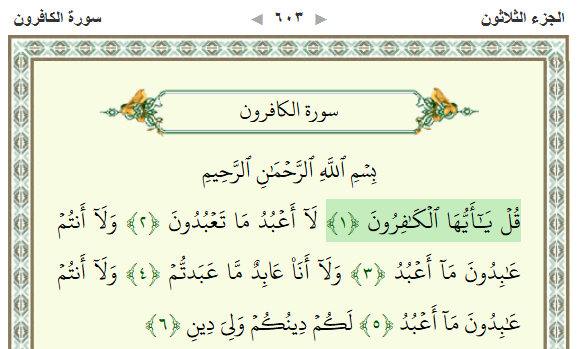
Classical Tafsir scholars, including Ibn Kathir, explain that this surah was revealed when the leaders of Quraysh proposed a compromise: worship our gods for one year, and we will worship yours for one year. The surah came as a definitive, uncompromising response.
لَا أَعْبُدُ مَا تَعْبُدُونَ
La a’budu ma ta’budun
“I do not worship what you worship.” (Al-Kafirun 109:2)
What makes this verse extraordinary in Tajweed and Tafsir study is the use of ma rather than man — “what” instead of “who” — which scholars interpret as a comprehensive rejection of any object of worship other than Allah, whether animate or inanimate.
At Riwaq Al Quran, our Online Quran Tafseer Course dedicates focused sessions to surahs like Al-Kafirun precisely because their brevity conceals profound theological weight that rewards deep study.
Enroll Now in Riwaq’s Tafseer Course with a FREE trial

2. Spiritual Protection from Shirk When Recited Before Sleep
Reciting Surah Al-Kafirun before sleeping is a confirmed Sunnah with a specific protective intention attached to it. The Prophet ﷺ instructed:
“When you go to your bed, recite Qul ya ayyuha al-kafirun to its end, for it is a disavowal (bara’a) from shirk.” (Sunan Abu Dawud 5055)
This is one of the clearest statements connecting a Quranic recitation to a specific spiritual outcome. The word bara’a — disavowal — is the same root used in Surah At-Tawbah. It carries the meaning of complete separation and immunity.
Students who memorize this surah should understand they are not simply completing a short portion of Hifz. They are internalizing a nighttime fortress.
The Quran memorization techniques that Riwaq Al Quran tutors recommend always begin with the short Makkan surahs because their memorization reinforces both recitation fluency and doctrinal clarity simultaneously.
Experience Riwaq Al Quran Classes
Watch real moments from our live sessions at Riwaq Al Quran and see how we bring learning to life. These clips highlight our interactive, student-focused approach designed to keep learners engaged, motivated, and actively involved in every step of their educational journey.
3. Reciting It in Fajr and Witr Follows the Direct Sunnah of the Prophet ﷺ
The Prophet ﷺ regularly recited Surah Al-Kafirun and Surah Al-Ikhlas in the two Sunnah rak’ahs before Fajr and in Witr prayer. This practice is narrated in multiple authentic chains.
The Messenger of Allah ﷺ “used to recite in the two rak’ahs of Fajr: Qul ya ayyuha al-kafirun and Qul huwa Allahu ahad.” (Sahih Muslim 726)
This pairing is significant. Surah Al-Ikhlas affirms who Allah is. Surah Al-Kafirun affirms what you reject.
Together, they form a complete doctrinal statement — positive affirmation and clear negation — which is precisely how Islamic theology defines Tawhid: ithbat (affirmation) and nafi (negation).
| Prayer Context | Surah Recited | Theological Function |
| First rak’ah (Fajr Sunnah / Witr) | Al-Kafirun | Negation — rejection of all false worship |
| Second rak’ah (Fajr Sunnah / Witr) | Al-Ikhlas | Affirmation — declaration of Allah’s oneness |
| Collective intention | Both together | Complete Tawhid declaration |
This pairing is not coincidental. The Prophet ﷺ’s consistent practice reflects the completeness of these two surahs when combined.

4. The Surah Equals One-Quarter of the Quran in Spiritual Weight
What many students do not know is that Surah Al-Kafirun is mentioned in a narration (Grade: Hasan) in classical hadith collections, describing it as equivalent to one-quarter of the Quran.
While the chain of the specific “quarter” narration is graded differently by hadith scholars, what is undisputed is the surah’s theological density.
Six verses carry the complete doctrine of al-bara’ wal-wala’ — loyalty to Allah and disavowal of false worship — which underpins a significant portion of Islamic creed (Aqeedah).
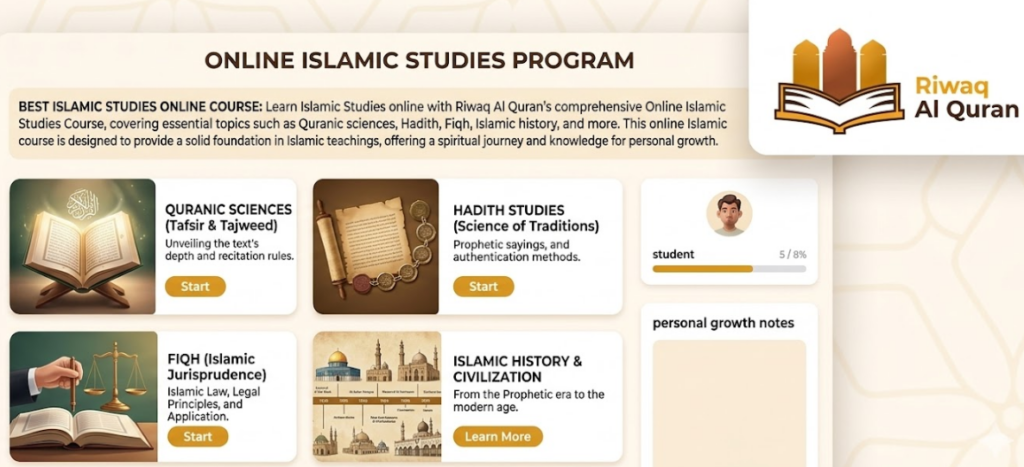
Students pursuing structured Islamic knowledge through the Best Islamic Studies Online Course at Riwaq Al Quran will encounter this surah within the Aqeedah curriculum, not merely the Tajweed one.
Begin your Islamic Studies with a FREE trial lesson
5. Its Recitation in Tawaf Carries a Specific Sunnah Recommended
There is a narration indicating the Prophet ﷺ recited Surah Al-Kafirun and Surah Al-Ikhlas in the two rak’ahs performed after Tawaf. This is recorded in Sahih Muslim and has been acted upon by scholars of Fiqh across the major madhabs.
This practice reinforces the surah’s role as a marker of major worship transitions — entering the day (Fajr Sunnah), ending the night (Witr), and completing the ritual circumambulation of the Ka’bah. Its placement across these contexts is not incidental.
Students enrolled in the Online Quran Memorization Course at Riwaq Al Quran are encouraged to learn the contextual Sunnah attached to each memorized surah — because knowing when and why a surah is recited deepens retention more than repetition alone.
Start your Hifz journey with a Free Trial
The most common error students make in our one-on-one sessions is substituting verse 4 for verse 2 — reciting T’abudun when a’budu is correct. A good Quran memorization schedule isolates these pairs deliberately for comparison drills before consolidating the full surah.
If you’re preparing for a structured memorization test, resources like the Quran memorization test framework at Riwaq Al Quran include short surah verification checkpoints that catch exactly these substitution errors.
Why Students Love Learning with Riwaq Al Quran
Hear directly from our students about how Riwaq Al Quran Academy has transformed their connection with the Book of Allah. Their experiences reflect the dedication, care, and quality that guide every step of our teaching.
Begin Understanding the Quran at This Depth with Riwaq Al Quran
Surah Al-Kafirun is six verses. Its benefits — doctrinal, protective, practical, and spiritual — run far deeper than its length suggests.
Riwaq Al Quran offers:
- Online Quran Tafseer Course — understand every surah the way classical scholars did
- Online Quran Memorization Course — memorize with meaning, guided by Azhari-certified Huffaz
- Best Islamic Studies Online Course — build the Aqeedah foundation that makes Quranic study complete
All tutors hold Al-Azhar University certification. Scheduling is flexible 24/7. Plans start from $32/month, with a 2 free trial classes and a 100% money-back guarantee.
Book your free trial today — Insha’Allah, the surah you’ve recited since childhood will never feel the same again.
We offer courses in Online Quran & Tajweed Classes, Arabic Language, and Islamic Studies.
- Online Quran Memorization Course
- Tafseer Course
- Tajweed Classes
- Online Quran Classes for Kids.
- Ijazah Program.
- Arabic Language Classes.
- Islamic Studies Courses.
Enroll now for 2 Free Trial Classes and Begin Learning Islam and Quran Today
Frequently Asked Questions About Surah Al-Kafirun Benefits
What are the benefits of reciting Surah Al-Kafirun 100 times?
There is no authentic hadith establishing a specific reward for reciting Surah Al-Kafirun exactly 100 times. Content circulating on this topic lacks verified scholarly grounding and should be treated with caution. The established Sunnah is to recite it before sleep, in Fajr Sunnah, and in Witr — these carry confirmed spiritual benefits from authentic narrations. Practicing an unverified number-based recitation ritual risks innovation (bid’ah) in worship, which Islamic scholarship uniformly warns against. The authentic benefits are substantial without fabricated additions.
Is Surah Al-Kafirun a Makkan or Madinan surah?
Surah Al-Kafirun is a Makkan surah — revealed in Makkah before the Hijrah to Madinah. Classical scholars of Quranic sciences (‘Ulum Al-Quran) are unanimous on this classification. Its Makkan context is evident in its direct doctrinal focus, its concise declarative style, and its historical background of responding to the Quraysh compromise proposal. Makkan surahs characteristically address matters of Aqeedah and Tawhid, and Surah Al-Kafirun exemplifies this precisely.
Does reciting Surah Al-Kafirun before sleep have a specific Sunnah basis?
Yes. The Prophet ﷺ explicitly instructed reciting Surah Al-Kafirun before sleep, describing it as a bara’a — disavowal — from shirk. This narration is recorded in Sunan Abu Dawud (hadith 5055) and is graded as authentic by scholars of hadith. The instruction is direct and specific: recite it in full (ila akhiriha — to its end), not partial recitation. This is among the most clearly established bedtime adhkar with a named protective function.
Can children memorize Surah Al-Kafirun easily?
Yes — Surah Al-Kafirun is consistently among the first surahs taught to children in structured Hifz programs. Its six short verses, rhythmic structure, and theological clarity make it well-suited for early memorization. At Riwaq Al Quran, our Online Quran Classes for Kids introduce Al-Kafirun after the foundational Juz’ Amma surahs, pairing it with its meaning so children understand what they are declaring — not merely reciting sounds.