Discipline in the Quran isn’t a single instruction — it runs through steadfastness in faith, consistency in worship, fairness in dealings, and control over anger, speech, and desire. Understanding what the Quran actually says about discipline means seeing how these threads connect, rather than reading them as separate rules.
This guide organizes the Quran’s teachings on discipline by theme — faith, worship, justice, and self-restraint — with the Arabic text, English meaning, and exact Surah reference for each verse.
What You’ll Learn in This Article
- What the Quran says about staying steadfast in faith once you’ve believed.
- How worship itself — prayer and fasting — functions as a discipline-building practice.
- The Quran’s standard for discipline in justice, trust, and fair judgment.
- Specific verses on controlling anger, speech, and desire.
- Where discipline connects to relying on Allah within your actual capacity.
Table of Contents
Staying Steadfast After Belief as the True Meaning of Discipline in Faith
The Quran ties discipline directly to steadfastness — not just declaring belief, but holding to it consistently under pressure. Two verses in particular define this connection clearly.
1. Steadfastness Brings Divine Reassurance
Allah describes the reward for consistency in faith directly:
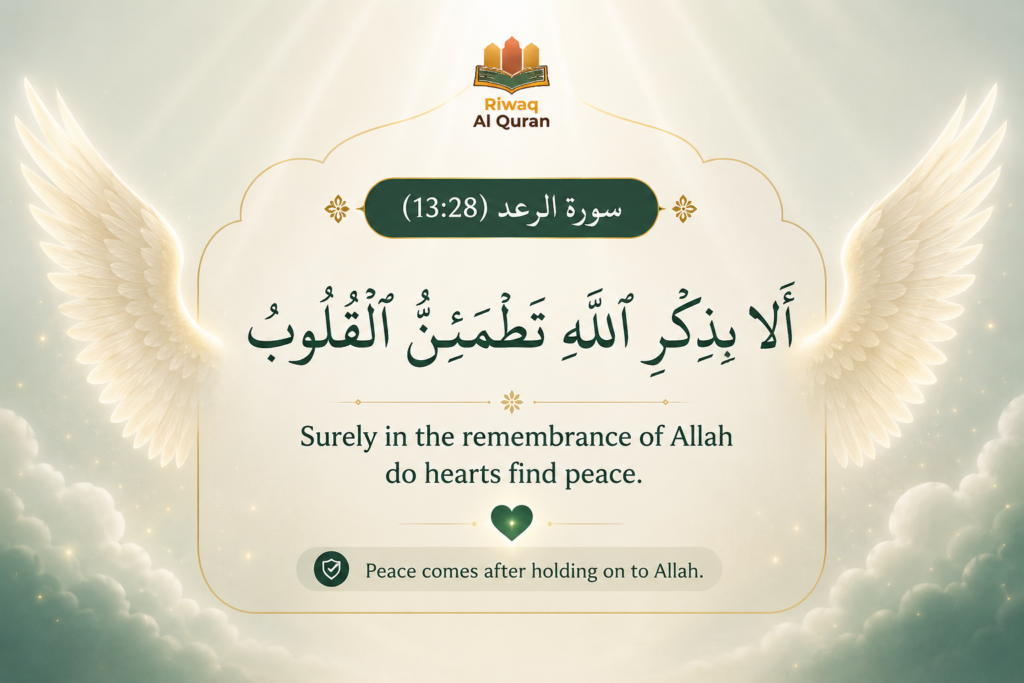
(إِنَّ ٱلَّذِينَ قَالُوا۟ رَبُّنَا ٱللَّهُ ثُمَّ ٱسْتَقَـٰمُوا۟ تَتَنَزَّلُ عَلَيْهِمُ ٱلْمَلَـٰٓئِكَةُ أَلَّا تَخَافُوا۟ وَلَا تَحْزَنُوا۟ وَأَبْشِرُوا۟ بِٱلْجَنَّةِ ٱلَّتِى كُنتُمْ تُوعَدُونَ)
“Those who say, ‘Our Lord is Allah,’ and then remain steadfast, the angels descend upon them: ‘Do not fear, nor grieve. Rejoice in the good news of Paradise.'” (Surah Fussilat, 41:30)
The discipline described here isn’t a one-time declaration; it’s the sustained follow-through afterward. The Prophet ﷺ condensed this same idea into a single piece of advice when a companion asked him for one instruction that would cover all of Islam:
(قُلْ آمَنْتُ بِاللَّهِ ثُمَّ اسْتَقِمْ)
“Say: ‘I believe in Allah,’ and then be steadfast.” (Sahih Muslim 38)
The brevity of this hadith is itself the point — the companion asked for something he wouldn’t need to ask anyone else about afterward, and the Prophet ﷺ gave him exactly two conditions: belief, then consistency.
Nothing else was added, which is why scholars often cite this hadith as one of the most comprehensive short statements in the entire Sunnah.
2. Restraining the Self From Desire
The Quran also links discipline directly to self-restraint against desire:
(وَأَمَّا مَنْ خَافَ مَقَامَ رَبِّهِۦ وَنَهَى ٱلنَّفْسَ عَنِ ٱلْهَوَىٰ فَإِنَّ ٱلْجَنَّةَ هِىَ ٱلْمَأْوَىٰ)
“As for those who were in awe of standing before their Lord and restrained themselves from evil desires, Paradise will certainly be their home.” (Surah An-Naziat, 79:40–41)
This kind of restraint sits close to what the Quran describes elsewhere as good character — see our guide to 25 Quranic Verses on Good Character for the broader picture of how these traits connect.
Discipline in Worship Through Prayer and Fasting
Worship in the Quran isn’t described as an emotional practice alone — it’s structured, timed, and consistent, which is itself a form of discipline. The two clearest examples of this are prayer’s fixed timing and fasting’s built-in restraint.
1. Prayer at Its Appointed Times
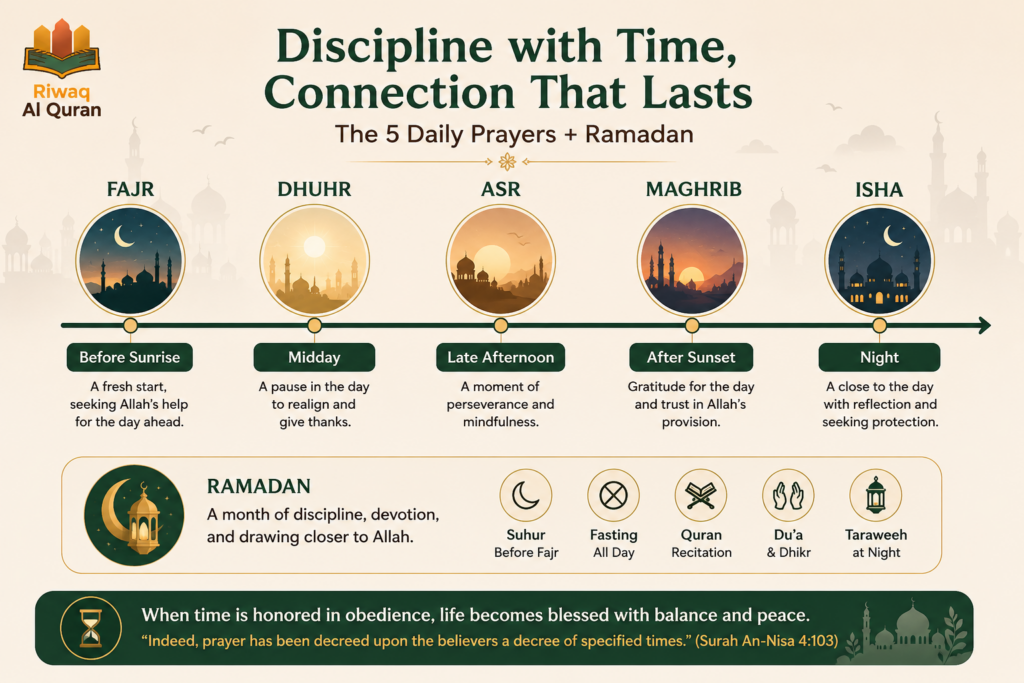
The Quran instructs remembrance of Allah in every state, then ties formal prayer to fixed timing:
(فَإِذَا قَضَيْتُمُ ٱلصَّلَوٰةَ فَٱذْكُرُوا۟ ٱللَّهَ قِيَـٰمًۭا وَقُعُودًۭا وَعَلَىٰ جُنُوبِكُمْ ۚ فَإِذَا ٱطْمَأْنَنتُمْ فَأَقِيمُوا۟ ٱلصَّلَوٰةَ ۚ إِنَّ ٱلصَّلَوٰةَ كَانَتْ عَلَى ٱلْمُؤْمِنِينَ كِتَـٰبًۭا مَّوْقُوتًۭا)
“When the prayers are over, remember Allah standing, sitting, or lying down. But when secure, establish regular prayers. Indeed, prayer is a duty on the believers at appointed times.” (Surah An-Nisa, 4:103)
The phrase “at appointed times” makes prayer a scheduling discipline, not just a devotional one.
2. Fasting as a Direct Training in Restraint
Fasting is presented explicitly as a discipline-building tool:
(يَـٰٓأَيُّهَا ٱلَّذِينَ ءَامَنُوا۟ كُتِبَ عَلَيْكُمُ ٱلصِّيَامُ كَمَا كُتِبَ عَلَى ٱلَّذِينَ مِن قَبْلِكُمْ لَعَلَّكُمْ تَتَّقُونَ)
“O believers, fasting is decreed for you as it was decreed for those before you, so that you may become righteous.” (Surah Al-Baqarah, 2:183)
The stated purpose is taqwa — God-consciousness built specifically through the discipline of restraint. If you want to build this same consistency into your recitation habit rather than just your fasting habit, our Online Quran Memorization Course is built around exactly this kind of structured, repeated practice.
And if you want to understand how these verses connect to daily life rather than reading them in isolation, Riwaq Al Quran‘s Online Tafseer Course walks through exactly this kind of thematic study with a qualified instructor.
Taqwa isn’t restraint for its own sake — it connects to a bigger question this short reflects on directly:
Discipline in Justice and Trust
A significant portion of the Quran’s teaching on discipline applies to fairness, honesty, and how a person handles responsibility toward others. Three verses set this standard directly.
1. Honoring Trusts and Judging Fairly
This section answers what the Quran demands specifically when someone else’s property, responsibility, or case is placed in your hands. Allah states the standard directly:
(إِنَّ ٱللَّهَ يَأْمُرُكُمْ أَن تُؤَدُّوا۟ ٱلْأَمَـٰنَـٰتِ إِلَىٰٓ أَهْلِهَا وَإِذَا حَكَمْتُم بَيْنَ ٱلنَّاسِ أَن تَحْكُمُوا۟ بِٱلْعَدْلِ)
“Allah commands you to return trusts to their rightful owners, and when you judge between people, judge with fairness.” (Surah An-Nisa, 4:58)
Discipline here means following through on responsibility even when no one is checking. The verse pairs two distinct obligations in one breath — returning what belongs to others, and judging fairly between people — which commentators read as covering both private trust (a debt, a deposit, a secret) and public trust (a ruling, a judgment, a decision affecting others).
Discipline here means following through on responsibility even when no one is checking — a standard closely tied to how the Quran talks about helping others more broadly.
2. Standing Firm as a Witness, Even Against Yourself
This section addresses the hardest version of justice the Quran asks for: standing by the truth even when it costs you personally. Allah instructs believers directly:
(يَـٰٓأَيُّهَا ٱلَّذِينَ ءَامَنُوا۟ كُونُوا۟ قَوَّٰمِينَ بِٱلْقِسْطِ شُهَدَآءَ لِلَّهِ وَلَوْ عَلَىٰٓ أَنفُسِكُمْ أَوِ ٱلْوَٰلِدَيْنِ وَٱلْأَقْرَبِينَ)
“O believers, stand firm for justice as witnesses for Allah, even if against yourselves, your parents, or close relatives.” (Surah An-Nisa, 4:135)
This is one of the Quran’s clearest calls for discipline over personal bias. The verse names three specific categories a person is most likely to protect instinctively — themselves, their parents, and their close relatives — and instructs that testimony be given honestly regardless of which of the three is implicated.
This isn’t a general call to honesty in the abstract; it’s a direct instruction to override the exact loyalties that make honesty hardest.
This is one of the Quran’s clearest calls for discipline over personal bias, and it’s worth reading alongside our piece on Quranic verses about parents, since the verse names parents specifically as a test of that discipline.
3. Commanding Justice and Forbidding Wrongdoing
This section pulls back to the broader ethical principle these first two verses sit inside. Allah states:
(إِنَّ ٱللَّهَ يَأْمُرُ بِٱلْعَدْلِ وَٱلْإِحْسَـٰنِ وَإِيتَآئِ ذِى ٱلْقُرْبَىٰ وَيَنْهَىٰ عَنِ ٱلْفَحْشَآءِ وَٱلْمُنكَرِ وَٱلْبَغْىِ)
“Allah commands justice, grace, and generosity to relatives. He forbids indecency, wickedness, and aggression.” (Surah An-Nahl, 16:90)
This verse is often cited as a single-sentence summary of the Quran’s entire ethical framework, and it’s worth noticing the structure: three things commanded (justice, grace, generosity to relatives) set directly against three things forbidden (indecency, wickedness, aggression).
The discipline this verse describes isn’t only about avoiding wrongdoing — it pairs that restraint with an equally active obligation to actively do good, particularly toward family, which is why classical commentators frequently treated this single verse as sufficient grounds on its own for a sermon on Islamic ethics as a whole.
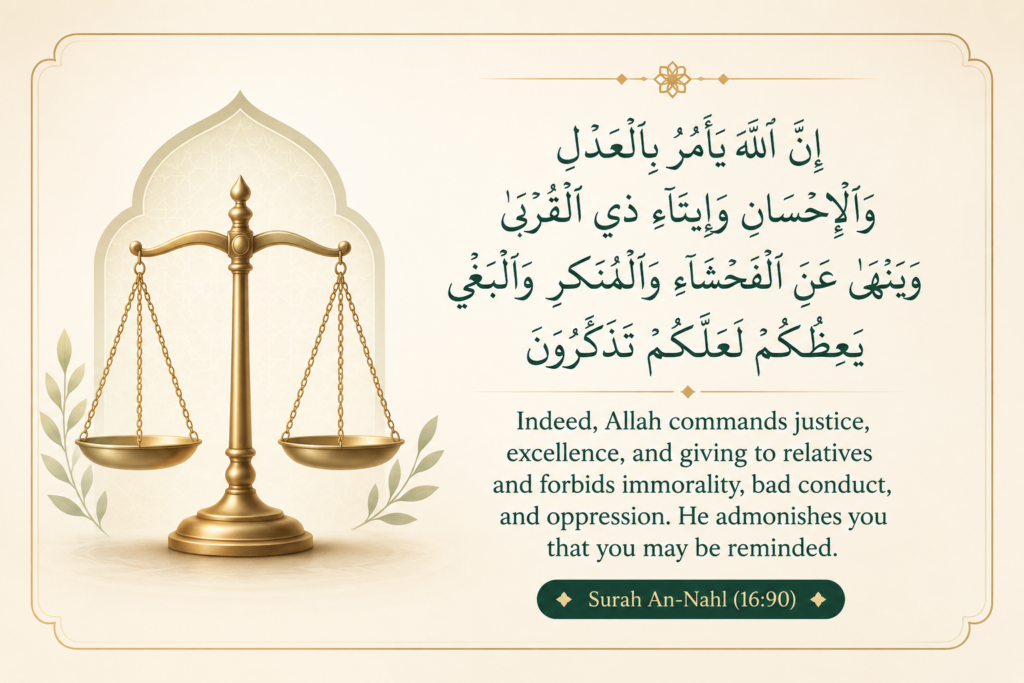
This verse is often cited as a single-sentence summary of the Quran’s entire ethical framework, and it also touches on family duty covered in our guide to the rights of children in the Quran and Islam.
Discipline in Speech, Anger, and Self-Restraint
Beyond worship and justice, the Quran addresses discipline at the level of everyday behavior — how a person speaks, reacts, and treats others. Four verses cover this ground directly.
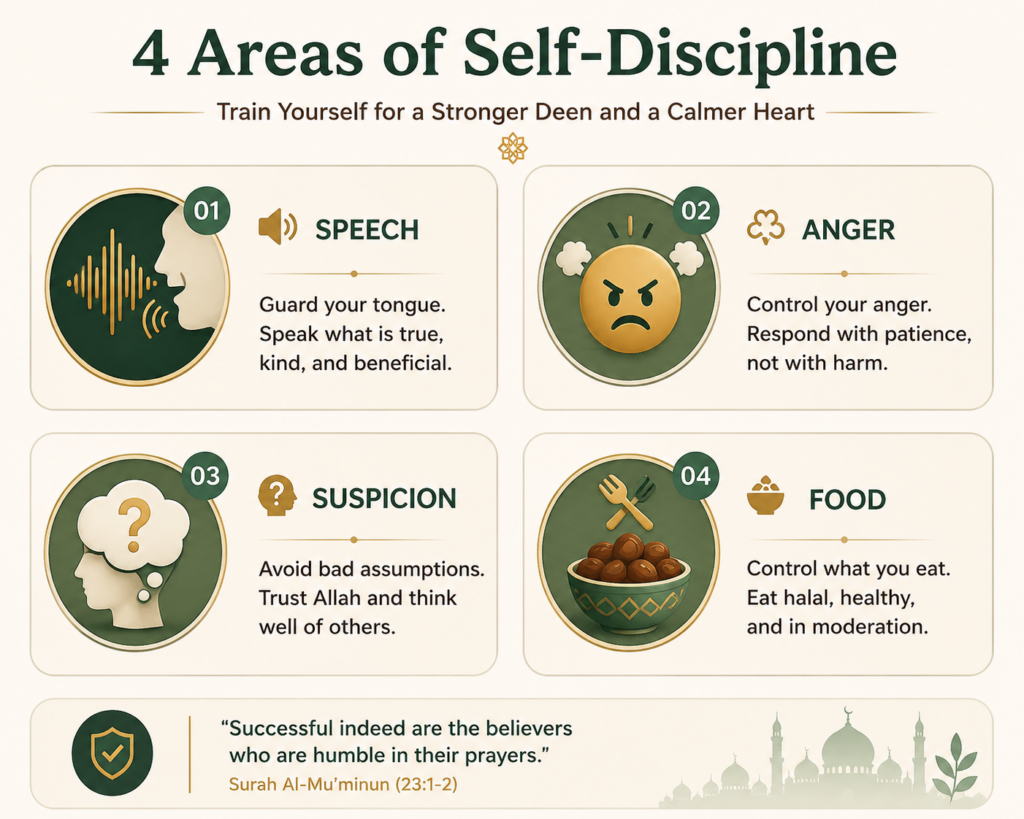
a. Moderation in Voice and Pace
Discipline in the Quran isn’t limited to major acts of worship — it extends down to something as ordinary as how a person walks and talks. Luqman’s advice to his son addresses exactly this, treating tone and pace as something worth training, not something that just happens naturally:
(وَٱقْصِدْ فِى مَشْيِكَ وَٱغْضُضْ مِن صَوْتِكَ ۚ إِنَّ أَنكَرَ ٱلْأَصْوَٰتِ لَصَوْتُ ٱلْحَمِيرِ)
“Be moderate in your pace, and lower your voice, for the ugliest of voices is the braying of donkeys.” (Surah Luqman, 31:19)
The comparison to a donkey’s bray is deliberately blunt — commentators note that Luqman is not warning his son against literal loudness alone, but against a manner of speaking that draws attention to itself through volume rather than substance.
Pairing “moderate pace” with “lower your voice” in the same instruction also signals that this is one discipline, not two separate pieces of advice — how a person carries their body and how they use their voice are treated as connected habits, both worth deliberate control.
b. Controlling Anger
Anger is one of the few emotional states the Quran and Hadith address as something to be actively managed rather than simply endured. Allah describes this management as a defining trait of believers:
(وَٱلَّذِينَ يَجْتَنِبُونَ كَبَـٰٓئِرَ ٱلْإِثْمِ وَٱلْفَوَٰحِشَ وَإِذَا مَا غَضِبُوا۟ هُمْ يَغْفِرُونَ)
“Those who avoid major sins and immoralities, and forgive when angry.” (Surah Ash-Shura, 42:37)
Forgiveness in a moment of anger is framed here as a discipline requiring active restraint, not passive tolerance — the verse doesn’t say believers don’t get angry, it says they forgive precisely when they are angry, which is the harder standard.
The Prophet ﷺ made the same point even more directly when a companion asked him for advice, repeating the same short answer three times rather than adding anything further:
(لَا تَغْضَبْ)
“Do not become angry.” (narrated in Sahih al-Bukhari, Book of Good Manners)
The repetition itself is the lesson: when the man kept pressing for more guidance, the Prophet ﷺ gave him nothing beyond this single instruction, each time.
Scholars read this as a deliberate signal that managing anger isn’t one virtue among many — it’s foundational enough that mastering it resolves a large share of the other discipline problems a person might otherwise ask about separately.
c. Avoiding Suspicion and Backbiting
Not every form of discipline the Quran addresses is about controlling your own impulses — some of it governs how you’re expected to treat other people’s reputations. Allah addresses this directly:
(يَـٰٓأَيُّهَا ٱلَّذِينَ ءَامَنُوا۟ ٱجْتَنِبُوا۟ كَثِيرًۭا مِّنَ ٱلظَّنِّ إِنَّ بَعْضَ ٱلظَّنِّ إِثْمٌۭ ۖ وَلَا تَجَسَّسُوا۟ وَلَا يَغْتَب بَّعْضُكُم بَعْضًا)
“O believers, avoid many suspicions, for some suspicion is sin. Do not spy, nor backbite one another.” (Surah Al-Hujurat, 49:12)
This discipline is social rather than personal — it addresses how a believer is expected to treat others’ reputations, not just their own conduct. Notice the verse names three distinct behaviors in sequence — suspicion, spying, and backbiting — rather than treating them as one general vice.
Scholars read this as intentional: suspicion left unchecked tends to escalate into spying to confirm it, which then escalates into backbiting to share it, meaning the verse is addressing a chain of behavior at its earliest, most easily interrupted point.
This discipline is social rather than personal, and it’s directly relevant to questions like can men and women be friends in Islam, where boundaries around suspicion and gossip come up often.
d. Moderation in Eating, Drinking, and Consumption
The Quran’s standard for discipline extends even to appetite, and it explicitly rejects the idea that religious devotion requires deprivation. Allah instructs:
(يَـٰبَنِىٓ ءَادَمَ خُذُوا۟ زِينَتَكُمْ عِندَ كُلِّ مَسْجِدٍۢ وَكُلُوا۟ وَٱشْرَبُوا۟ وَلَا تُسْرِفُوٓا۟ ۚ إِنَّهُۥ لَا يُحِبُّ ٱلْمُسْرِفِينَ)
“O children of Adam, dress properly at every place of worship, eat and drink, but do not waste. He does not like the wasteful.” (Surah Al-A’raf, 7:31)
Moderation, not deprivation, is the standard set here. The verse is worth noting for what it doesn’t say — it never instructs believers to eat and drink minimally or to treat food as something to be restricted out of piety; the actual boundary named is israf, excess or waste, not consumption itself.
This is a meaningful distinction: the discipline being asked for is proportion, not abstinence, which is consistent with how the Quran treats moderation across the other examples in this section — pace, voice, suspicion, and anger are all managed, not eliminated.
Discipline and Relying on Allah Within Your Limits
The Quran balances its call for discipline with an explicit acknowledgment that no one is asked to exceed their actual capacity. Allah states:
(لَا يُكَلِّفُ ٱللَّهُ نَفْسًا إِلَّا وُسْعَهَا)
“Allah does not burden a soul beyond what it can bear.” (Surah Al-Baqarah, 2:286, partial)
This matters as a corrective: Quranic discipline is not about limitless self-punishment, but sustainable, realistic self-control matched to one’s actual ability. The Prophet ﷺ reinforced this same principle when Aisha asked him which deeds Allah loves most:
(سَدِّدُوا وَقَارِبُوا، وَاعْلَمُوا أَنْ لَنْ يُدْخِلَ أَحَدَكُمْ عَمَلُهُ الْجَنَّةَ، وَأَنَّ أَحَبَّ الْأَعْمَالِ أَدْوَمُهَا إِلَى اللَّهِ وَإِنْ قَلَّ)
“Do good deeds properly, sincerely, and moderately, and know that the most beloved deed to Allah is the one done most consistently, even if it is small.” (Sahih al-Bukhari 6464)
This hadith is worth pairing directly with the verse above: discipline that respects your actual capacity, sustained consistently, is explicitly described as more beloved to Allah than an intense but unsustainable effort.
This same principle of realistic effort applies directly to seeking knowledge — the Quran encourages consistent learning, not overwhelming yourself all at once.
Understanding where a verse like this sits within its full Surah — and how scholars have explained its legal and spiritual weight — is exactly the kind of study Riwaq Al Quran‘s online Tafseer classes are built around, with a native-speaking instructor guiding the discussion.
Sustained discipline within real limits looks like something specific in practice — Khadijah’s (RA) life is one of the clearest examples of it:
Build Consistency in Your Own Quran Study With Riwaq Al Quran
Reading these verses is one step — building the same discipline the Quran describes into your own recitation and study habit is another. Riwaq Al Quran is a comprehensive online platform that offers personalized Quran, Arabic, and Islamic Studies classes for individuals of all ages and backgrounds.

Their experienced instructors use a structured curriculum to cover Tajweed, Tafsir, and Memorization, giving you an easy and effective way to learn the Quran, with seamless communication between students and teachers.
We offer several courses such as:
- Online courses for kids
- Online Quran classes for kids and adults
- Online Arabic courses
- Online Ijazah courses
- Online Islamic Studies courses


Here’s a sample of our Quran Courses that can help you build this same discipline into a habit:
- Online Tafseer Course: dig into Quranic meanings with our insightful online Tafseer course.
- Noorani Qaida Online: learn Quranic basics efficiently through our Noorani Qaida online program.
- Online Quran Recitation Course: enhance your recitation skills with our expert-led online course.
- Online Tajweed Classes: master Tajweed rules for beautiful Quranic recitation.
- Quran Memorization Online Course: memorize the Quran effectively with our specialized program.
- Online Qirat Course: explore diverse Qirat styles with our comprehensive course.
- Online Quran Classes for Kids: nurture a love for the Quran in kids through interactive classes.

Conclusion
Discipline in the Quran isn’t confined to one verse or one practice. It shows up across several connected threads:
- Steadfastness after belief, and restraint from desire.
- The fixed timing of prayer and the restraint built into fasting.
- Fair judgment and honoring trust, even against one’s own interest.
- Control over anger, speech, suspicion, and consumption.
What ties these Quran verses about discipline together is a consistent standard: sustained, realistic self-control, matched to what a person can actually bear, rather than one dramatic act of willpower.
FAQs
The verses above cover most of what the Quran says about discipline directly, but a few related questions come up often and are worth answering on their own.
What does the Quran say about self-discipline?
The Quran ties self-discipline to steadfastness in faith and restraint from desire, most directly in Surah An-Naziat (79:40–41), which promises Paradise to those who feared standing before their Lord and restrained themselves from evil desires.
Which Quran verse talks about controlling anger?
Surah Ash-Shura (42:37) describes believers as those who avoid major sins and, when angry, choose to forgive — framing anger management as an active discipline rather than simple patience.
Does the Quran connect fasting to discipline?
Yes, Surah Al-Baqarah (2:183) states that fasting was decreed specifically so that believers “may become righteous,” directly linking the discipline of restraint during fasting to spiritual growth.
What does the Quran say about moderation?
The Quran calls for moderation across multiple areas of life, including eating and drinking without waste (Surah Al-A’raf, 7:31) and moderation in voice and pace (Surah Luqman, 31:19), treating excess itself as a lack of discipline.
Is discipline in the Quran only about worship?
No, the Quran extends the concept of discipline well beyond worship to justice, honoring trusts, avoiding suspicion and backbiting, and controlling anger, treating discipline as a standard for both personal conduct and social behavior.