Surah Al-Insan starts with a direct question about human existence that stops the reader cold. Before outlining any ruling or legal matter, Allah asks man to reflect on where he came from, and what he was before guidance reached him. That is the spirit this Surah breathes from its first ayah to its last.
The benefits of Surah Al-Insan span the spiritual, psychological, and moral dimensions of a believer’s life. Its verses sharpen gratitude, deepen God-consciousness, and paint the most detailed pictures of Jannah found in the Makkan and Madinan revelation alike — giving every reciter a living reason to stay firm on the path.
Table of Contents
1. Surah Al-Insan Reminds Every Human of Their Origin Before Allah’s Guidance
Surah Al-Insan opens with one of the most penetrating rhetorical questions in the Quran. Allah says:
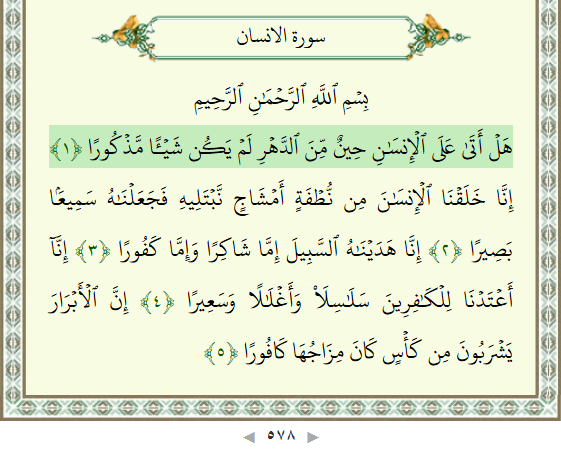
هَلْ أَتَىٰ عَلَى ٱلْإِنسَـٰنِ حِينٌ مِّنَ ٱلدَّهْرِ لَمْ يَكُن شَيْـًٔا مَّذْكُورًا
Hal atā ‘alal-insāni ḥīnum minad-dahri lam yakun shay’am madhkūrā
“Has there [not] come upon man a period of time when he was not a thing [even] mentioned?” (Al-Insan 76:1)
This verse does something no self-help argument can replicate: it dissolves pride at its root. The believer who truly sits with this ayah understands that before Allah’s will brought him into existence, he was less than a footnote.
This awareness is not meant to diminish — it is meant to liberate. When you understand your origin, gratitude becomes the only rational response.
In our sessions at Riwaq Al Quran, students who study this Surah through our Online Quran Tafseer Course often report that verse one alone shifts how they approach their daily prayers. Understanding what the verse actually means — through verified Tafsir, not guesswork — makes recitation an act of genuine reflection rather than mechanical repetition.
Enroll Now in Riwaq’s Tafseer Course with a FREE trial

2. Affirming Divine Mercy And Human Accountability
A core benefit of reciting and studying Surah Al-Insan is its clarification that hidayah — guidance — flows entirely from Allah. Verse 3 states this with remarkable balance:
إِنَّا هَدَيْنَـٰهُ ٱلسَّبِيلَ إِمَّا شَاكِرًا وَإِمَّا كَفُورًا
Innā hadaynāhus-sabīla immā shākiran wa-immā kafūrā
“Indeed, We guided him to the way, be he grateful or ungrateful.” (Al-Insan 76:3)
Allah guided humanity to the right path and then left the choice to each person. This verse simultaneously affirms divine mercy and human accountability — a balance that classical scholars of Tafsir identify as central to the Surah’s theological contribution.
The gratitude-ingratitude polarity set up here runs as a thread through the entire chapter.
Understanding this theological depth is one reason connecting with a qualified teacher matters so much.
Our Best Islamic Studies Online Course walks students through exactly this kind of Aqeedah-level understanding, taught by Al-Azhar-certified scholars who know how to make these distinctions accessible to non-Arabic speakers.
Begin your Islamic Studies with a FREE trial lesson
3. Providing Daily Motivation To Maintain Prayer, Fasting, And Righteous Conduct
No other short Surah in the Quran describes Paradise’s rewards as vividly or as specifically as Surah Al-Insan. Verses 5 through 22 form a sustained, luminous portrait of what awaits the Abrar — the righteous. Allah mentions a drink mixed with camphor from a spring (verse 5–6), silk garments, thrones, and a shade with clustered fruits within easy reach.
| Reward Mentioned | Verse Reference | Significance |
| Drinking from a cup mixed with Kafur (camphor) | 76:5 | A drink of purity reserved for the righteous |
| A spring the servants of Allah drink from freely | 76:6 | Closeness to Allah expressed through abundance |
| Silver bracelets and green silk garments | 76:21 | Complete adornment of the believer in Jannah |
| Reclining on thrones with no sun’s heat or cold | 76:13 | Perfect comfort with no hardship of any kind |
| Fruits hanging close, vessels of silver passed around | 76:14–16 | Ease and generosity of the heavenly provision |
These descriptions are not decorative — they serve a precise spiritual function. They make the promise of Jannah tangible for the believer, providing daily motivation to maintain prayer, fasting, and righteous conduct.
Reciting these verses during night prayers has historically been a practice of the devout, drawing real emotional and motivational energy from the imagery.
Experience Riwaq Al Quran Classes
Watch real moments from our live sessions at Riwaq Al Quran and see how we bring learning to life. These clips highlight our interactive, student-focused approach designed to keep learners engaged, motivated, and actively involved in every step of their educational journey.
4. Cultivation of Ikhlas (Sincerity) in All Worship
One of the most celebrated passages in Surah Al-Insan — and one of its most instructive for daily Muslim life — is the description of how the Abrar give charity. Allah says in verse 8–9:
وَيُطْعِمُونَ ٱلطَّعَامَ عَلَىٰ حُبِّهِۦ مِسْكِينًا وَيَتِيمًا وَأَسِيرًا إِنَّمَا نُطْعِمُكُمْ لِوَجْهِ ٱللَّهِ لَا نُرِيدُ مِنكُمْ جَزَآءً وَلَا شُكُورًا
Wa yuṭ’imūnat-ta’āma ‘alā ḥubbihī miskīnaw-wa yatīmaw-wa asīrā. Innamā nuṭ’imukum li-wajhillāhi lā nurīdu minkum jazā’aw-wa lā shukūrā
“And they give food in spite of love for it to the needy, the orphan, and the captive, [Saying], ‘We feed you only for the countenance of Allah. We wish not from you reward or gratitude.” (Al-Insan 76:8–9)
This is perhaps the most profound ethical teaching in the chapter. Classical Tafsir scholars, including Ibn Kathir in his Tafsir al-Quran al-Adhim, understood these verses as describing the highest level of sincerity in giving: feeding others at personal cost, with zero expectation of acknowledgment.
The three categories mentioned — the poor, the orphan, and the captive — represent the most vulnerable members of any society.
The spiritual benefit of internalizing this passage is the cultivation of ikhlas (sincerity) in all worship — not just charity. If you give food for Allah’s face alone, you can learn to pray for His face alone, memorize for His face alone, and live for His face alone.
5. Regular Recitation of Surah Al-Insan Connects the Believer to the Prophetic Practice
The Sunnah provides direct guidance on the recitation of Surah Al-Insan in specific contexts. It is reported that the Prophet ﷺ would recite Surah As-Sajdah (Chapter 32) and Surah Al-Insan in the Fajr prayer on Fridays. (Sahih Muslim 880a)
This Prophetic practice points to a real benefit: the recitation of this Surah in Fajr on Fridays was deliberately chosen by the Prophet ﷺ, which scholars understand as indicating its thematic appropriateness for beginning the blessed day of Jumu’ah.
Starting Friday with a reminder of human origins, Allah’s guidance, and the rewards of the righteous sets a spiritual tone for the entire day.
If you want to properly recite this Surah with the accuracy its status deserves, learning correct Tajweed is not optional. Our Best Online Tajweed Course pairs you with an Ijazah-certified tutor who will ensure your Fajr recitation reflects the standard the Prophet ﷺ himself embodied.
Enroll Now in the Best Online Tajweed Classes
6. Strengthening Patience and Steadfastness
The final section of Surah Al-Insan, from verses 23 onward, addresses the Prophet ﷺ directly — and through him, every believer — with a call to patience and consistent worship. Allah says:
فَٱصْبِرْ لِحُكْمِ رَبِّكَ وَلَا تُطِعْ مِنْهُمْ ءَاثِمًا أَوْ كَفُورًا
Faṣbir liḥukmi rabbika wa lā tuṭi’ minhum āthiman aw kafūrā
“So be patient for the decision of your Lord and do not obey from among them a sinner or ungrateful [disbeliever].” (Al-Insan 76:24)
The Surah then prescribes specific acts of worship: remembering Allah’s name morning and evening, prostrating to Him by night, and glorifying Him through the long night.
These are not vague instructions — they map directly onto the five daily prayers and the voluntary night prayer (Tahajjud).
The believer who recites this Surah regularly and understands its closing section gains a structured spiritual framework: patience in hardship is not passive resignation — it is active worship maintained consistently in prayer. This understanding transforms how a Muslim faces difficulty.
7. Surah Dahr Benefits Include a Reminder That All Power Belongs to Allah Alone
Surah Al-Insan is also known as Surah Ad-Dahr (the Surah of Time), and this name itself carries a lesson. The Surah reminds the believer through its 31 verses that human existence unfolds entirely within Allah’s will — neither time nor circumstance operates independently of His command.
| Name of the Surah | Source of the Name | Key Thematic Link |
| Surah Al-Insan (The Human) | Verse 1 — “upon man” | Reflection on human origin and accountability |
| Surah Ad-Dahr (Time/Era) | Verse 1 — “a period of time” | Existence within Allah’s eternal decree |
| Surah Al-Abrar (The Righteous) | Verses 5–22 — description of the Abrar | The reward for consistent righteousness |
Understanding that both names are used in Islamic scholarship is itself a lesson in how layered the Quran’s communication is. The Surah speaks to the human condition, to the passage of time, and to the character of the righteous — all at once.
Exploring this depth requires proper Tafsir study. The Tafsir meaning and methodology behind Surah Ad-Dahr is something our qualified tutors cover systematically in our dedicated Tafseer course.
Read Also: Surah Naas Benefits
The Claim That Surah Ad-Dahr Has Specific Benefits for Marriage
Among the questions students frequently ask is whether Surah Dahr has specific benefits for marriage. It is important to address this with scholarly honesty. There is no authentic hadith that specifically designates recitation of Surah Ad-Dahr as a means for facilitating marriage.
Scholars of Islamic jurisprudence and Hadith science are clear that attributing specific worldly benefits to a particular Surah requires authentic prophetic evidence. Without it, making such a claim constitutes an unverified addition to religious practice.
What is authentically established is this: regular recitation of the Quran in general, maintaining righteous character as described in Surah Al-Insan’s verses 8–9, and relying on Allah through du’a and good deeds are the means a Muslim uses for all lawful needs — including seeking a righteous spouse.
If someone recites this Surah as part of their general Quranic practice, with the sincere intention of drawing closer to Allah, the spiritual benefit is real. But targeting it exclusively for marriage based on unverified narrations is not a practice supported by authenticated scholarship.
Read Also: Surah Al-Fil Benefits
Why Students Love Learning with Riwaq Al Quran
Hear directly from our students about how Riwaq Al Quran Academy has transformed their connection with the Book of Allah. Their experiences reflect the dedication, care, and quality that guide every step of our teaching.
Begin Your Quran Study With the Depth Surah Al-Insan Deserves
Surah Al-Insan is not a chapter to rush through. Its 31 verses contain theological depth, ethical instruction, vivid descriptions of Jannah, and a practical roadmap for patient worship — all delivered in some of the most beautiful Arabic in the entire Quran.
At Riwaq Al Quran, our Azhari-certified tutors teach this Surah and the entire Quran through three dedicated tracks:
- Online Quran Memorization Course — Hifz with proper Tajweed, one-on-one, 24/7 scheduling
- Online Quran Tafseer Course — Verse-by-verse understanding from verified classical sources
- Best Islamic Studies Online Course — Aqeedah, Fiqh, and Islamic ethics for Western Muslims
Start with 2 free trial classes — no commitment required. Over 1000 students worldwide have built a real connection with the Quran through Riwaq Al Quran. Insha’Allah, you will be next.
Connect with our Azhari tutors to learn Quran with Tafseer

Read Also: Surah Al-Fajr Benefits
Frequently Asked Questions About Surah Al-Insan Benefits
What Are the Main Benefits of Reciting Surah Al-Insan?
Reciting Surah Al-Insan regularly grounds the believer in gratitude, strengthens patience through its closing verses, and exposes the heart to the most vivid Quranic descriptions of Paradise. Its prophetic recitation context — Fajr on Fridays — makes it a Sunnah-aligned practice with direct spiritual reward established through authentic hadith.
Is Surah Al-Insan the Same as Surah Ad-Dahr?
Yes. Surah Al-Insan and Surah Ad-Dahr are two names for the same chapter — the 76th Surah of the Quran, containing 31 verses. “Al-Insan” (the Human) comes from verse 1’s reference to man, while “Ad-Dahr” (Time) refers to the same verse’s mention of “a period of time.” Both names appear in classical Islamic scholarship.
Does Surah Ad-Dahr Have Specific Benefits for Marriage?
No authentic hadith specifically links recitation of Surah Ad-Dahr to facilitating marriage. Scholars require prophetic evidence for such specific designations. The correct approach is to rely on verified means: sincere du’a, righteous character, and general Quranic recitation. Claims without prophetic basis should not be treated as established religious practice.
When Did the Prophet ﷺ Recite Surah Al-Insan?
According to Sahih Muslim 880a, the Prophet ﷺ recited Surah As-Sajdah and Surah Al-Insan in the Fajr prayer on Fridays. This established practice makes reciting Surah Al-Insan in Friday Fajr a confirmed Sunnah that every Muslim can follow to connect their recitation directly to prophetic guidance.