| Key Takeaways |
| Saying Bismillah before eating, drinking, and beginning any significant action is a confirmed Sunnah of the Prophet ﷺ. |
| Bismillah is recited before starting Quran recitation from the beginning of any Surah except Surah At-Tawbah (Surah 9). |
| Scholars agree that Bismillah before wudu is recommended (Sunnah), and some hold it obligatory based on hadith evidence. |
| Bismillah said before slaughtering an animal is a condition for the meat to be halal according to the majority of scholars. |
Every deliberate, meaningful act a Muslim begins carries the potential to become an act of worship — and Bismillah is the key that opens that door. Saying “Bismillah ir-Rahman ir-Raheem” (In the name of Allah, the Most Gracious, the Most Merciful) is not merely a cultural habit; it is a prophetic instruction with deep spiritual and legal dimensions.
Understanding when to say Bismillah is not a trivial matter. Across eating, reciting Quran, performing ritual acts, and entering daily life, the rulings differ — some occasions make it obligatory, others Sunnah, and some require specific wording.
Table of Contents
1. Say Bismillah Before Eating and Drinking
Bismillah must be said before every meal and drink. This is an established Sunnah with explicit prophetic command. The Prophet ﷺ instructed: “When one of you eats, let him mention the name of Allah.” (Sunan Abi Dawud 3767)
This applies whether the meal is large or small, eaten alone or with others. The minimum is “Bismillah” — though the full phrase “Bismillah ir-Rahman ir-Raheem” is preferable.
What If You Forget Bismillah at the Start of a Meal?
If you forget to say Bismillah at the beginning, say it when you remember — even mid-meal. The Prophet ﷺ specifically addressed this:
“If one of you forgets to mention Allah’s name at the beginning of his meal, he should say: ‘Bismillahi awwalahu wa akhirah’ (In the name of Allah at its beginning and at its end).” (Sunan Abi Dawud 3767)
This prophetic provision shows how the Sunnah accommodates human forgetfulness with practical guidance — a mercy for all believers.
Should Children Be Taught to Say Bismillah?
Yes — from the earliest age. Teaching children to say Bismillah before eating, drinking, and studying Quran is among the foundational Islamic habits that shape lifelong practice.
At Riwaq Al Quran, our Online Quran Classes for Kids integrate these Islamic etiquettes alongside Quran instruction from the very first lesson.
Enroll Your Kid in Riwaq’s Quran Classes for Kids with a FREE trial

2. Say Bismillah Before Reciting Quran
Bismillah is recited before beginning Quran recitation at the start of any Surah, with one exception: Surah At-Tawbah (Surah 9), before which Bismillah is not recited. This is the unanimous position of Quranic scholars and is tied to the circumstances of that Surah’s revelation.
When starting recitation from the middle of a Surah — not from its beginning — the majority scholarly position holds that Bismillah is not required, though it is permissible. This is a distinction many students learning Tajweed rules are initially unaware of.
Experience Riwaq Al Quran Classes
Watch real moments from our live sessions at Riwaq Al Quran and see how we bring learning to life. These clips highlight our interactive, student-focused approach designed to keep learners engaged, motivated, and actively involved in every step of their educational journey.
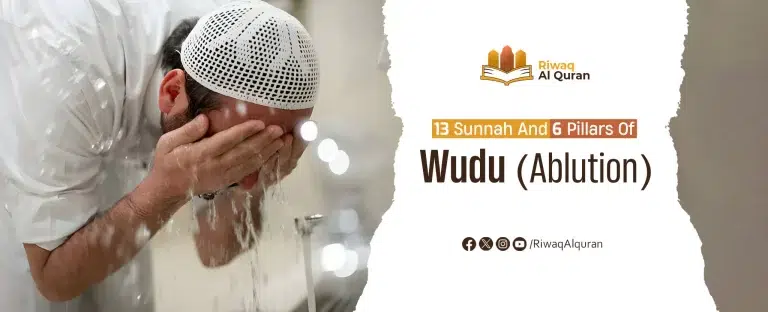
3. Say Before Wudu (Ablution)
Bismillah should be said at the beginning of wudu. This is confirmed in the hadith:
“There is no prayer for one who does not have wudu, and there is no wudu for one who does not mention the name of Allah (in the beginning).” (Sunan Abi Dawud 101)
On the ruling: The Hanbali school considers Bismillah before wudu obligatory based on this hadith. The Hanafi, Maliki, and Shafi’i schools consider it a Sunnah, interpreting the hadith language as emphasizing importance rather than strict obligation.
The prudent approach — and the one we encourage students at Riwaq Al Quran to adopt — is never to leave it.
Connect with our Azhari tutors to learn and memorize the Quran

4. Say Bismillah Before Slaughtering an Animal
Bismillah is a condition for the permissibility of slaughtered meat. Allah says in the Quran:
وَلَا تَأْكُلُوا۟ مِمَّا لَمْ يُذْكَرِ ٱسْمُ ٱللَّهِ عَلَيْهِ
Wa laa ta’kuluu mimmaa lam yudhkar ismu-Allaahi ‘alayh
“And do not eat of that upon which the name of Allah has not been mentioned.” (Al-An’am 6:121)
The majority of scholars — including Maliki, Hanbali, and the relied-upon Hanafi position — hold that intentionally omitting Bismillah during slaughter renders the meat impermissible.
If forgotten unintentionally, the majority holds the meat remains halal. This ruling has direct implications for Muslims navigating halal food standards.
5. Say Bismillah Before Entering the Home
The Prophet ﷺ instructed believers to say Bismillah upon entering the home. He ﷺ said:
“When a man enters his home and mentions Allah’s name upon entering and upon eating, Shaytan says: ‘There is no lodging and no supper for you here.'” (Sahih Muslim 2018)
This practice combines two separate Bismillahs — one at the door, one before eating — each with its distinct spiritual effect.
In our Islamic studies classes at Riwaq Al Quran, we often remind students that consistency in small acts like this transforms the home into a space of remembrance.
Begin your Islamic Studies with a FREE trial lesson

6. Bismillah is Said Before Intimate Relations
The Prophet ﷺ taught that a married couple should say Bismillah before intimate relations. He ﷺ said:
“If one of you, when he wants to have relations with his wife, says: ‘Bismillahi, Allahumma jannibna al-shaytan wa jannib al-shaytan ma razaqtana’ — if Allah decrees a child from that, Shaytan will never harm that child.” (Sahih al-Bukhari 141)
This is among the most overlooked Sunnahs in daily life — yet it carries one of the most profound spiritual protections for the family. It is Sunnah, and its wording is specific and should be memorized accurately.
7. Say Bismillah Before Getting Dressed
Saying Bismillah when dressing — particularly when putting on a garment — is established through prophetic guidance. The recommended supplication begins with “Bismillah” and includes praise of Allah for the garment. Scholars of hadith classify this among the recommended (mustahabb) invocations of daily life.
This falls under the broader principle found in the hadith:
“Every matter of importance that does not begin with the praise of Allah is cut off (from blessing).” (Sunan Ibn Majah 1894)
— emphasizing that beginning acts with Allah’s name invites barakah into them.
8. Say Bismillah Before Leaving the Home
Upon leaving the home, the complete recommended dhikr begins with “Bismillah” followed by “Tawakkaltu ‘ala Allah” (I place my trust in Allah). The Prophet ﷺ taught:
“Whoever says upon leaving his home: ‘Bismillahi, tawakkaltu ‘ala Allah, wa la hawla wa la quwwata illa billah’ — it is said to him: You are guided, sufficed, and protected, and Shaytan moves away from him.” (Sunan Abi Dawud 5095)
Knowing how to study and understand the Quran helps students appreciate that these daily Sunnahs are extensions of Quranic consciousness into lived reality.
9. Bismillah is Recommended Before Beginning Any Significant Task
The principle governing Bismillah across all acts is the hadith: “Every matter of importance that does not begin with the praise of Allah is cut off.” This establishes a general Islamic ethic — begin meaningful actions in Allah’s name.
Scholars apply this to acts including:
- Writing or beginning a letter or document
- Starting a lesson or study session — particularly Quran study
- Boarding a vehicle (the Quran mentions this in Surah Hud 11:41)
- Beginning any trade or transaction
This broad principle is not a license to be mechanical. Rather, it cultivates a Muslim’s consciousness that every deliberate act can carry divine blessing when initiated with intention and Allah’s name.
10. Bismillah is Said in Salah (Prayer)
In Salah, Bismillah is recited silently before Al-Fatiha in each rak’ah according to the majority position. The Shafi’i school — which considers Bismillah the first verse of Al-Fatiha — holds reciting it aloud in the Jahr prayers. The Hanafi school specifies recitation is silent in all prayers.
Students who are developing their recitation skills through a Quran Recitation course will encounter these madhab-specific differences and should follow the position of their school of jurisprudence consistently.
Book Your Free Session in Riwaq’s Recitation Course

Read Also: Which Surah in the Quran Has No Bismillah?
Why Students Love Learning with Riwaq Al Quran
Hear directly from our students about how Riwaq Al Quran Academy has transformed their connection with the Book of Allah. Their experiences reflect the dedication, care, and quality that guide every step of our teaching.
Read Also: What Are the Shortest, Longest, First, and Last Surahs in the Quran?
Start Your Quranic Practice the Right Way with Riwaq Al Quran
Understanding when and how to say Bismillah is one part of developing an authentic, grounded Islamic practice. If you want your Quran recitation, memorization, and daily worship to be built on verified prophetic guidance — not assumptions — structured learning makes all the difference.
At Riwaq Al Quran, our Azhari-certified tutors bring 9+ years of experience teaching non-Arabic speaking Muslims worldwide. We offer:
- Online Quran Memorization Course — one-on-one Hifz with certified Hafiz tutors
- Best Online Tajweed Course — precise recitation built on authentic scholarship
- Islamic Studies Classes for Kids — authentic Islamic foundations from early age
- 24/7 scheduling, 2 free trial classes, and a 100% money-back guarantee
Claim your 2 free trial classes today and begin with the name of Allah.
We offer courses in Online Quran & Tajweed Classes, Arabic Language, and Islamic Studies.
- Online Quran Memorization Course
- Recitation Course
- Tafseer Course
- Tajweed Classes
- Online Quran Classes for Kids.
- Ijazah Program.
- Qira’at Course.
- Arabic Language Classes.
- Islamic Studies Courses.
Enroll now for 2 Free Trial Classes
Conclusion
Saying Bismillah is far more than a verbal habit — it is a prophetic architecture for bringing divine consciousness into every corner of daily life. From the plate of food in front of you to the Quran open in your hands, each moment carries the invitation to begin in Allah’s name.
The rulings differ across occasions — some are obligatory, some strongly recommended — but the underlying principle is constant: a Muslim’s life is an act of worship, and Bismillah is how that worship begins. May Allah grant us consistency in remembering Him, Insha’Allah.
Frequently Asked Questions About When to Say Bismillah
Is It Necessary to Say the Full “Bismillah ir-Rahman ir-Raheem” Every Time?
For most daily acts — eating, entering the home, leaving — saying “Bismillah” alone is sufficient, though the full phrase is preferable. For Quran recitation, the full “Bismillah ir-Rahman ir-Raheem” is the established practice. Scholars agree the core obligation or recommendation is fulfilled with the shortened form.
Do You Say Bismillah Before Every Single Bite of Food?
No. Bismillah is said once at the beginning of the meal. It covers the entire eating session unless you leave the table and return, in which case scholars recommend saying it again. If forgotten at the start, the Prophet ﷺ prescribed a specific mid-meal phrase to rectify it.
Why Is Bismillah Not Said Before Surah At-Tawbah?
Classical scholars offer two main explanations: Surah At-Tawbah was revealed as a continuation of Surah Al-Anfal, making them effectively one Surah; or that it was revealed with the announcement of the withdrawal of security from the polytheists, making it inappropriate to begin with the name of Allah’s mercy. Both explanations are documented in traditional Tafsir literature. Learn more about Tafsir meaning and methodology.