
| Key Takeaways |
| Understanding the Quran requires combining translation study, basic Quranic Arabic, and authentic Tafsir from verified scholarly sources. |
| A structured daily Quran study plan — even 20 minutes — builds comprehension faster than long, irregular sessions. |
| Tafsir study is the bridge between reading words and grasping divine intent; Ibn Kathir and Al-Sa’di are widely recommended scholarly resources. |
| Non-Arabic speakers make the fastest progress when they pair English translation study with basic Quranic Arabic vocabulary simultaneously. |
| Enrolling in a guided Tafsir or Islamic Studies course eliminates misinterpretation risks that self-study alone cannot fully prevent. |
Understanding the Quran is not reserved for scholars or native Arabic speakers. Every Muslim — regardless of background or mother tongue — is addressed directly by its verses, which means accessing its meaning is a personal obligation and a deeply personal right.
The path forward involves more than reading a translation. It means building a Quran study plan that layers translation, vocabulary, Tafsir, and consistent daily practice — each element reinforcing the others until comprehension becomes natural and devotional at once.
Table of Contents
1. Start with a Reliable English Translation to Build Your Foundation
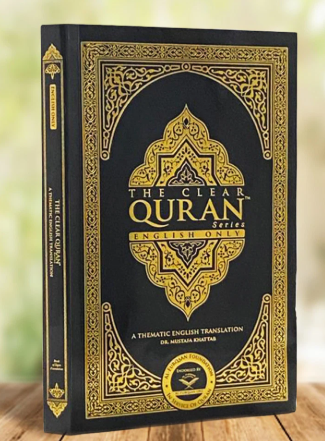
To understand the Quran in English, begin with a scholarly, widely trusted translation such as Sahih International or Dr. Mustafa Khattab’s The Clear Quran. Read with purpose — one page at a time — paying attention not just to word meaning but to the internal logic of each passage. Translation alone is not full understanding, but it is the honest first step.
Many students at Riwaq Al Quran arrive having never read a complete translation cover to cover. Before any structured study can begin, that gap must be filled.
We consistently recommend reading the Quran in translation alongside a brief introductory context for each Surah — understanding whether it is Makki or Madani, for instance, immediately clarifies tone and subject matter.
Why translation choice matters:
| Translation | Strengths | Best For |
| Sahih International | Precise, literal, widely cited | Serious students, adult learners |
| The Clear Quran (Khattab) | Readable, modern English | Beginners, Western-born Muslims |
| Yusuf Ali (revised) | Classical cadence, footnotes | Those who enjoy explanatory notes |
Avoid switching between multiple translations constantly. Choose one, read it fully, and use a second only for cross-referencing specific passages.
2. Learn Basic Quranic Arabic Vocabulary Before Attempting Grammar
The single most effective accelerator for Quran comprehension is learning Quranic vocabulary — not full grammar study, but the 300–500 most frequently occurring root words. These words account for a significant portion of the Quran’s total text, meaning a focused vocabulary effort returns immediate comprehension gains.
In our experience at Riwaq Al Quran, students who spend four to six weeks on high-frequency Quranic vocabulary begin recognizing words during Salah — often for the first time in their lives. That recognition produces an emotional shift that transforms their relationship with recitation entirely.
Start with words like rahma (mercy), ‘ilm (knowledge), haqq (truth), and taqwa (God-consciousness). These appear hundreds of times across the Quran. Knowing them makes translation study far more interactive.
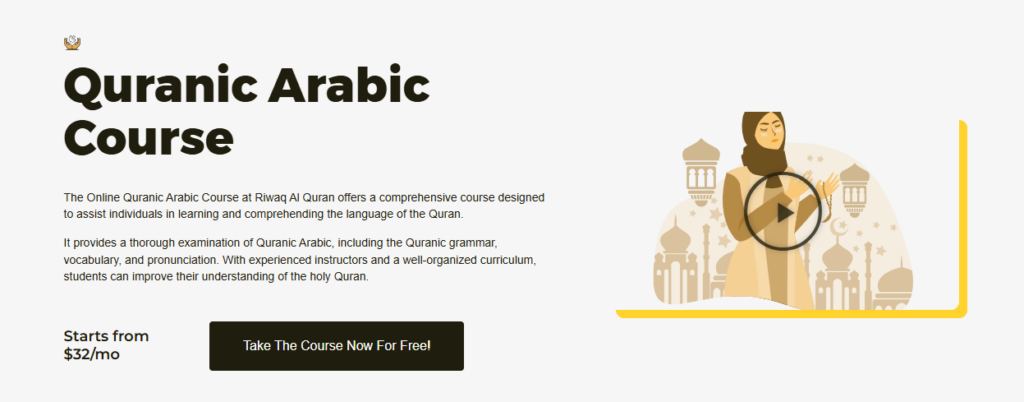
Our Quranic Arabic Course is specifically designed for non-Arabic speakers who want to access the Quran’s meaning without the full burden of classical Arabic grammar study.
Book Your FREE Trial in Riwaq’s Quranic Arabic Classes
3. Study Tafsir to Move Beyond Word-for-Word Meaning
Tafsir — the scholarly exegesis of the Quran — is the discipline through which Muslim scholars explain the context, occasion of revelation (Asbab al-Nuzul), linguistic nuances, and legal or theological implications of each verse. Reading translation alone without Tafsir is like reading a legal document without any commentary — you get the words, but you risk missing the intent entirely.
Allah ﷻ commands reflection on His words:
أَفَلَا يَتَدَبَّرُونَ ٱلْقُرْءَانَ ۚ وَلَوْ كَانَ مِنْ عِندِ غَيْرِ ٱللَّهِ لَوَجَدُوا۟ فِيهِ ٱخْتِلَٰفًا كَثِيرًا
Afalā yatadabbarūna al-Qur’āna wa law kāna min ‘indi ghayri Allāhi la-wajadū fīhi ikhtilāfan kathīrā
“Then do they not reflect upon the Qur’an? If it had been from any other than Allah, they would have found within it much contradiction.” (An-Nisa 4:82)
For English-speaking students, Ibn Kathir’s Tafsir (available through IslamQA for specific rulings) and Tafsir Al-Sa’di (translated into English as Taysir al-Karim al-Rahman) are the most accessible entry points into classical Tafsir study. For a deeper understanding of Tafsir as a discipline, explore our article on Tafsir meaning and methodology.
Our Online Quran Tafseer Course guides students through verified Tafsir sources with an Azhari-certified instructor — eliminating the misinterpretation risk that comes with unsupervised self-study.
Enroll Now in Riwaq’s Tafseer Course with a FREE trial

4. Build a Daily Quran Study Plan
A Quran study plan works only when it is built around your real life — not around an idealized version of it. Consistency over months outperforms intensity over days. A structured 20-minute daily session produces deeper understanding than three hours once a week.
The Prophet ﷺ said:
“The most beloved deeds to Allah are the most consistent ones, even if they are small.” (Sahih al-Bukhari 6464)
A practical daily Quran study plan:
| Time Block | Activity | Duration |
| Morning (after Fajr) | Read one page with Sahih International translation | 10 minutes |
| Midday or Afternoon | Review 5–10 new Quranic vocabulary words | 10 minutes |
| Evening | Read one passage from Tafsir Al-Sa’di or Ibn Kathir | 15 minutes |
| Weekly Review | Revise the week’s vocabulary and re-read the week’s pages | 30 minutes |
This structure allows a student to complete the entire Quran with translation in approximately 20 months at a relaxed pace — or in 10 months with slightly expanded daily sessions. The goal is not speed. The goal is depth.
For more structured scheduling frameworks, our Quran memorization schedule resource provides a planning methodology that adapts to different life circumstances.
5. Study the Quran Thematically to Understand Its Internal Coherence
One of the most powerful methods for understanding the Quran is thematic study — selecting a topic (such as tawakkul, or reliance on Allah; or the stories of the Prophets) and tracing it across multiple Surahs. This approach reveals how the Quran builds, revisits, and deepens its core themes with each recurrence.
Classical scholars called this approach al-tafsir al-mawdu’i — thematic Tafsir. It is distinct from sequential Tafsir (al-tafsir al-tahlili), which moves verse by verse. Both have value, but thematic study builds a more holistic understanding of Quranic worldview.
In practice: choose one theme per month. Gather the relevant verses using a concordance tool such as Tanzil.net, read them in sequence, then consult Tafsir for each. By the end of the month, you will have a scholar-level understanding of that single theme — far deeper than a surface reading provides.
Experience Riwaq Al Quran Classes
Watch real moments from our live sessions at Riwaq Al Quran and see how we bring learning to life. These clips highlight our interactive, student-focused approach designed to keep learners engaged, motivated, and actively involved in every step of their educational journey.
6. Study the Context of Revelation to Unlock Verse Meaning
Asbab al-Nuzul — the occasions or circumstances of revelation — is the scholarly discipline that records why and when specific verses were revealed. This context is not optional background knowledge. For many verses, it is the key that unlocks meaning entirely.
For example, the beginning of Surah Al-Mujadila (58:1) —
“Certainly has Allah heard the speech of the one who argues with you”
— was revealed in response to a specific woman’s complaint about an unjust divorce practice.
Knowing this context transforms an abstract declaration into a direct divine intervention in a real human situation.
A reliable English-language resource for this subject is Asbab Al-Nuzul by Imam Al-Wahidi, portions of which are referenced in verified Tafsir compilations.
7. Attend Structured Islamic Studies to Protect Against Misinterpretation
Self-study of the Quran carries a real risk that independent learners often underestimate: misinterpretation. Without a teacher to guide the sequence of learning, correct errors, and flag common misreadings, well-intentioned students sometimes arrive at conclusions that classical scholarship has resolved differently.
Allah ﷻ instructs the believers: “So ask the people of knowledge if you do not know.” (An-Nahl 16:43)
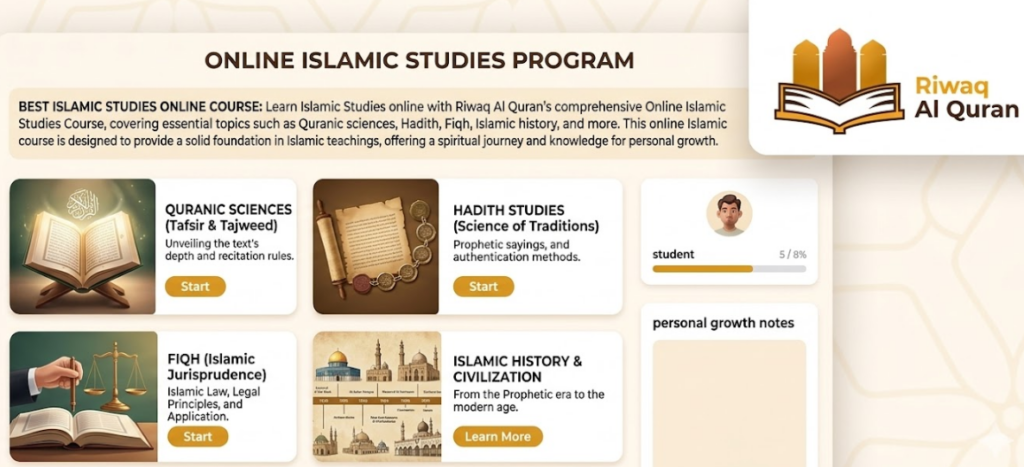
At Riwaq Al Quran, our Best Islamic Studies Online Course addresses this gap directly. Azhari-certified instructors guide students through Aqeedah, Fiqh, Seerah, and Quranic sciences — giving non-Arabic speaking Muslims the theological grounding that prevents misapplication of what they read.
For younger learners, our Islamic Studies Classes for Kids build this foundation from an early age with structured, engaging one-on-one sessions.
Begin your Islamic Studies with a FREE trial lesson
8. Connect Understanding to Recitation by Improving Your Tajweed
Understanding the Quran and reciting it correctly are not separate goals — they reinforce each other. When you know what a verse means, your recitation carries that meaning in its pauses, its elongations, and its emotional weight. Tajweed is not purely phonetic discipline; it is the sound body through which meaning is conveyed.
The rules of waqf (stopping) and ibtida’ (beginning) in Tajweed, for instance, are directly tied to meaning. Stopping at the wrong place in Surah Al-Baqarah 2:255 (Ayat al-Kursi) can completely alter the grammatical and theological sense of the verse. A student who understands the meaning will naturally stop correctly.
Explore our detailed breakdown of Tajweed rules and the benefits of Tajweed to understand how recitation quality and comprehension develop together.
Our Online Quran Memorization Course pairs Tajweed instruction with meaning-based memorization — an approach that significantly improves both retention and understanding simultaneously.
Why Students Love Learning with Riwaq Al Quran
Hear directly from our students about how Riwaq Al Quran Academy has transformed their connection with the Book of Allah. Their experiences reflect the dedication, care, and quality that guide every step of our teaching.
Start Your Quran Study Journey with Riwaq Al Quran Today
Understanding the Quran is one of the most rewarding intellectual and spiritual efforts a Muslim can undertake — and you do not have to figure it out alone.
Riwaq Al Quran has supported non-Arabic speaking Muslims worldwide since 2017 with:
- Azhari-certified instructors (Al-Azhar University graduates)
- One-on-one personalized sessions tailored to your current level
- 24/7 scheduling — study at your own pace, in your own time zone
- 2 Free Trial Classes — no commitment required to begin
- 100% Money-Back Guarantee for complete peace of mind
Whether your goal is Tafsir study, Islamic Studies, or full Quran memorization — we have the structured course and the qualified teacher to take you there. Book your free trial class today.
We offer courses in Online Quran & Tajweed Classes, Arabic Language, and Islamic Studies.
- Online Quran Memorization Course
- Tafseer Course
- Tajweed Classes
- Online Quran Classes for Kids.
- Ijazah Program.
- Qirat Course.
- Arabic Language Classes.
- Islamic Studies Courses.
Enroll now for 2 Free Trial Classes
Conclusion
Understanding the Quran is a lifelong relationship — one that deepens every time you return to its pages with more knowledge, more sincerity, and more context than you had before. The steps outlined here are not a one-time checklist; they are a cycle you will revisit at every level of your learning.
Begin where you are. A reliable translation, a consistent daily plan, and access to authentic Tafsir are enough to start. Add structured guidance when you are ready, and protect your understanding by learning from qualified scholars.
The Quran was revealed to be understood — and that invitation extends to every sincere heart, regardless of language or background.
Read Also: How to Study Quran Daily?
Frequently Asked Questions About How to Understand the Quran
How long does it take to understand the Quran in English?
A dedicated student reading one page daily with translation and brief Tafsir notes can complete the Quran with foundational understanding in 12–18 months. Deeper comprehension — including Quranic Arabic vocabulary and thematic study — develops over several years of consistent engagement. There is no fixed endpoint; understanding grows continuously with sustained effort and scholarly guidance.
Can I understand the Quran without learning Arabic?
Yes — a reliable English translation combined with authentic Tafsir gives meaningful access to Quranic meaning. However, learning even 300–500 high-frequency Quranic Arabic words dramatically deepens comprehension and allows you to engage with the original text during recitation and Salah. Full classical Arabic study further enriches understanding but is not a prerequisite for beginning.
What is the best Tafsir for English speakers?
The most widely recommended Tafsir for English-speaking students is Tafsir Ibn Kathir (available in English translation) for its hadith-based methodology and scholarly depth. Tafsir Al-Sa’di (Taysir al-Karim al-Rahman) is equally recommended for its accessible language and balanced explanations. Both align with mainstream Sunni scholarship and are free from interpretive irregularities.
Is it permissible to study the Quran without a teacher?
Reading the Quran’s translation and studying accessible Tafsir independently is permissible and encouraged. However, Islamic scholarship consistently emphasizes that a teacher is necessary for correct recitation (Tajweed), and highly recommended for Tafsir study to avoid misinterpretation. The classical principle — “This knowledge is religion, so be careful from whom you take your religion” — reflects the scholarly tradition’s caution on this point.
How should I study the Quran daily if I have limited time?
A 20-minute daily session divided into three focused blocks is more effective than irregular longer sessions. Spend roughly 10 minutes reading one page with translation, 5 minutes reviewing Quranic vocabulary, and 5 minutes with a Tafsir note on one verse from your reading. Aligning study with existing routines — such as after Fajr prayer — significantly improves long-term consistency and retention.