| Key Takeaways |
| Prophet Musa (AS) is mentioned by name 136 times in the Quran — more than any other prophet. |
| Prophet Musa (AS)’s story spans over 30 Surahs, covering prophethood, confrontation with Pharaoh, and divine guidance. |
| The Quran presents Musa’s story not as biography, but as living lessons in patience, trust, and submission. |
| Key episodes include the burning bush, the parting of the sea, and receiving the Torah on Mount Sinai. |
| Studying Musa’s story through Tafsir deepens Quran recitation by connecting meaning to the words being memorized. |
No prophet’s story is told across the Quran with greater frequency or depth than that of Musa ibn Imran (AS). From his birth in a house of fear to his direct conversation with Allah on a sacred mountain, the Quran returns to his life repeatedly — not to repeat history, but to renew lessons every generation needs.
What makes studying Prophet Musa in the Quran so transformative is that his story is inseparable from the Quran’s own call to faith. Understanding who he was, what he faced, and how Allah guided him gives students of the Quran a richer, more rooted recitation — one where the words carry weight because the story behind them is truly known.
Table of Contents
How Many Times Is Prophet Musa Mentioned in the Quran?
Prophet Musa (AS) is mentioned by name 136 times in the Quran, making him the most frequently named prophet in the entire Book. His story appears across more than 30 Surahs, spanning different contexts — legislative, narrative, consolatory, and prophetic.
This frequency is not coincidental. The Prophet Muhammad ﷺ faced trials that echoed Musa’s, and Allah repeatedly directed him — and by extension all believers — toward Musa’s steadfastness as a model.
The concentrated attention the Quran gives to Musa (AS) reflects how essential his story is to Islamic theology. His direct speech with Allah, his confrontation with Pharaoh, and his long years shepherding a difficult nation all carry instruction for every era.
What Are the Most Important Episodes of Prophet Musa’s Story in the Quran?
The Quran presents Prophet Musa’s life through interconnected episodes, each revealing a distinct dimension of faith.
These are not isolated stories — they form a cumulative portrait of a man tested at every stage, guided at every turn, and ultimately elevated through complete submission to Allah.
| Episode | Primary Surah(s) | Core Quranic Lesson |
| Birth and preservation in the river | Al-Qasas 28:7 | Allah’s protection works through the most unlikely means |
| Raised in Pharaoh’s household | Al-Qasas 28:8–9 | Divine planning is invisible to those carrying it out |
| Fleeing to Madyan and sincere repentance | Al-Qasas 28:16–24 | Honest supplication restores divine connection immediately |
| The burning bush and divine call | Ta-Ha 20:11–16 | Prophethood is given to those who acknowledge their limits |
| Confrontation with Pharaoh’s magicians | Al-A’raf 7:117–122 | Truth recognized by qualified witnesses cannot be suppressed |
| The parting of the sea | Al-Shu’ara 26:62–63 | Tawakkul precedes the miracle — never follows it |
| Receiving the Torah on Mount Sinai | Al-A’raf 7:145 | Divine law carries its wisdom and moral foundation within it |
| The trial of the Golden Calf | Al-A’raf 7:150, Ta-Ha 20:85–97 | Greatest spiritual danger follows greatest divine rescue |
Each of these episodes rewards sustained Tafsir study. The surface narrative is always clear — but the layers of linguistic precision, structural sequencing, and theological implication beneath them are what make the Quran’s account of Musa (AS) inexhaustible for the sincere student.
Below, each major episode is examined with its Quranic evidence and the lesson it carries for the believing reader.


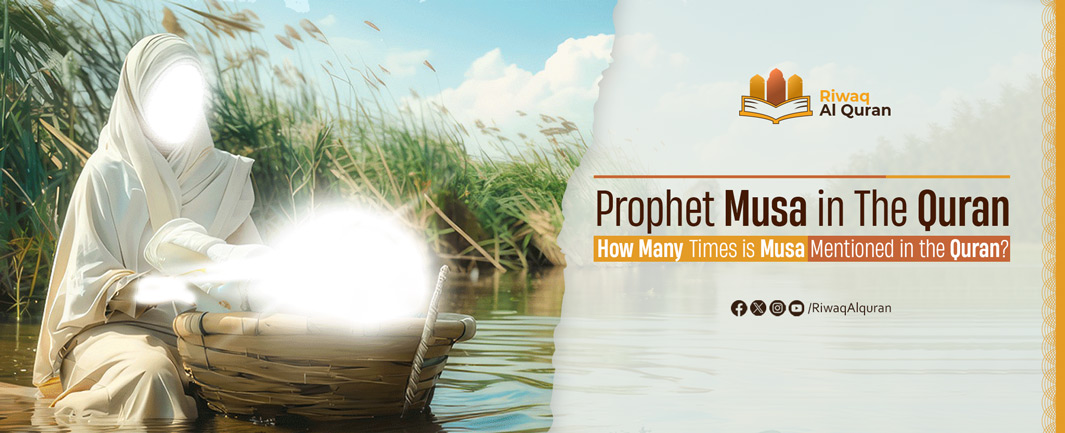
1. Prophet Musa’s Birth and Preservation in the River
Musa was born into a household under state terror. Pharaoh had decreed the killing of every male child born to the Children of Israel — a systematic genocide rooted in his fear that a boy among them would one day end his reign. Into this darkness, Musa was born.
What makes the Quranic account extraordinary is that Allah’s response to this danger was not a visible miracle — it was an instruction that looked, from the outside, like abandonment.
وَأَوْحَيْنَآ إِلَىٰٓ أُمِّ مُوسَىٰٓ أَنْ أَرْضِعِيهِ ۖ فَإِذَا خِفْتِ عَلَيْهِ فَأَلْقِيهِ فِى ٱلْيَمِّ وَلَا تَخَافِى وَلَا تَحْزَنِى ۖ إِنَّا رَآدُّوهُ إِلَيْكِ وَجَاعِلُوهُ مِنَ ٱلْمُرْسَلِينَ
Wa awḥaynā ilā ummi Mūsā an arḍi’īhi fa-idhā khifti ‘alayhi fa-alqīhi fil-yammi wa lā takhāfī wa lā taḥzanī, innā rāddūhu ilayki wa jā’ilūhu minal-mursalīn
“And We inspired to the mother of Moses, ‘Suckle him; but when you fear for him, cast him into the river and do not fear and do not grieve. Indeed, We will return him to you and will make him one of the messengers.'” (Al-Qasas 28:7)
Classical Tafsir scholars have marveled at the grammatical density of this single verse. It contains two commands (suckle him; cast him), two prohibitions (do not fear; do not grieve), and two glad tidings (We will return him; We will make him a messenger) — all in one breath.
This is among the examples scholars cite when discussing the Quran’s linguistic miracle (i’jaz).
The basket placed on the Nile did not drift aimlessly. The Quran tells us in Al-Qasas 28:8 that it was retrieved by the family of Pharaoh — the very household that had ordered every Israelite boy’s death. The divine irony is exact and intentional.
Allah’s protection did not remove Musa from danger — it placed him at the center of it, where no human would have thought to look.
For students memorizing Surah Al-Qasas, understanding this opening episode makes the Arabic text emotionally alive.
The mother’s grief and Allah’s reassurance are present in every word — and that understanding is what transforms memorization from repetition into ibadah.
If you want to study passages like this with genuine depth, our Online Quran Tafseer Course at Riwaq Al Quran guides students through the meanings behind these verses with Azhari-certified scholars who understand how to bring the Quran’s narrative layers to life.
Enroll Now in Riwaq’s Tafseer Course with a FREE trial

2. Prophet Musa Was Raised Inside Pharaoh’s Household
After the basket was retrieved from the Nile, Pharaoh’s wife — identified in the Quran as a woman of faith — intervened to protect the child she found inside.
وَقَالَتِ ٱمْرَأَتُ فِرْعَوْنَ قُرَّتُ عَيْنٍ لِّى وَلَكَ ۖ لَا تَقْتُلُوهُ عَسَىٰٓ أَن يَنفَعَنَآ أَوْ نَتَّخِذَهُۥ وَلَدًا وَهُمْ لَا يَشْعُرُونَ
Wa qālatim-ra’atu Fir’awna qurratu ‘aynin lī wa lak, lā taqtulūh, ‘asā ay yanfa’anā aw nattakhidhahu waladā, wa hum lā yash’urūn
“And the wife of Pharaoh said, ‘He will be a comfort of the eye for me and for you. Do not kill him; perhaps he may benefit us, or we may adopt him as a son.’ And they perceived not.” (Al-Qasas 28:9)
The final phrase — wa hum lā yash’urūn (“and they perceived not”) — is one of the Quran’s quiet but devastating observations.
The very people funding, feeding, and educating the future liberator of the Children of Israel had no awareness of what they were doing. Allah’s plan was unfolding in plain sight, invisible to those carrying it out.
This episode teaches a lesson that every believer in difficulty needs: Allah’s planning does not require human cooperation or understanding. The people of Pharaoh’s court made a decision they thought was about convenience — they were in reality fulfilling a divine decree they could not comprehend.
Experience Riwaq Al Quran Classes
Watch real moments from our live sessions at Riwaq Al Quran and see how we bring learning to life. These clips highlight our interactive, student-focused approach designed to keep learners engaged, motivated, and actively involved in every step of their educational journey.
3. Prophet Musa’s Flight to Madyan After an Unintended Killing
As a young man in Pharaoh’s palace, Musa witnessed an Israelite being oppressed by an Egyptian. He intervened physically — and the Egyptian died from a single blow, unintentionally. Musa immediately turned to Allah in remorse.
قَالَ رَبِّ إِنِّى ظَلَمْتُ نَفْسِى فَٱغْفِرْ لِى فَغَفَرَ لَهُۥٓ ۚ إِنَّهُۥ هُوَ ٱلْغَفُورُ ٱلرَّحِيمُ
Qāla rabbi innī ẓalamtu nafsī faghfir lī, fa-ghafara lah, innahu huwal-ghafūrur-raḥīm
“He said, ‘My Lord, indeed I have wronged myself, so forgive me,’ and He forgave him. Indeed, He is the Forgiving, the Merciful.” (Al-Qasas 28:16)
The immediacy of the forgiveness — fa-ghafara lah — is striking. No extended penance. No condition of time. Sincere acknowledgment of wrongdoing, direct address to Allah, and immediate response. This is the Quran’s consistent teaching on tawbah: the door opens the moment the heart turns.
Musa then fled to Madyan, a journey undertaken alone, on foot, without provisions. He arrived at a well where two women waited with their livestock — unable to water their flocks because the men at the well would not give way.
He helped them without being asked, then retired to the shade and made one of the most honest supplications recorded in the Quran:
رَبِّ إِنِّى لِمَآ أَنزَلْتَ إِلَىَّ مِنْ خَيْرٍ فَقِيرٌ
Rabbi innī limā anzalta ilayya min khayrin faqīr
“My Lord, indeed I am, for whatever good You would send down to me, in need.” (Al-Qasas 28:24)
He did not specify what he needed — food, shelter, safety, or direction. He simply declared his need before Allah and left the form of the answer entirely to Him. That evening, one of the women returned to invite him on behalf of her father.
Years of shelter, provision, and marriage followed — all from a single act of honest supplication.
This passage is among those our tutors frequently share with adult students at Riwaq Al Quran who are beginning their Quran study later in life, feeling behind, and wondering if they have left things too late.
The answer is always the same: make the honest supplication and leave the form of the response to Allah.
At Riwaq Al Quran, students in our Best Islamic Studies Online Course study these narrative confrontations in their full theological context, understanding how the Quran’s presentation of prophetic stories serves as direct instruction for Muslim life.
Begin your Islamic Studies with a FREE trial lesson

4. The Burning Bush and Divine Calling of Musa
After years in Madyan, Musa set out with his family on a journey. Noticing fire in the distance on a cold night, he left his family to seek warmth or guidance. What awaited him was neither — it was the beginning of the greatest responsibility of his life.
فَلَمَّآ أَتَىٰهَا نُودِىَ يَـٰمُوسَىٰٓ إِنِّىٓ أَنَا۠ رَبُّكَ فَٱخْلَعْ نَعْلَيْكَ ۖ إِنَّكَ بِٱلْوَادِ ٱلْمُقَدَّسِ طُوًى
Fa-lammā atāhā nūdiya yā Mūsā, innī anā rabbuka fakhlā’ na’layk, innaka bil-wādil-muqaddasi Ṭuwā
“But when he came to it, he was called, ‘O Moses, indeed I am your Lord, so remove your sandals. Indeed, you are in the sacred valley of Tuwa.'” (Ta-Ha 20:11–12)
The command to remove sandals is a powerful symbolic gesture within the Quranic account. Standing on sacred ground requires leaving behind the ordinary supports of daily life — the things we walk through the world with.
Scholars of Tafsir have noted that Allah’s first command to Musa was not a theological statement but a physical act of humility: remove what you stand on.
Allah then revealed Himself explicitly —
Innī anā Allāhu lā ilāha illā anā (“Indeed, I am Allah. There is no deity except Me”) at Ta-Ha 20:14
— and commanded Musa to establish prayer. Even at the moment of receiving prophethood, the first instruction was worship.
Musa was then shown two signs. His staff became a living serpent, and his hand emerged radiant white when drawn from his garment. These were not performed for Musa’s entertainment — they were the credentials he would carry into Pharaoh’s court.
What is deeply human about this passage is what follows: Musa asked Allah for support. He requested that his brother Harun be made his companion and that his own speech be made fluent.
The Quran does not hide this request — it presents it as legitimate, and Allah granted it. Prophethood did not eliminate Musa’s human awareness of his own limitations. It made those limitations a reason to call upon Allah more, not less. That is a lesson every student of the Quran who struggles with Arabic pronunciation, recitation anxiety, or memorization difficulty should hold closely.
5. Prophet Musa’s Confrontation with Pharaoh and His Magicians
When Musa stood before Pharaoh and declared his mission, Pharaoh’s response was dismissal, then mockery, then political strategy.
He assembled the greatest magicians of his empire for a public showdown — confident that his institutional resources could overwhelm what one man brought from the desert.
The magicians cast their ropes and staffs, which appeared to the crowd as moving serpents. Then Musa cast his staff.
فَإِذَا هِىَ تَلْقَفُ مَا يَأْفِكُونَ
Fa-idhā hiya talqafu mā ya’fikūn
“And at once it swallowed up what they were falsifying.” (Al-A’raf 7:117)
The magicians — the very professionals Pharaoh had assembled as his weapon — immediately prostrated.
They recognized in an instant the difference between their craft and what they had just witnessed. They declared faith openly, before the entire nation, knowing the consequence.
قَالُوا۟ ءَامَنَّا بِرَبِّ ٱلْعَـٰلَمِينَ رَبِّ مُوسَىٰ وَهَـٰرُونَ
Qālū āmannā bi-rabbil-‘ālamīn, rabbi Mūsā wa Hārūn
“They said, ‘We have believed in the Lord of the worlds — the Lord of Moses and Aaron.'” (Al-A’raf 7:121–122)
Pharaoh threatened crucifixion. Their response, preserved in Ta-Ha 20:72, was one of the most steadfast declarations of faith in the entire Quran: they would not prefer Pharaoh over the clear truth they had seen.
They asked Allah to grant them patience and to receive them as Muslims. These are men who entered that day as Pharaoh’s employees and left it as martyrs for tawhid.
The Quran repeats this episode across multiple Surahs precisely because the dynamic it captures — truth recognized instantly by those whose expertise makes them qualified to judge — is eternally instructive.
For the Quran reciter who engages with Tafsir while memorizing, passages like Al-A’raf 7:103–126 become not just text to recall, but a living argument about the nature of certainty and courage.
6. The Parting of the Sea
The moment before the sea parted was, outwardly, the moment of certain death. Pharaoh’s army was behind. The sea was ahead. The Children of Israel cried out that they were finished. Musa’s response was not tactical — it was theological.
قَالَ كَلَّآ ۖ إِنَّ مَعِىَ رَبِّى سَيَهْدِينِ
Qāla kallā, inna ma’iya rabbī sa-yahdīn
“He said, ‘No! Indeed, with me is my Lord; He will guide me.'” (Al-Shu’ara 26:62)
Then the command came:
فَأَوْحَيْنَآ إِلَىٰ مُوسَىٰٓ أَنِ ٱضْرِب بِّعَصَاكَ ٱلْبَحْرَ ۖ فَٱنفَلَقَ فَكَانَ كُلُّ فِرْقٍ كَٱلطَّوْدِ ٱلْعَظِيمِ
Fa-awḥaynā ilā Mūsā anidrib bi-‘aṣākal-baḥr, fānfalaqa fa-kāna kullu firqin kaṭ-ṭawdil-‘aẓīm
“So We inspired to Moses, ‘Strike with your staff the sea,’ and it parted, and each portion was like a great towering mountain.” (Al-Shu’ara 26:63)
The Quran describes each separated portion as being like a great towering mountain — kaṭ-ṭawdil-‘aẓīm. This is not poetic flourish. It gives the reader a sense of the structural scale — walls of water high enough to be compared to mountain ranges, while a dry path ran between them.
The critical sequence in this passage is one that students of Quran memorization are often moved by when their teachers draw their attention to it: the declaration of certainty preceded the miracle.
Musa did not say “I trust Allah” after the sea parted. He said it with the army behind him and the water in front of him. The miracle was the response to tawakkul — not its replacement.
This is also why, at Riwaq Al Quran, Azhari tutors in our Online Quran Memorization Course consistently encourage students at their most difficult memorization plateaus with a reminder drawn directly from this episode: reliance on Allah precedes the breakthrough, it does not follow it.
Start your Hifz journey with a Free Trial
7. Prophet Musa Received the Torah on Mount Sinai
After the crossing of the sea and the destruction of Pharaoh’s army, Musa (AS) was summoned by Allah to Mount Sinai for forty nights. This period of seclusion resulted in the giving of the Alwah — the Tablets containing guidance and law for the Children of Israel.
وَكَتَبْنَا لَهُۥ فِى ٱلْأَلْوَاحِ مِن كُلِّ شَىْءٍ مَّوْعِظَةً وَتَفْصِيلًا لِّكُلِّ شَىْءٍ
Wa katabnā lahu fil-alwāḥi min kulli shay’im maw’iẓataw-wa tafṣīlal-li-kulli shay’
“And We wrote for him on the Tablets [something] of all things — instruction and explanation for all things.” (Al-A’raf 7:145)
The Quran emphasizes that the Tablets contained maw’iẓah (moral instruction) and tafṣīl (detailed explanation) — not simply legal commands. This framing is significant.
Divine law in the Quranic worldview is inherently accompanied by its wisdom and moral foundation. Command and understanding were given together.
Allah also spoke directly to Musa during this period in a mode of communication the Quran calls taklim — direct speech. This is why Musa (AS) carries the unique title Kalimullah — “the one spoken to by Allah” — as referenced in Al-Nisa 4:164. No other prophet received revelation in this form as consistently as he did.
The forty nights Musa spent in divine seclusion parallel, in a spiritual sense, the commitment the Quran demands of those who seek to carry its words.
Our Islamic Studies resources provide deeper context for understanding how these legislative passages connect to Islamic scholarship as a living tradition.
8. The Trial of the Golden Calf
While Musa (AS) was on Mount Sinai receiving the Tablets, a man named Al-Samiri led a significant portion of the Children of Israel into worshipping a golden calf. He had crafted it to emit a lowing sound, and the people — fresh from witnessing the parting of the sea and the destruction of Pharaoh — followed him into idolatry.
When Musa returned and witnessed what had happened, the Quran captures his grief and outrage.
وَلَمَّا رَجَعَ مُوسَىٰٓ إِلَىٰ قَوْمِهِۦ غَضْبَـٰنَ أَسِفًا قَالَ بِئْسَمَا خَلَفْتُمُونِى مِنۢ بَعْدِىٓ
Wa lammā raja’a Mūsā ilā qawmihi ghaḍbāna asifan qāla bi’samā khalaftumūnī min ba’dī
“And when Moses returned to his people, angry and grieved, he said, “How wretched is that by which you have replaced me after [my departure]'” (Al-A’raf 7:150)
The Quran uses two simultaneous emotional words to describe Musa’s state: ghaḍbān (anger) and asif (grief). These are not contradictory — they capture the layered response of a leader who loves his people and sees them destroying themselves.
He seized his brother Harun by the beard in his distress, and Harun explained that he had tried to prevent it but feared splitting the community further.
The episode concludes with Al-Samiri being banished and the golden calf being burned and scattered into the sea. Yet the Quran’s purpose in narrating this story is not to condemn — it is to warn.
The most dramatic spiritual failure of Bani Isra’il came immediately after their most dramatic divine rescue.
That sequencing is a permanent lesson: moments of relief and victory carry their own spiritual danger. Gratitude requires vigilance, and communities of faith must guard most carefully at the moments when they feel safest.
For students exploring these themes further, our Islamic topics for youth resource addresses how these Quranic narratives translate into lessons for Muslim communities today.
What Are the Lessons from Prophet Musa’s Story That the Quran Wants Believers to Learn?
The Quran is explicit that the stories of the prophets are not historical accounts — they are lessons (‘ibr) extracted for those who reflect.
| Quranic Lesson from Musa’s Story | Relevant Context |
| Allah’s planning operates beyond human sight | Musa raised by Pharaoh unknowingly |
| Sincere repentance opens doors | Musa’s return to Allah after the incident in Egypt |
| Prophethood comes with human vulnerability | Musa’s stutter, his request for Harun’s support |
| Patience is tested through the community, not just enemies | 40 years with Bani Isra’il in the desert |
| Truth stated clearly is itself a form of power | Musa’s address to Pharaoh without aggression |
| Miracles follow complete reliance, not desperation | The sea parting after Musa’s statement of certainty |
These lessons connect directly to how students experience the Quran memorization process. At Riwaq Al Quran, Azhari-certified tutors in our Online Quran Memorization Course regularly draw students’ attention to these meanings — because when you understand what you’re memorizing, retention deepens significantly.
Our experience shows that students who engage with meaning alongside recitation retain Surahs 30–40% more effectively than those drilling Arabic text alone.
Explore structured Quran memorization techniques that incorporate meaning-based learning alongside traditional repetition methods.
Which Surahs Contain the Longest Accounts of Prophet Musa’s Story?
Several Surahs contain extended, sequential narratives of Musa’s life. Understanding which Surahs to study — and in what order — helps both Tafsir students and memorizers navigate his story coherently.
Surah Al-Qasas (28) provides the most sequential account of Musa’s early life, from birth to prophethood. Its very name — Al-Qasas (The Stories) — signals its narrative intention.
Surah Ta-Ha (20) contains the most theologically detailed account of his calling at the burning bush and his confrontation with Pharaoh’s magicians. It is also one of the Surahs the Prophet ﷺ reportedly recited regularly at night.
Surah Al-A’raf (7) covers the plagues sent upon Pharaoh’s people and the giving of the Torah at length. Surah Al-Shu’ara (26) focuses sharply on the dialogue between Musa and Pharaoh and the parting of the sea.
Students working toward Hifz often find that memorizing these Surahs with a foundational understanding of Musa’s timeline makes the Arabic more memorable — the narrative provides a mental structure that supports retention.
Our Tafsir meaning resource explains how engaging with the Quran’s meaning transforms recitation from performance to understanding.
Why Students Love Learning with Riwaq Al Quran
Hear directly from our students about how Riwaq Al Quran Academy has transformed their connection with the Book of Allah. Their experiences reflect the dedication, care, and quality that guide every step of our teaching.
Start Learning the Quran with Depth at Riwaq Al Quran
Prophet Musa’s story in the Quran is not merely beautiful — it is instructional. Every episode is placed, worded, and sequenced to build something in the believer who recites it. Reciting these verses with understanding is a different act of worship than reciting them without it.
At Riwaq Al Quran, our Azhari-certified tutors bring this depth to every session:
- 🕌 Online Quran Memorization Course — Hifz with Tajweed, guided by Hafiz tutors who integrate meaning into memorization
- 📖 Online Quran Tafseer Course — Deep study of Quranic meaning with scholars trained at Al-Azhar
- 🌙 Best Islamic Studies Online Course — Full Islamic education covering Seerah, Aqeedah, and Quranic history
We offer courses in Online Quran & Tajweed Classes, Arabic Language, and Islamic Studies.
- Online Quran Memorization Course
- Tafseer Course
- Tajweed Classes
- Online Quran Classes for Kids.
- Ijazah Program.
- Qirat Course.
- Arabic Language Classes.
- Islamic Studies Courses.
Enroll now for 2 Free Trial Classes

Conclusion
Prophet Musa (AS) stands at the heart of the Quran’s prophetic tradition — not because his story is the longest, but because it is the most complete mirror of the human struggle with faith, patience, and divine trust. The Quran returns to him across dozens of Surahs because each context extracts a different lesson from the same life.
For students of the Quran, his story is both a subject of study and a companion through the memorization process. Knowing who Musa was — his fears, his conversations with Allah, his decades of patience — makes reciting his verses an act of connection, not just repetition. Insha’Allah, may every student of the Quran find in Musa’s story the patience they need for their own.
Read Also: How Many Times Is Muhammad Mentioned in the Quran?
Frequently Asked Questions About Prophet Musa in the Quran
How many times is Prophet Musa mentioned in the Quran?
Prophet Musa (AS) is mentioned by name 136 times in the Quran — more than any other prophet, including Prophet Muhammad ﷺ. His story appears across more than 30 Surahs in different narrative contexts, reflecting how central his example is to the Quran’s overall message of prophetic patience and divine guidance.
Which Surah tells the most complete story of Prophet Musa?
Surah Al-Qasas (Chapter 28) provides the most sequential narrative of Musa’s life, from his birth and preservation in the Nile to his calling at the burning bush. Surah Ta-Ha (Chapter 20) offers the deepest theological account of his prophethood and confrontation with Pharaoh’s magicians.
Why does the Quran repeat Prophet Musa’s story so many times?
The Quran repeats Musa’s story across multiple Surahs because each retelling emphasizes a different lesson — patience, reliance on Allah, confronting injustice, or community leadership. Repetition in the Quran is a pedagogical tool, not redundancy. Each account speaks to a distinct spiritual need of the believing community.
Did Prophet Musa speak directly to Allah?
Yes. The Quran explicitly describes Musa as Kalimullah — “the one whom Allah spoke to directly.” This direct speech is referenced in Al-Nisa 4:164 and detailed narratively in Surah Ta-Ha. No intermediary angel carried the revelation to Musa during these conversations — making this a distinction unique to him among the prophets.
How can studying Prophet Musa’s story help with Quran memorization?
Understanding the narrative context of Musa’s story creates mental anchors that significantly support retention. When a student memorizing Surah Al-Shu’ara understands the dramatic moment each verse describes, the Arabic text carries meaning that reinforces memory. Our Quran memorization schedule resource shows how to integrate meaning-based learning into a structured daily Hifz routine.