| Key Takeaways |
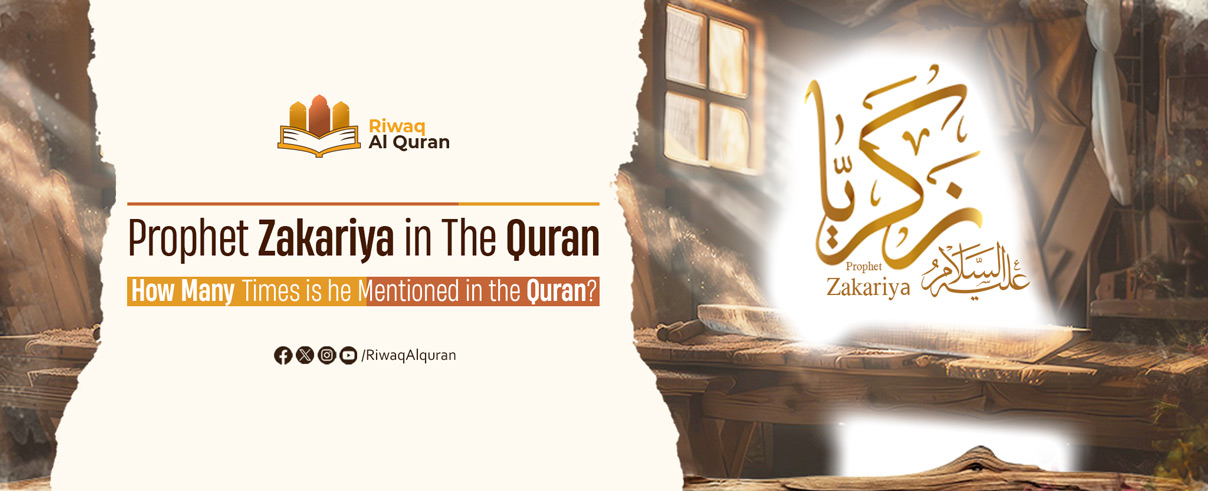
| Prophet Zakariya (AS) is mentioned by name exactly seven times across four Surahs in the Quran. |
| Prophet Zakariya’s story in the Quran centers on a miraculous supplication for a son, answered by Allah despite his extreme old age. |
| The four Surahs mentioning Zakariya are Al-Imran, Al-An’am, Maryam, and Al-Anbiya. |
| Prophet Zakariya’s du’a in Surah Maryam is among the most cited Quranic supplications in Islamic scholarly tradition. |
Prophet Zakariya (AS) stands among the most spiritually compelling figures in the Quran — a prophet who, in his most desperate moment, turned entirely to Allah and received an answer that defied every human expectation. His story is not peripheral; it runs through the heart of Quranic narrative about trust, supplication, and divine power.
He is mentioned by name seven times across four Surahs, each occurrence adding a distinct layer to his character. Studying these verses carefully — with proper Tafsir grounding — reveals a man whose faith was not passive but urgently, beautifully active.
Table of Contents
How Many Times Is Prophet Zakariya Mentioned by Name in the Quran?
Prophet Zakariya (AS) is mentioned by name seven times in the Quran, distributed across four Surahs: Al-Imran (Chapter 3), Al-An’am (Chapter 6), Maryam (Chapter 19), and Al-Anbiya (Chapter 21). Each mention serves a specific narrative or doctrinal purpose — none are repetitive in meaning.
The table below maps every occurrence precisely:
| Surah | Chapter | Verse(s) | Context |
| Al-Imran | 3 | 37 | Zakariya witnesses Maryam’s miraculous provision |
| Al-Imran | 3 | 38 | Zakariya makes his supplication for a son |
| Al-An’am | 6 | 85 | Listed among the righteous prophets |
| Maryam | 19 | 2 | Introduction to his story |
| Maryam | 19 | 7 | Allah responds with glad tidings of Yahya |
| Al-Anbiya | 21 | 89 | His supplication recalled |
| Al-Anbiya | 21 | 90 | Allah’s response and praise for the prophets |
This precision matters. When students study Quranic stories through our Online Quran Memorization Course at Riwaq Al Quran, one of the first lessons Azhari-certified tutors emphasize is that repetition in the Quran is never redundant — every mention of a prophet’s name signals a fresh dimension of meaning worth examining closely.
Start your Hifz journey with a Free Trial
What Does the Quran Say About Zakariya in Surah Al-Imran?
Surah Al-Imran contains two of the seven mentions, and together they form the earliest narrative context for Zakariya’s story. These verses (3:37–38) appear in the context of Maryam (AS) and her miraculous provisions.
Verse 3:37 Mentions Zakariya as a Witness for a Miracle:
كُلَّمَا دَخَلَ عَلَيْهَا زَكَرِيَّا ٱلْمِحْرَابَ وَجَدَ عِندَهَا رِزْقًا
Kullamā dakhala ʿalayhā Zakariyyā al-miḥrāba wajada ʿindahā rizqā
“Every time Zakariya entered upon her in the prayer chamber, he found with her provision.” (Al-Imran 3:37)
This verse establishes Zakariya as Maryam’s guardian. Witnessing out-of-season fruit appearing for her — with no human explanation — became the precise trigger for his own supplication. The Quran links these two miracles intentionally.
Verse 3:38 Highlights Zakariya’s Supplication:
هُنَالِكَ دَعَا زَكَرِيَّا رَبَّهُۥ ۖ قَالَ رَبِّ هَبْ لِى مِن لَّدُنكَ ذُرِّيَّةً طَيِّبَةً ۖ إِنَّكَ سَمِيعُ ٱلدُّعَآءِ
Hunalika daAAa zakariyya rabbahu qala rabbi hab lee min ladunka thurriyyatan tayyibatan innaka sameeAAu aldduAAai
“At that, Zechariah called upon his Lord, saying, “My Lord, grant me from Yourself a good offspring. Indeed, You are the Hearer of supplication.”” (Al-Imran 3:38)
The Arabic word هُنَالِكَ (hunālika — “at that point/there”) is pedagogically significant. Classical commentators like Ibn Kathir note that this word indicates immediate, causally-linked action.
Seeing Allah provide for Maryam miraculously, Zakariya did not deliberate — he supplicated on the spot. This is a model of responsive tawakkul that Tafsir scholars have drawn on across centuries.
Experience Riwaq Al Quran Classes
Watch real moments from our live sessions at Riwaq Al Quran and see how we bring learning to life. These clips highlight our interactive, student-focused approach designed to keep learners engaged, motivated, and actively involved in every step of their educational journey.
Zakariya’s Mention in Surah Al-An’am
In Surah Al-An’am, Prophet Zakariya is mentioned once — in verse 85 — as part of a distinguished list of prophets whom Allah specifically guided and chose.
وَزَكَرِيَّا وَيَحْيَىٰ وَعِيسَىٰ وَإِلْيَاسَ ۖ كُلٌّ مِّنَ ٱلصَّـٰلِحِينَ
Wa Zakariyyā wa Yaḥyā wa ʿĪsā wa Ilyās, kullun min aṣ-ṣāliḥīn
“And Zakariya and Yahya and Isa and Ilyas — all were of the righteous.” (Al-An’am 6:85)
This mention serves a doctrinal function distinct from narrative. Allah is enumerating His guided prophets to affirm a chain of divine guidance that Zakariya is explicitly included in.
His name appears alongside his own son Yahya — a detail that, after reading Surah Maryam, carries profound emotional weight.
Surah Maryam Present the Most Detailed Account of Zakariya
Surah Maryam opens with the most extended, intimate account of Zakariya’s story in the entire Quran. Two of the seven name-mentions appear here, but the surrounding narrative spans verses 2 through 11 — making this the primary Quranic source for his biography.
Verse 19:2 Presents The Opening Frame:
ذِكْرُ رَحْمَتِ رَبِّكَ عَبْدَهُۥ زَكَرِيَّآ
Dhikru raḥmati rabbika ʿabdahu Zakariyyā
“[This is] a mention of the mercy of your Lord to His servant Zakariya.” (Maryam 19:2)
The Surah introduces his story not as a biographical account but as an exhibit of rahmah — divine mercy.
This framing is deliberate. Everything that follows — his old age, his fear of dying without an heir, his supplication — is presented through the lens of Allah’s mercy, not human achievement.
Verse 19:7 Presents The Divine Response to Zakariya’s Supplication:
يَـٰزَكَرِيَّآ إِنَّا نُبَشِّرُكَ بِغُلَـٰمٍ ٱسْمُهُۥ يَحْيَىٰ
Yā Zakariyyā innā nubashshiruka bighulāmin ismuhu Yaḥyā
“O Zakariya, indeed We give you good tidings of a boy whose name will be Yahya.” (Maryam 19:7)
Allah addresses Zakariya directly by name in His response — a mark of divine intimacy rarely noted in general discussions of this passage. The name Yahya is given by Allah Himself, meaning it was not chosen by the parents. Classical scholars of Tafsir consider this a unique honor.
The famous supplication in verses 3–6, though not containing his name directly in those lines, forms the surrounding context for these two named references. Students in our Online Quran Tafseer Course work through precisely these textual layers — learning how context before and after a name-mention dramatically changes its meaning.
Enroll Now in Riwaq’s Tafseer Course with a FREE trial

The Verses in Surah Al-Anbiya Add to Zakariya’s Story
Surah Al-Anbiya contains the final two mentions of Zakariya by name, in verses 89 and 90. This Surah approaches his story thematically rather than narratively — focusing on the principle of turning to Allah in distress.
Verse 21:89 That Mentiona Zakariya’s Name in Surah Al-Anbiya
وَزَكَرِيَّآ إِذْ نَادَىٰ رَبَّهُۥ رَبِّ لَا تَذَرْنِى فَرْدًا
Wa Zakariyyā idh nādā rabbahu rabbi lā tadharni fardan
“And Zakariya, when he called to his Lord, ‘My Lord, do not leave me alone [with no heir].'” (Al-Anbiya 21:89)
فَٱسْتَجَبْنَا لَهُۥ وَوَهَبْنَا لَهُۥ يَحْيَىٰ
Fastajabnā lahu wa wahabnā lahu Yaḥyā
“So We responded to him, and We gave him Yahya.” (Al-Anbiya 21:90)
The verb فَٱسْتَجَبْنَا (fastajabnā) — “We responded” — is in the past tense but carries timeless Quranic weight. Scholars of Arabic linguistics note this is not merely historical reporting; it is a standing testament to the certainty of Allah’s response to sincere supplication. This verse is frequently cited in discussions of du’a methodology in Islamic scholarship.
In our sessions at Riwaq Al Quran, students preparing for Hifz often encounter Surah Al-Anbiya as one of the mid-Quran chapters requiring careful contextual grounding.
Without Tafsir knowledge, the rapid succession of prophets’ stories in this Surah can feel disconnected. With it, the thematic unity becomes clear — every prophet mentioned called upon Allah in difficulty, and every one received a response.
Connect with our Azhari tutors to learn and memorize the Quran

What Are the Key Lessons from Zakariya’s Verses for Quran Students?
The seven verses mentioning Zakariya by name teach several principles that Islamic scholars consistently extract from authentic Tafsir sources:
Lesson 1 — Supplication is Active, Not Passive
Zakariya’s du’a in every Surah is described with active, urgent Arabic verbs — daʿā, nādā. His calling upon Allah reflects complete reliance combined with earnest effort.
Lesson 2 — Context Triggers Supplication
In Al-Imran, witnessing Maryam’s miracle directly prompted his prayer. The Quran models how observing Allah’s power in others should increase one’s own tawakkul.
Lesson 3 — Allah Names What He Wills
That Yahya’s name was divinely assigned — mentioned explicitly in the Quranic response — underlines that Zakariya’s heir was entirely Allah’s gift, not a human plan.
Lesson 4 — Age Is No Barrier to Divine Generosity
Zakariya explicitly acknowledged his old age and his wife’s barrenness in his supplication, yet asked anyway. This combination of honest acknowledgment and continued hope is a model the Quran preserves deliberately.
These lessons are most fully appreciated when approached through structured Islamic Studies courses grounded in classical Tafsir methodology.
Begin your Islamic Studies with a FREE trial lesson
Why Students Love Learning with Riwaq Al Quran
Hear directly from our students about how Riwaq Al Quran Academy has transformed their connection with the Book of Allah. Their experiences reflect the dedication, care, and quality that guide every step of our teaching.
Start Learning the Quran with Expert Guidance from Riwaq Al Quran
Understanding the Quran’s stories — including Prophet Zakariya’s seven appearances across four Surahs — requires more than reading translations. It requires authentic Tafsir knowledge, structured study, and qualified guidance.
At Riwaq Al Quran, you get:
- Azhari-certified instructors (Al-Azhar University graduates)
- One-on-one personalized sessions, available 24/7
- Structured courses in Memorization, Tafsir, and Islamic Studies
- Two free trial classes — no commitment required
- Affordable plans and a 100% money-back guarantee
We offer courses in Online Quran & Tajweed Classes, Arabic Language, and Islamic Studies.
- Online Quran Memorization Course
- Tafseer Course
- Tajweed Classes
- Online Quran Classes for Kids.
- Ijazah Program.
- Qirat Course.
- Arabic Language Classes.
- Islamic Studies Courses.
Enroll now for 2 Free Trial Classes

Conclusion
Prophet Zakariya’s seven Quranic mentions are not scattered footnotes — they form a coherent portrait of a prophet whose greatest strength was his willingness to ask Allah for what seemed impossible. From Al-Imran’s narrative trigger to Al-Anbiya’s thematic summation, each verse adds precision to that portrait.
For Quran students, these verses are also a masterclass in how the Quran teaches through repetition with variation. Understanding that pattern — and extracting its full meaning — is precisely what separates surface-level reading from genuine Quranic comprehension.
Insha’Allah, exploring these stories through proper Tafsir study will deepen not only your knowledge but your connection to the Quran itself.


Read Also: How Many Times Is Musa Mentioned in the Quran?
Frequently Asked Questions About Prophet Zakariya in the Quran
How many times is Prophet Zakariya mentioned in the Quran?
Prophet Zakariya (AS) is mentioned by name exactly seven times in the Quran, across four Surahs: Al-Imran (Chapter 3, verses 37 and 38), Al-An’am (Chapter 6, verse 85), Maryam (Chapter 19, verses 2 and 7), and Al-Anbiya (Chapter 21, verses 89 and 90). Each mention serves a distinct narrative or thematic function within its Surah.
Which Surah contains the most detailed story of Prophet Zakariya?
Surah Maryam (Chapter 19) provides the most extended account of Zakariya’s story, spanning verses 2 through 11. It frames his entire narrative as an exhibition of divine mercy (rahmah), covers his supplication in emotional detail, and records Allah’s direct response giving the glad tidings of Yahya by name.
What was Prophet Zakariya’s supplication in the Quran?
In Surah Maryam, Zakariya supplicated privately, acknowledging his old age and his wife’s barrenness, yet sincerely asking Allah for a righteous heir. In Surah Al-Anbiya (21:89), his supplication is summarized as: “My Lord, do not leave me alone [without an heir].” Both versions are preserved in the Quran as models of sincere, humble du’a.
Is Prophet Zakariya related to Maryam in the Quran?
The Quran indicates that Zakariya was Maryam’s guardian, entering upon her in the prayer chamber (Al-Imran 3:37). Classical Tafsir scholars, including Ibn Kathir, understood him to be her maternal uncle or a close relative assigned her guardianship. The Quran does not specify the exact family relationship beyond the guardian role.
How can I study the Tafsir of Prophet Zakariya’s verses in depth?
Structured Tafsir study under qualified guidance is the most reliable method. Riwaq Al Quran’s Online Quran Tafseer Course connects students with Azhari-certified instructors who teach classical Tafsir methodology, including the contextual analysis needed to understand prophetic narratives like Zakariya’s across multiple Surahs. You can also explore foundational Tafsir concepts to begin your study.