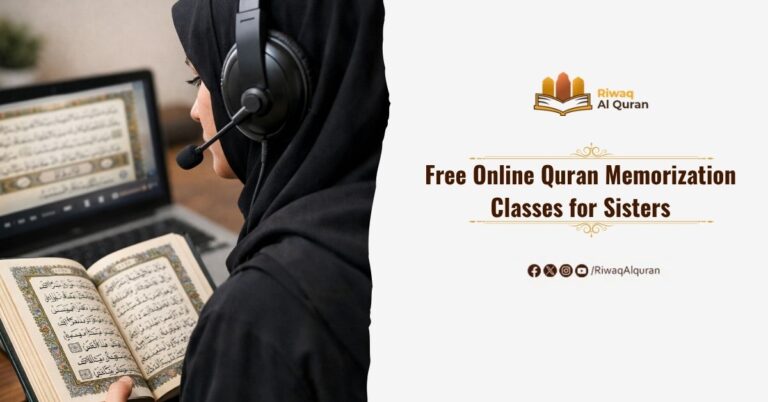

The mushaf can feel heavier than it looks. Not because of its pages, but because of what starts whispering once you open it—fear of forgetting, fear of failing, fear that you’re not built for this kind of commitment. Many students recognize that silence before memorization begins.
Those mental blocks aren’t random, and they aren’t personal flaws. Fear of forgetting, perfectionism, self-doubt, comparison, vague goals, and past failures all interfere with how memory actually works. When those patterns are named and handled correctly, memorization stops feeling like an emotional fight and becomes a structured, manageable practice.
Table of Contents
1. Fear of Forgetting After Quran Memorization is The Most Common Psychological Barrier in Memorization
Fear of forgetting is the primary psychological barrier in Quran memorization that prevents students from even starting their Hifz. This anxiety creates a self-fulfilling prophecy where stress impairs the very retention you’re trying to achieve.
The fear stems from a misconception about how memory works. Allah designed our minds to retain through repetition, not perfection on the first attempt. Understanding this removes unnecessary pressure.
A. Understanding the Forgetting Curve in Quran Memorization
German psychologist Hermann Ebbinghaus discovered that forgetting follows a predictable pattern. Without review, we lose approximately 50% of new information within 24 hours. However, each subsequent review strengthens retention exponentially.
At Riwaq Al Quran, our Online Quran Memorization Course teaches systematic review schedules that work with your brain’s natural retention cycles, not against them. Our Azhari tutors guide students through proven revision techniques used in Al-Azhar’s traditional Hifz methodology.
Start your Hifz journey with a Free Trial

B. Reframing Forgetting as Part of Quran Memorization Process
The Companions themselves forgot verses and corrected each other. This demonstrates that temporary forgetting doesn’t indicate failure.
Prophet Muhammad ﷺ said: “Keep on reciting the Quran, for by Him in Whose Hand my life is, the Quran runs away (is forgotten) faster than camels that are released from their tying ropes.” (Sahih Bukhari)
This hadith normalizes forgetting and emphasizes consistent recitation as the solution. When you shift from fearing forgetting to expecting and managing it, anxiety decreases significantly.
2. Perfectionism as a Psychological Barrier in Quran Memorization Progress
Perfectionism creates paralysis. Students delay moving forward because their recitation isn’t “perfect enough” yet. This psychological barrier in memorization disguises procrastination as conscientiousness.
While striving for excellence in Quran recitation is praiseworthy, perfectionism crosses into harmful territory when it prevents progress. The goal is continuous improvement, not unattainable flawlessness.
A. The Difference Between Excellence and Perfectionism in Hifz
Excellence means applying Tajweed rules correctly and striving to improve. Perfectionism means refusing to move forward until every single breath, pause, and inflection matches your idealized standard.
Azhari tutors at Riwaq Al Quran help students distinguish between necessary precision in articulation points (makhraj) and counterproductive perfectionism. They provide realistic benchmarks for when to advance to new verses.
Enroll Now in the Best Online Tajweed Classes

B. Setting Realistic Memorization Standards
A verse is ready for review when you can recite it with correct Tajweed three times consecutively without looking. It doesn’t require sounding exactly like Qari Abdul Basit on your first memorization.
Your first memorization establishes the foundation; years of review build mastery.
3. Self-Doubt and Imposter Syndrome in Quran Memorization
Many students harbor deep psychological barriers in memorization rooted in self-doubt. They believe memorizing the Quran is only for “special” people with exceptional abilities, not ordinary Muslims like themselves.
This belief contradicts the Quran’s own testimony about itself. Allah describes the Quran as easy to remember for those who seek to remember it.
وَلَقَدْ يَسَّرْنَا ٱلْقُرْءَانَ لِلذِّكْرِ فَهَلْ مِن مُّدَّكِرٍۢ
Walaqad yassarna alqur’ana lildhikri fahal min muddakir
“And We have certainly made the Qur’an easy for remembrance, so is there any who will remember?” (Al-Qamar 54:17)
This verse appears four times in Surah Al-Qamar, emphasizing Allah’s promise. If Allah made it easy, your struggle indicates methodology issues, not personal inadequacy.
Recognizing the Signs of Imposter Syndrome in Hifz Students
Imposter syndrome manifests when you attribute others’ success to talent but your own to luck. You might think, “They’re naturally gifted, but I’m just getting by.”
You may also hesitate to share your memorization progress or feel unworthy of reciting during Salah despite knowing verses correctly. These thoughts are psychological barriers in memorization, not reality.
Working with qualified Azhari tutors at Riwaq Al Quran provides the individualized attention needed to build confidence through measurable progress, with flexible scheduling available 24/7.
Get your personalized plan with Azhari Tutors

4. Comparison Anxiety Is a Hidden Psychological Barrier in Memorization
Comparing your progress to others creates debilitating anxiety. You see someone complete a Juz in three months while you’re struggling through a single page.
This comparison ignores crucial variables: their prior Arabic knowledge, daily available time, previous memorization experience, and learning style differences. Their pace isn’t your benchmark.
A. The Danger of Social Media Comparison in Hifz
Instagram posts celebrating Hifz completion rarely show the hundreds of hours, tears, and struggles behind the success. You’re comparing your behind-the-scenes with someone else’s highlight reel.
Allah tests each person according to their unique circumstances. Your memorization, done with sincerity despite your specific challenges, may be more beloved to Allah than someone else’s faster completion.
B. Focusing on Personal Progress Over External Competition
Track your own metrics: How many verses did you solidify this week? How has your pronunciation of the letter ض improved? Are you reviewing more consistently?
Your only competition is yesterday’s version of yourself. Personal growth in Quran memorization matters infinitely more than matching someone else’s timeline.
Experience Riwaq Al Quran Classes
Watch real moments from our live sessions at Riwaq Al Quran and see how we bring learning to life. These clips highlight our interactive, student-focused approach designed to keep learners engaged, motivated, and actively involved in every step of their educational journey.
5. Overwhelm From Inadequate Goal-Setting in Quran Memorization
Goals like “memorize the Quran” create overwhelming psychological barriers in memorization. The human brain struggles with massive, undefined tasks but excels with specific, measurable objectives.
Breaking the Hifz into manageable portions transforms an impossible mountain into climbable steps. This requires strategic planning, not just enthusiasm.
A. The Problem With “Memorize the Whole Quran” as a Goal
Setting “complete Hifz” as your sole goal provides no roadmap, no milestones, and no sense of progress until the very end. This demotivates most students.
Instead, create hierarchical goals: This month, memorize Surah Al-Mulk. This week, solidify the first 15 verses. Today, master verses 1-5 with proper Ghunnah application.
B. SMART Goal Framework for Quran Memorization
Specific: “Memorize Surah Ar-Rahman” not “memorize more Quran”
Measurable: “Three new verses daily” not “as much as possible”
Achievable: Based on your actual available time and current level
Relevant: Aligned with your spiritual objectives
Time-bound: “Complete in 60 days” provides accountability
This framework eliminates the psychological barrier in memorization caused by unclear expectations and provides daily direction.
Read Also: Quran Memorization for Men


Read Also: Quranic Memorization and Review Program
6. Past Failure Trauma Blocking Current Quran Memorization Attempts
Many students carry psychological barriers in memorization from previous failed attempts. Perhaps you memorized portions of the Quran in childhood but forgot them, creating lasting discouragement.
Past failure doesn’t predict future results when you change the approach. Most previous failures stemmed from inappropriate methods, inconsistent review, or lack of qualified guidance.
A. Identifying Patterns From Past Quran Memorization Attempts
Analyze what went wrong previously without self-blame. Did you lack a Quran review system? Was your daily portion too ambitious? Did you memorize without understanding?
These weren’t character failures but methodological gaps. Recognizing specific problems allows targeted solutions rather than vague “try harder” resolutions.
B. Starting Fresh With Evidence-Based Methods
Modern understanding of memory science combined with traditional Islamic pedagogy creates powerful results. Spaced repetition, active recall, and proper Tajweed integration form the foundation.
Read Also: Quran Memorization Program
Why Students Love Learning with Riwaq Al Quran
Hear directly from our students about how Riwaq Al Quran Academy has transformed their connection with the Book of Allah. Their experiences reflect the dedication, care, and quality that guide every step of our teaching.
Start Your Hifz Journey With Riwaq Al Quran
Understanding psychological barriers in memorization is crucial, but transformation requires expert guidance and proven methodology. Don’t let mental obstacles steal your chance to carry the Quran in your heart.
Riwaq Al Quran offers comprehensive support through:
- Certified Azhari tutors who are graduates of Al-Azhar University with specialized Hifz training
- 1-on-1 personalized sessions tailored to your psychological needs and learning style
- 24/7 flexible scheduling that accommodates your life commitments
- Affordable pricing starting at just $32/month
- 2 Free Trial Classes with no credit card required to experience our methodology
- 100% Money-Back Guarantee because we’re confident in our proven approach
Our Online Quran Memorization Course combines traditional Azhari methods with modern learning science to help you overcome every psychological barrier. We’ve guided thousands of students since 2017 through successful Hifz completion.
Beyond memorization, we offer courses in Online Tajweed Classes, Arabic Language, and Islamic Studies.
- Online Quran Memorization Course
- Tajweed Classes
- Online Quran Classes for Kids.
- Ijazah Program.
- Arabic Language Classes.
- Islamic Studies Courses.
Enroll now for 2 Free Trial Classes and Begin Memorizing Quran Today.

Conclusion
Psychological barriers in memorization rarely come from lack of sincerity. They usually grow from misunderstandings about how memory develops and how long-term retention is built. Fear fades when forgetting is treated as expected, reviewed, and corrected instead of feared.
Progress slows most when standards become unrealistic—either through perfectionism or comparison. Sound Tajweed, steady review, and personal benchmarks matter more than speed or imitation. Memorization strengthens when growth is measured against yesterday, not against someone else’s pace.
Sustainable Hifz depends on clear goals, honest reflection, and the right method. Past failures don’t define future outcomes when the approach changes. With structure, qualified guidance, and patience, mental obstacles stop blocking memorization and start revealing exactly what needs adjustment.