Surah Taha carries a weight that goes beyond its 135 verses. It was the surah that softened one of the hardest hearts in Makkah — Umar ibn al-Khattab (RA) — before he became one of Islam’s greatest leaders. That alone tells you something profound about what this surah holds for anyone who recites it with presence and understanding.
The benefits of Surah Taha are both spiritual and practical. From strengthening a believer’s connection with Allah to offering supplications taught directly by the Quran, this surah speaks to the student, the parent, the struggling soul, and anyone seeking closeness to their Lord. Reciting it with tajweed and understanding its tafsir deepens every benefit it carries.
Table of Contents
1. Surah Taha Eases Hardship and Brings Divine Reassurance to the Heart
One of the most immediate and documented benefits of Surah Taha is the profound comfort it offers a believer under pressure. The surah opens with Allah telling His Prophet:
“We have not sent down to you the Qur’an that you be distressed” (Taha 20:2).
This single verse is a direct divine reassurance — not merely a historical address to the Prophet ﷺ, but a message that reaches every Muslim reciting it in difficulty.
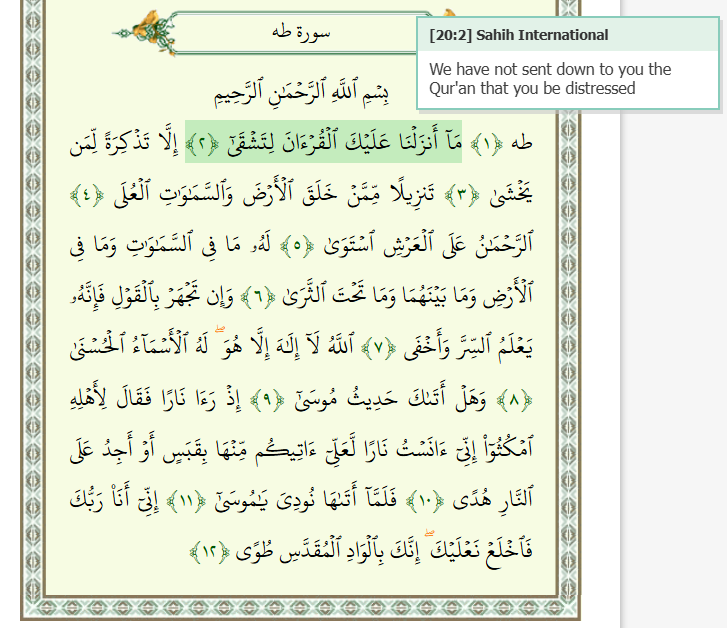
When life tightens, when anxiety rises, when a person feels overwhelmed by circumstances, returning to this opening is an act of grounding. Classical mufassirun understood this verse as proof that the Quran was sent as mercy, not burden.
The reassurance embedded in the surah’s earliest verses makes it a natural recourse for the heart seeking stillness.
At Riwaq Al Quran, our tutors regularly observe that students who engage with Surah Taha through structured tafsir — not just recitation — report a noticeably different relationship with the surah.
Understanding what Allah is actually saying transforms recitation from a ritual into a conversation. Our Online Quran Tafseer Course is designed precisely for this level of engagement.
Enroll Now in Riwaq’s Tafseer Course

2. Teaching Profound Tawakkul
Surah Taha dedicates a large portion of its verses to the story of Prophet Musa (AS) — from his early prophethood, to his confrontation with Pharaoh, to the parting of the sea. This narrative is not repetition for its own sake.
Each retelling in the Quran carries a distinct angle, and Surah Taha’s version emphasizes divine support in moments of apparent impossibility.
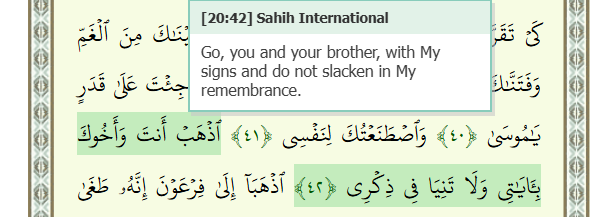
Allah commands Musa directly: “Go, you and your brother, with My signs and do not slacken in My remembrance” (Taha 20:42). This is a command woven with reassurance — go forward, but stay anchored in dhikr.
The lesson for the believer is unmistakable: action and remembrance of Allah are not competing demands. They reinforce each other.
For students studying tafsir meaning and the depth behind Quranic narratives, Surah Taha offers one of the richest story-based lessons in the entire Quran. The emotional arc of Musa’s story — fear, divine reassurance, action, and eventual victory — mirrors the arc of nearly every believer’s spiritual struggle.
3. The Most Powerful Quranic Duas for Knowledge
Among the most cited benefits of Surah Taha is that it contains a supplication taught directly by Allah to His Prophet. This is not a hadith-reported dua. It is a Quranic instruction — meaning Allah Himself directed His Prophet to say these words:
رَّبِّ زِدْنِى عِلْمًۭا
Rabbi zidni ‘ilma
“My Lord, increase me in knowledge.” (Taha 20:114)
These four words carry enormous weight in Islamic scholarship. If the Prophet ﷺ — the most knowledgeable of humans — was instructed to ask for more knowledge, the lesson for every believer is clear: seeking knowledge is a lifelong act of worship, not a phase.
For students who recite this surah as part of their Quran memorization practice or their daily wird, anchoring this dua into regular recitation makes it a living supplication. It connects the act of Quran study itself to a direct divine command.
Anyone benefiting from our Online Quran Memorization Course is encouraged to make this dua a daily companion to their sessions.
Start your Hifz journey with a Free Trial
4. Surah Taha Offers a Lesson on Repentance
One of the less-discussed yet deeply moving sections of Surah Taha is its account of Adam (AS) — his forgetfulness, his error, and his repentance. Allah describes how Adam forgot the covenant, and then:
فَتَابَ عَلَيْهِ وَهَدَىٰ
Fataba ‘alayhi wa hada
“Then his Lord chose him and turned to him in forgiveness and guided him.” (Taha 20:122)
This verse encapsulates the Islamic theology of repentance with extraordinary economy of words. Adam sinned, turned back, and Allah chose him and guided him.
The sequence — tawbah followed by divine guidance — is a pattern the Quran affirms repeatedly. Surah Taha reinforces that no believer is too far from Allah’s mercy to return.
For anyone carrying guilt, struggling with consistency in worship, or feeling spiritually distant, this passage in Surah Taha is among the most humanizing in the entire Quran. It grounds the concept of tawbah not in theory, but in the first human story.
Experience Riwaq Al Quran Classes
Watch real moments from our live sessions at Riwaq Al Quran and see how we bring learning to life. These clips highlight our interactive, student-focused approach designed to keep learners engaged, motivated, and actively involved in every step of their educational journey.
5. Surah Taha Benefits for Students Seeking Clarity and Focus
The surah’s opening letters — طه (Ta Ha) — along with its sustained emphasis on divine guidance, knowledge, and patience, make it particularly resonant for students and learners. The verse
“Rabbi zidni ‘ilma”
alone has been adopted by generations of Muslim scholars and students as a pre-study supplication.
Beyond that specific dua, the surah’s narrative structure models intellectual courage. Musa (AS) faces Pharaoh’s magicians — a formidable intellectual and psychological challenge — and stands firm. Allah reassures him:
“Do not fear. Indeed, it is you who are superior.” (Taha 20:68).
For students facing exams, memorization pressure, or academic difficulty, this verse models the combination of preparation, trust in Allah, and forward movement.
Students enrolled in Islamic studies classes often encounter Surah Taha as a study in Quranic pedagogy — how Allah teaches through narrative, repetition, and emotional resonance rather than abstract instruction alone.
Begin your Islamic Studies with a FREE trial lesson
6. Surah Taha Benefits for Marriage and the Household
While no authentic hadith specifically designates Surah Taha as a surah for marriage, some have noted its thematic richness around divine planning, trust in Allah, and the account of Musa’s family — including the extraordinary preservation of his life as an infant through his mother’s tawakkul.
The surah models how the believer’s relationship with Allah — built on honest supplication and complete reliance — creates the foundation for barakah in all life domains, including marriage and family.
“And whoever turns away from My remembrance — indeed, he will have a depressed life” (Taha 20:124)
is a verse scholars have consistently cited when addressing the spiritual dimensions of a peaceful home.
Any benefit connected to Surah Taha and marriage should be understood through this lens: regular, attentive recitation of the Quran — with understanding — brings the believer closer to Allah, and that closeness positively affects every relationship.
7. Surah Taha Benefits During Pregnancy and Times of Vulnerability
While specific, verified hadiths designating Surah Taha exclusively for pregnancy are not established in the major hadith collections, the surah’s themes are profoundly relevant to a pregnant believer.
The account of Musa’s mother — who received direct divine revelation to place her infant in the river, with Allah’s promise to return him — is one of the most powerful demonstrations of divine protection in the Quran.
إِذْ أَوْحَيْنَآ إِلَىٰٓ أُمِّكَ مَا يُوحَىٰٓ ﴿٣٨﴾ أَنِ ٱقْذِفِيهِ فِى ٱلتَّابُوتِ فَٱقْذِفِيهِ فِى ٱلْيَمِّ فَلْيُلْقِهِ ٱلْيَمُّ بِٱلسَّاحِلِ يَأْخُذْهُ عَدُوٌّ لِّى وَعَدُوٌّ لَّهُۥ ۚ وَأَلْقَيْتُ عَلَيْكَ مَحَبَّةً مِّنِّى وَلِتُصْنَعَ عَلَىٰ عَيْنِىٓ
“When We inspired to your mother what We inspired, (38) [Saying], ‘Cast him into the chest and cast it into the river, and the river will throw it onto the bank; there will take him an enemy to Me and an enemy to him.’ And I bestowed upon you love from Me that you would be brought up under My eye.'” (Taha 20:38-39)
For a pregnant believer, this passage carries immense emotional and spiritual weight: Allah protects what is entrusted to Him. Reciting Surah Taha with this understanding is a meaningful act of tawakkul during a vulnerable, hopeful time.

8. Surah Taha Benefits for Health and the Overall Wellbeing of the Believer
While specific, verified hadiths designating Surah Taha exclusively for health are not established in the major hadith collections, the connection between Quran recitation and well-being is established in Islamic theology through the Quran’s own description of itself. Allah says in Surah Al-Isra:
“And We send down of the Quran that which is healing and mercy for the believers” (Al-Isra 17:82).
This applies to the Quran as a whole, including Surah Taha.
Surah Taha’s specific contribution to wellbeing lies in its sustained message of relief and divine presence. The opening declaration — that the Quran was not sent to cause distress — positions the surah itself as an antidote to the inner heaviness that accompanies poor health, anxiety, or chronic difficulty.
The Prophet ﷺ said: “There is no disease that Allah has created, except that He also has created its treatment.” (Sahih al-Bukhari 5678). The believer who recites Surah Taha in a state of illness, combining recitation with dua and medical treatment, is practicing a holistic approach grounded in both prophetic tradition and Quranic reliance on Allah.
9. The Hadith Dimension of Surah Taha and Its Documented Status
Regarding Surah Taha benefits hadith specifically — it is important to state clearly: several narrations circulate online claiming specific rewards for reciting Surah Taha that are either very weak or have no traceable chain. Scholarly integrity requires distinguishing between what is established and what is not.
What is authentically documented is the account of Umar ibn al-Khattab (RA) and his acceptance of Islam after hearing this surah — reported in Sirah literature with strong chains. This is not a hadith about its recitation reward, but it is historical testimony to the surah’s transformative power.
The Quran’s general descriptions of its own healing and guidance properties — such as Al-Isra 17:82 — apply fully to Surah Taha. Scholars like Ibn Kathir in his tafsir address Surah Taha’s content with depth, while being measured about claims specific to reward. Anyone seeking the verified scholarly position is encouraged to engage with classical tafsir through our Online Quran Tafseer Course.
Enroll Now in Riwaq’s Tafseer Course with a FREE trial

The table below summarizes key themes in Surah Taha and their connection to the believer’s life:
| Quranic Theme in Surah Taha | Verse Reference | Benefit for the Believer |
| Divine reassurance against distress | 20:2 | Comfort during hardship and anxiety |
| Dua for knowledge | 20:114 | Supplication for students and seekers |
| Tawbah and divine forgiveness | 20:122 | Hope and return for the repentant |
| Musa’s mother and divine protection | 20:38–39 | Tawakkul during vulnerability |
| Remembrance of Allah | 20:124 | Spiritual foundation for a peaceful life |
Why Students Love Learning with Riwaq Al Quran
Hear directly from our students about how Riwaq Al Quran Academy has transformed their connection with the Book of Allah. Their experiences reflect the dedication, care, and quality that guide every step of our teaching.
Reciting Surah Taha with Tajweed Deepens Every Spiritual Benefit
The benefits of Surah Taha are not merely in the words — they are unlocked through proper, attentive recitation. Surah Taha contains a variety of Tajweed applications: extended Madd letters, Ghunnah rules, and instances of Idgham that must be applied correctly for the recitation to fulfill its purpose.
Reciting طه itself requires correct application of the Madd al-Lazim — a six-count elongation — a rule that many non-Arabic speakers miss without proper instruction. This is the kind of detail that separates recitation that fulfills the right of the surah from recitation that approximates it.
Mastering these rules through structured learning is not optional for the serious reciter. Review our detailed resources on tajweed rules and the benefits of tajweed to understand what correct recitation actually requires — and why it matters spiritually.
| Tajweed Rule | Where It Appears in Surah Taha | Application Requirement |
| Madd al-Lazim (6 counts) | Opening letters طه | Mandatory elongation, Hafs ‘an Asim |
| Ghunnah (2 counts) | Multiple instances of Noon and Meem with shadda | Nasal resonance must be applied |
| Idgham | Noon sakinah followed by applicable letters | Complete merging with nasal resonance |
| Qalb | Noon sakinah before Baa | Conversion to Meem with Ghunnah |
Learning these rules with a qualified tutor — not from approximation — is how the recitation of Surah Taha becomes technically sound and spiritually complete.
Begin Experiencing the Benefits of Surah Taha Through Structured Learning at Riwaq Al Quran
Understanding Surah Taha changes how you recite it. And reciting it correctly changes how it affects you. At Riwaq Al Quran, our Azhari-certified tutors guide students through both — proper recitation with tajweed and meaningful engagement through tafsir.
Our most relevant courses for this:
- Online Quran Memorization Course — memorize with correct application from the start
- Online Quran Tafseer Course — understand what you recite, verse by verse
- Best Islamic Studies Online Course — build the broader Islamic knowledge that deepens Quranic understanding
Two free trial classes. 24/7 scheduling. 100% Money-Back Guarantee. Book your free trial today and let Surah Taha become more than words — let it become understanding.
We offer courses in Online Quran & Tajweed Classes, Arabic Language, and Islamic Studies.
- Online Quran Memorization Course
- Tafseer Course
- Tajweed Classes
- Online Quran Classes for Kids.
- Ijazah Program.
- Arabic Language Classes.
- Islamic Studies Courses.
Enroll now for 2 Free Trial Classes and Begin Learning Islam and Quran Today
Frequently Asked Questions About Surah Taha Benefits
What are the main benefits of reciting Surah Taha regularly?
The main benefits of reciting Surah Taha include spiritual comfort during hardship, connection to powerful Quranic supplications like “Rabbi zidni ‘ilma,” and deep lessons in tawakkul and repentance through the stories of Musa and Adam (AS). Regular recitation with understanding strengthens the believer’s relationship with Allah and brings the heart to a state of tranquility.
Are there authentic hadiths about specific rewards for reciting Surah Taha?
No specific, widely authenticated hadith establishes distinct recitation rewards exclusive to Surah Taha. The general Quranic principle that the Quran is “healing and mercy” (Al-Isra 17:82) applies. The historical account of Umar (RA) embracing Islam after hearing it is documented in Sirah literature. Scholars advise caution regarding weak or fabricated narrations circulating online about this surah.
What are the benefits of Surah Taha for students?
Surah Taha is particularly resonant for students because it contains the Quranic dua “Rabbi zidni ‘ilma” (My Lord, increase me in knowledge) in verse 114. This supplication, taught by Allah directly, models that seeking knowledge is an act of worship. The surah’s narrative of Musa facing intellectual challenge with divine support further reinforces courage and perseverance in learning.
Is there a connection between Surah Taha and marriage in Islamic scholarship?
No authenticated hadith establishes Surah Taha specifically for marriage outcomes. However, scholars connect the surah’s core theme — that turning away from Allah’s remembrance brings a constricted life (20:124) — to the spiritual foundations of a blessed marriage. Regular recitation with understanding builds the tawakkul and God-consciousness that underpin a healthy, spiritually grounded marital relationship.
How can I memorize Surah Taha effectively as a non-Arabic speaker?
Memorizing Surah Taha as a non-Arabic speaker requires three elements: correct pronunciation through tajweed, systematic Quran memorization techniques, and a structured Quran memorization schedule. Working with an Azhari-certified tutor ensures that what you memorize is phonetically and spiritually sound from the first repetition, preventing deeply ingrained errors that become difficult to correct later.