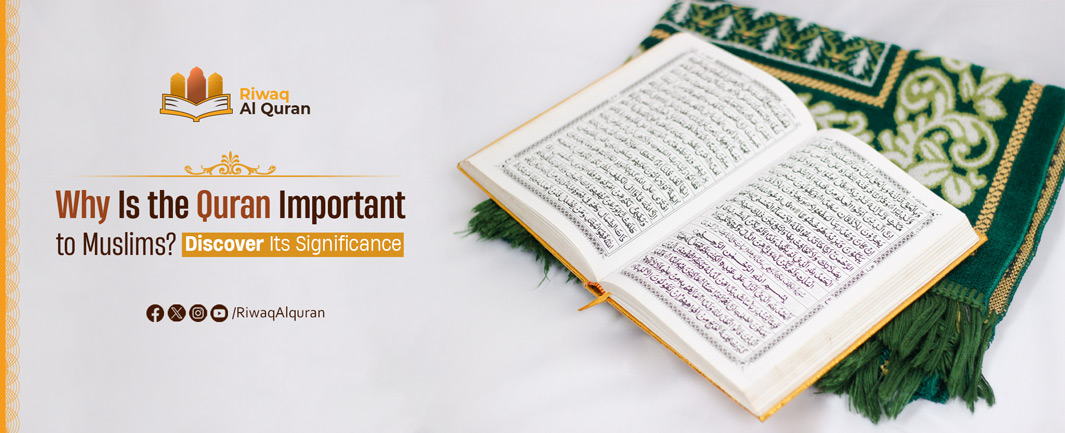
| Key Takeaways |
| The Quran is the literal word of Allah, preserved letter-perfect in Arabic for over 1,400 years without alteration. |
| Muslims believe the Quran serves as their primary legal, spiritual, and moral authority governing every dimension of life. |
| Reciting the Quran carries measurable spiritual reward; each letter earns ten hasanat according to authenticated hadith. |
| The Quran is the foundation of Islamic worship — Salah is invalid without reciting Al-Fatiha in every rak’ah. |
The Quran is the direct speech of Allah, transmitted through Jibreel, preserved in the memory of millions, unchanged across fourteen centuries.
That belief reshapes everything. It determines how Muslims hold the Quran, how they speak before opening it, how they grieve when they forget a verse. Understanding why the Quran is important to Muslims means understanding that for over a billion people, this is not religious literature — it is a living covenant between the Creator and humanity.
Table of Contents
1. The Quran Is the Literal, Unaltered Word of Allah
The Quran is important to Muslims above all else because it is believed to be the direct, verbatim speech of Allah — not inspired writing, not prophetic interpretation, but divine dictation preserved letter-perfect.
This foundational belief separates the Quran from every other religious text in Islamic theology, including the hadith of the Prophet ﷺ himself.
Allah confirmed this preservation directly:
إِنَّا نَحْنُ نَزَّلْنَا ٱلذِّكْرَ وَإِنَّا لَهُۥ لَحَـٰفِظُونَ
Innā naḥnu nazzalnā al-dhikra wa-innā lahu laḥāfiẓūn
“Indeed, it is We who sent down the Reminder, and indeed, We will be its guardian.” (Al-Hijr 15:9)
The identical text recited in Cairo, Lagos, Jakarta, and Detroit today matches what was memorized by the Companions of the Prophet ﷺ.
2. The Quran Is the Supreme Source of Islamic Law and Guidance
The Quran functions as the primary legislative source for the entire Islamic legal tradition. Every ruling in Fiqh, every ethical principle in Islamic ethics, every matter of Halal and Haram traces its legitimacy back to the Quran first. This is not ceremonial — it is operational theology lived daily.
Muslims consult Quranic guidance on inheritance, marriage, business ethics, criminal justice, interfaith relations, and personal conduct.
When scholars at Al-Azhar University issue a fatwa, the opening line is always a Quranic reference.
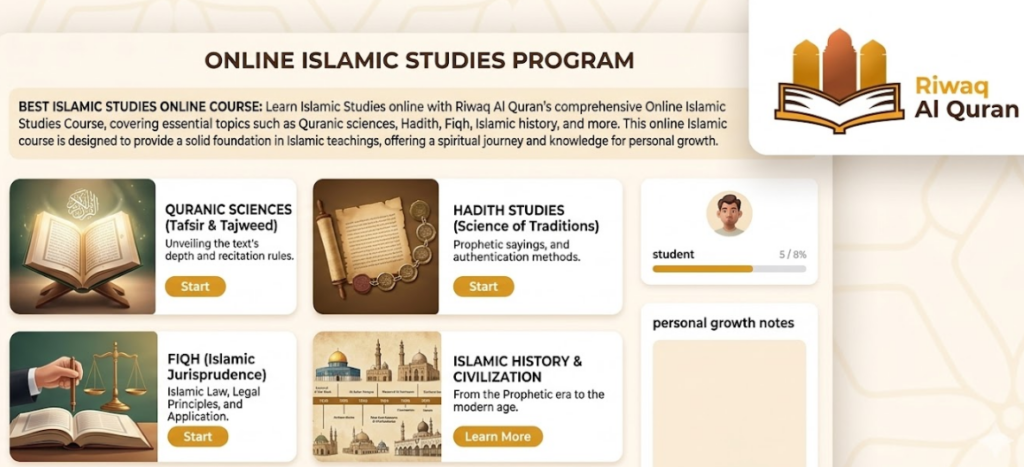
For students exploring Islamic studies in Riwaq’s Islamic studies course, understanding this legal role is the starting point of the entire discipline.
Begin your Islamic Studies with a FREE trial lesson
3. The Quran Makes Salah Valid
The Quran is not studied only at a desk. It is recited in every unit of every prayer, five times daily, for a Muslim’s entire life. Al-Fatiha — the opening chapter — is obligatory in every rak’ah. Without it, the prayer is invalid according to the dominant scholarly position across all four major madhabs.
This means a Muslim who prays five daily prayers recites Al-Fatiha a minimum of seventeen times each day.
Over a lifetime, that is hundreds of thousands of recitations. The Quran does not sit on a shelf in Islamic worship — it is the worship.
This reality alone explains why correct recitation with proper Tajweed rules is treated as a religious obligation, not an elective skill.
Experience Riwaq Al Quran Classes
Watch real moments from our live sessions at Riwaq Al Quran and see how we bring learning to life. These clips highlight our interactive, student-focused approach designed to keep learners engaged, motivated, and actively involved in every step of their educational journey.
4. Every Quranic Letter Recited Carries Multiplied Spiritual Reward
Reciting the Quran earns specific, documented spiritual reward that motivates millions of Muslims to recite daily. This is not vague encouragement — it is precise theological teaching backed by authenticated hadith.
The Prophet ﷺ said:
“Whoever recites a letter from the Book of Allah will receive a good deed, and a good deed is multiplied ten times. I am not saying that Alif Lam Mim is a letter, rather Alif is a letter, Lam is a letter, and Mim is a letter.” (Sunan al-Tirmidhi 2910)
This hadith reframes the Quran’s importance from abstract reverence to daily spiritual accounting.
At Riwaq Al Quran, our instructors consistently observe that students who internalize this reality — particularly adult beginners who struggle with slow recitation — stop apologizing for their pace and start appreciating the weight of each letter they work through.
Connect with our Azhari tutors to learn and memorize the Quran
5. The Quran Is the Miracle That Proves the Prophet’s Prophethood
In Islamic theology, every prophet was granted a miracle suited to his era. Musa had staff and sea. ‘Isa healed the sick. Muhammad ﷺ was given the Quran — a linguistic miracle directed at a civilization that prized eloquence above all else.
The 7th-century Arabs were masters of poetry and rhetoric. The Quran challenged them directly:
وَإِن كُنتُمْ فِى رَيْبٍۢ مِّمَّا نَزَّلْنَا عَلَىٰ عَبْدِنَا فَأْتُوا۟ بِسُورَةٍۢ مِّن مِّثْلِهِۦ
Wa-in kuntum fī raybin mimmā nazzalnā ʿalā ʿabdinā fa-ʾtū bi-sūratin min mithlih
“And if you are in doubt about what We have sent down upon Our Servant, then produce a chapter like it.” (Al-Baqarah 2:23)
Fourteen centuries later, that challenge stands unanswered. The inimitability of the Quran — known as I’jaz al-Qur’an in classical scholarship — remains one of the most studied subjects in Islamic intellectual history.
6. The Quran Provides Spiritual Healing and Peace of Heart
Muslims turn to the Quran not only for rulings and recitation, but for sukoon — the Arabic word for tranquility and stillness that settles over a person during sincere recitation. This is theologically grounded, not merely psychological.
أَلَا بِذِكْرِ ٱللَّهِ تَطْمَئِنُّ ٱلْقُلُوبُ
Alā bi-dhikri llāhi taṭmaʾinnu al-qulūb
“Verily, in the remembrance of Allah do hearts find rest.” (Ar-Ra’d 13:28)
Students in our Online Quran Memorization Course frequently report that the period of Hifz — demanding and rigorous as it is — becomes one of the most emotionally stabilizing phases of their lives. That is not coincidental. Sustained, daily engagement with Quranic text produces what this verse describes.
Start your Hifz journey with a Free Trial
7. The Quran Elevates the Rank of Those Who Learn and Teach It
The Prophet ﷺ identified a specific group as the best among believers — and it is defined entirely by their relationship with the Quran.
“The best of you are those who learn the Quran and teach it.” (Sahih al-Bukhari 5027)
This hadith has shaped Islamic civilization’s educational priorities for fourteen centuries. It explains why Quran teachers hold elevated social status in Muslim communities, why Hafiz carry a title of honor, and why parents across the world make Quran memorization their child’s first formal education.
The importance of the Quran in Muslim life is inseparable from this prophetic ranking system.
8. Memorizing the Quran Grants Distinct Honor in This Life and the Next
Hifz — complete memorization of the Quran’s 604 pages across 30 Juz’ — is considered among the highest personal achievements in Islam. The reward is not only spiritual. The Prophet ﷺ taught that the Hafiz carries an honor that extends to their family:
“The Hafiz of the Quran will come on the Day of Resurrection and the Quran will say: ‘O Lord, adorn him.’ So he will be dressed in a crown of honor. Then it will say: ‘O Lord, give him more.’ So he will be dressed in a garment of honor. Then it will intercede for him.” (Sunan al-Tirmidhi 2915)
This intercession — Shafa’ah — is among the most profound spiritual motivations for students pursuing Hifz.
Our tutors at Riwaq Al Quran, all Ijazah-certified Al-Azhar graduates, keep this hadith central to how they frame the memorization path for adult students who feel the goal is out of reach.
The table below shows how the Hifz milestone breaks down practically:
| Quran Structure | Detail |
| Total Juz’ | 30 |
| Total pages (Madinah Mushaf standard) | 604 |
| Pages per Juz’ | ~20 |
| Hizb per Juz’ | 2 |
| Average memorization target (beginners) | 3–5 lines per session |
For structured guidance on building a realistic memorization plan, our Quran memorization schedule resource provides session-by-session frameworks used by our instructors.
9. The Quran Is the Definitive Guide to Islamic Ethics and Character
How Muslims are expected to treat parents, neighbors, orphans, enemies, and the poor is not left to cultural interpretation. The Quran specifies it. Islamic ethics — Akhlaq — draws directly from Quranic injunctions, making the Book the moral constitution of Muslim life.
The Prophet ﷺ himself was described by his wife ‘A’ishah (may Allah be pleased with her) in a single phrase that became one of the most cited descriptions in Islamic scholarship:
“His character was the Quran.” (Sahih Muslim 746)
This is not biographical praise alone — it is a pedagogical standard. The goal of Islamic character formation is Quranic character.
10. The Quran Unifies the Global Muslim Community Across Languages and Cultures
Over one billion Muslims worldwide — across 57 countries, speaking hundreds of languages — recite the same Arabic text in prayer.
A Muslim from Senegal visiting a mosque in Malaysia hears the identical words he grew up with. This linguistic unity is one of the Quran’s most extraordinary sociological realities.
The preservation of Quranic Arabic also explains why learning Quranic Arabic remains a priority for non-Arabic speaking Muslims globally. The Quran is not fully translated — it can only be interpreted.
The Arabic original is irreplaceable, which is why sincere students pursue the language alongside recitation.
11. The Quran Connects Muslims Directly to Their Purpose of Creation
The Quran answers the question every human eventually asks: Why am I here? It does not answer abstractly.
The Quran answers directly, repeatedly, and with specificity — addressing the human being’s relationship with the Creator, with other people, with death, with accountability, and with what comes after.
وَمَا خَلَقْتُ ٱلْجِنَّ وَٱلْإِنسَ إِلَّا لِيَعْبُدُونِ
Wa-mā khalaqtu al-jinna wa-al-insa illā li-yaʿbudūn
“And I did not create the jinn and mankind except to worship Me.” (Adh-Dhariyat 51:56)
For a Muslim, this verse is not a theological statement to memorize — it is a life orientation.
The Quran provides the framework within which that worship takes shape. That is why studying it through Tafsir — the science of interpretation — is considered a lifelong obligation, not a one-time achievement.
How do Muslims treat the Quran?
Muslims treat the Quran with a level of physical reverence that surprises many non-Muslims. The Mushaf is placed on the highest shelf. It is not set on the floor. Many Muslims perform Wudu before touching it.
This reflects the theological reality that the physical Mushaf contains the actual words of Allah.
Classical Islamic scholarship discusses the rules of touching the Quran extensively — many madhabs generally require ritual purity before physical contact with the Mushaf.
This level of reverence shapes Muslim identity in tangible, daily ways that non-Muslims often notice first.
Why Students Love Learning with Riwaq Al Quran
Hear directly from our students about how Riwaq Al Quran Academy has transformed their connection with the Book of Allah. Their experiences reflect the dedication, care, and quality that guide every step of our teaching.
Start Learning the Quran the Right Way with Riwaq Al Quran
The Quran deserves to be learned correctly — with proper recitation, genuine understanding, and guidance from qualified scholarship.
At Riwaq Al Quran, our Ijazah-certified, Al-Azhar-trained tutors have been teaching non-Arabic speaking Muslims since 2017.
What we offer:
- One-on-one personalized instruction, 24/7 scheduling
- Online Quran Memorization Course with full Tajweed integration
- Online Tajweed Course for beginners through advanced levels
- Quran Classes for Kids with specialized child-friendly pedagogy
- Plans starting from $32/month — 2 free trial classes, 100% money-back guarantee
Here are a sample of our set of Quran Courses that will be helpful for you:
- Online Tafseer Course: Delve into Quranic meanings with our insightful online Tafseer course.
- Noorani Qaida Online: Learn Quranic basics efficiently through our Noorani Qaida online program.
- Online Quran Recitation Course: Enhance Quranic recitation skills through our expert-led online course.
- Online Tajweed Classes: Master Tajweed rules for beautiful Quranic recitation in online classes.
- Quran Memorization Online Course: Memorize the Quran effectively with our specialized online memorization course.
- Online Qirat Course: Explore diverse Qirat styles with our comprehensive online Qirat course.
- Online Quran Classes for Kids: Nurture a love for the Quran in kids through interactive online classes.
Enroll now for 2 Free Trial Classes
Conclusion
The Quran’s importance to Muslims cannot be reduced to sentiment or tradition. It is the unaltered word of Allah, the legal foundation of Islamic life, the heart of daily worship, and the moral compass of over a billion people worldwide. Its preservation across fourteen centuries — in both text and sound — stands as one of history’s most extraordinary realities.
For non-Arabic speaking Muslims especially, building a genuine relationship with the Quran requires structured, sustained effort: learning to recite it correctly, understanding it word by word, and eventually carrying portions of it in memory. That effort, Insha’Allah, is among the most rewarding a person can undertake in this life.
Frequently Asked Questions About Why the Quran Is Important to Muslims
Why is the Quran the most important book in Islam?
The Quran is the most important book in Islam because Muslims believe it is the direct, verbatim word of Allah — not human authorship or prophetic interpretation. It serves as the supreme source of Islamic law, worship, ethics, and theology. No other text in Islam, including the hadith, holds equivalent legal or spiritual authority in the Islamic scholarly tradition.
How does the Quran influence Muslims’ daily lives?
The Quran influences every dimension of Muslim life. It is recited in the five daily prayers, consulted for legal and ethical guidance, and memorized as an act of worship. It shapes how Muslims raise children, conduct business, treat neighbors, and face death. Its influence is not compartmentalized into “religious time” — it is the operating framework of Muslim existence.
Why is reading the Quran important even if you don’t understand Arabic?
Reading the Quran in Arabic carries spiritual reward per letter, regardless of comprehension level. The Prophet ﷺ confirmed this explicitly, noting that even those who recite with difficulty earn doubled reward. However, understanding deepens the relationship — which is why studying how to understand the Quran word by word is strongly encouraged alongside recitation practice.
How do Muslims treat the Quran physically?
Muslims treat the physical Mushaf with formal reverence. Most scholars require ritual purity (Wudu) before touching it. It is placed on elevated surfaces, never on the floor, and worn copies are retired with dignity. This physical reverence reflects the theological reality that the Mushaf contains the actual words of Allah, not a human account of them.