Arabic has a letter that carries a bright, buzzing sound — and once you learn it, you will spot it everywhere, from everyday conversation to the pages of the Quran. The letter Zay (ز) is one of the most recognizable letters in the Arabic alphabet, and beginners often find it easier to grasp than many other letters.
Mastering ز means understanding its shape across all word positions, producing its sound correctly from the right articulation point, and recognizing it in common Arabic words. This guide walks you through every step — with exercises and real examples you can practice right away.
Table of Contents
What does the Letter Z in Arabic Look Like?
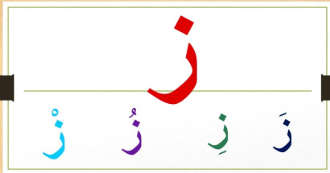
The Arabic letter Z is called Zay (زاي), and it belongs to the group of letters that share their base shape with two letters: ر (Ra) and ز (Zay). However, Zay’s isolated form is distinctively simple — a small curved baseline with a single dot placed above it.
The single dot is what separates letter Zay from letter Ra (ر). Without the dot, you have Ra. With the dot above, you have Zay. This distinction is critical for accurate reading.
How the Arabic Letter Zay Appears in Different Word Positions?
Zay is one of the non-connecting letters in Arabic. This means it connects to the letter before it (on its right) but does not connect to the letter that follows it (on its left). This rule applies in every position.
| Position | Arabic Form | Example Word | Meaning |
| Isolated | ز | ز | The letter itself |
| Initial (word-beginning) | زَ | زَيْت | Oil |
| Medial (middle of word) | ـزـ | مَنْزِل | House/Home |
| Final (end of word) | ـز | خُبْز | Bread |
Because Zay is a non-connecting letter, its medial form still carries a small gap after it before the next letter continues. This is important to note when you read connected Arabic script — do not assume the gap means a new word.
Common Arabic Words That Contain the Letter Z to Build Your Vocabulary
Learning a letter in isolation is only the first step. Recognizing it inside real, everyday words is where your reading skill truly develops. Below is a categorized list of common Arabic words containing ز, with their positions marked.
Everyday Objects and Places with Zay
| Arabic Word | Transliteration | Meaning | Zay Position |
| زَيْت | Zayt | Oil | Initial |
| زَهْرَة | Zahrah | Flower | Initial |
| مَنْزِل | Manzil | House / Home | Medial |
| مِيزَان | Mīzān | Scale / Balance | Medial |
| خُبْز | Khubz | Bread | Final |
| جَوَاز | Jawāz | Passport | Final |
| زُجَاج | Zujāj | Glass | Initial |
| زِيَارَة | Ziyārah | Visit | Initial |
| رُزّ | Ruzz | Rice | Final (doubled) |
These words give you practice seeing Zay in all three positions — initial, medial, and final. When you read through this table aloud, focus on producing a clean, buzzing “z” each time without softening it.


Zay in Names and Descriptive Words
Zay also appears in many beautiful Arabic names and qualities. The word زَيْن means “beauty” or “adornment” — making it one of the most meaningful letter-name combinations in the Arabic alphabet.
Other examples include زَاهِد (Zāhid – one who is pious/ascetic) and زَاهِر (Zāhir – radiant, flourishing).
How to Help Children Learn the Arabic Letter Z in an Effective Way?
For young learners specifically, the approach to teaching ز should be multi-sensory and connected to familiar objects. The word زَرَافَة (Zarāfah — giraffe) is an excellent anchor word for children because the “z” sound at the start is memorable and the image is vivid.
Other child-friendly Zay words include زَهْرَة (flower), زَبَادِي (yogurt), and زِنْجِبِيل (ginger). Using flashcards with the letter on one side and a colorful image on the other helps young learners build letter-to-sound association quickly.
Children in Riwaq Al Quran’s Online Arabic Classes for Kids follow a structured progression that introduces letters through familiar vocabulary, making the experience both educational and enjoyable Alhamdulillah.
Enroll Your Kid in Riwaq’s Arabic Classes for Kids with a FREE trial

How to Pronounce the Letter Z in Arabic with Correct Articulation?
The pronunciation of ز (Zay) is very close to the English “z” sound in words like “zebra” or “zero.” For most English speakers, this is one of the easiest Arabic letters to produce accurately from the very first attempt.
In classical Arabic phonetic science, the makhraj (articulation point) of Zay is the tip of the tongue placed lightly near — but not fully touching — the back of the upper front teeth, allowing air to pass through and create a buzzing friction. This is classified as an interdental-area fricative.
The Phonetic Attributes (Sifat) of Zay
Understanding the sifat (characteristic attributes) of a letter helps you produce it with precision. Zay carries the following established phonetic attributes:
| Attribute (Sifat) | Classification | Explanation |
| Voicing | Voiced (مَجْهُور) | The vocal cords vibrate during production |
| Airflow | Sibilant (صَفِير) | Produces a sharp, whistling-like friction |
| Openness | Open (مُنْفَتِح) | The tongue does not rise to the hard palate |
| Lowness | Low (مُسْتَفِل) | The tongue stays in a low position |
| Flowing air | Rakhawah (رَخَاوَة) | Air flows continuously — it is not a stopped sound |
Experience Riwaq Al Quran Classes
Watch real moments from our live sessions at Riwaq Al Quran and see how we bring learning to life. These clips highlight our interactive, student-focused approach designed to keep learners engaged, motivated, and actively involved in every step of their educational journey.
Common Pronunciation Errors English Speakers Make with Zay
English speakers rarely mispronounce Zay significantly, but a few subtle errors appear regularly. The most common mistake is producing a soft “s” sound instead of a voiced “z.” This confusion happens because English has many “s” spellings that blend with “z” sounds.
Another error is over-emphasizing the sound with heavy vibration, making it sound exaggerated. Zay should be clean, buzzing, and moderate — not forced. Practicing words like زَيْت (zayt) and زَمَان (zamān) aloud will help you calibrate the right intensity.
Book Your FREE Trial in Riwaq’s Arabic Classes

How the Letter Z in Arabic Connects to Quranic Recitation?
Zay appears frequently in the Quran, and recognizing it quickly will strengthen your recitation fluency. Because Zay carries the Sifat of Safir (whistling-type friction), it should be recited with a light, clear buzz — never softened into an “s” or hardened into a harsh sound.
One beautiful example from the Quran where Zay appears prominently is:
إِنَّا نَحْنُ نَزَّلْنَا الذِّكْرَ وَإِنَّا لَهُ لَحَافِظُونَ
Innā naḥnu nazzalnā al-dhikra wa-innā lahu laḥāfiẓūn
“Indeed, it is We who sent down the Reminder, and indeed, We will be its guardian.” (Sahih International – Al-Hijr 15:9)
(Note: The word nazzalnā — نَزَّلْنَا — contains a doubled Zay (Shaddah on ز), which requires you to hold the buzzing sound slightly longer. This is a practical Tajweed exercise in controlling Zay’s duration.)
If you are working on your Quranic recitation alongside learning the alphabet, Riwaq Al Quran’s Online Tajweed Classes offer structured letter-by-letter Tajweed instruction with certified teachers Insha’Allah.
Enroll Now in the Best Online Tajweed Classes

Read Also: The Letter D in Arabic د
Exercises to Practice the Letter Z in Arabic Inside This Guide
Practicing what you have learned is essential to moving from recognition to reading fluency. Work through the exercises below carefully, and repeat each one at least three times.
Exercise 1 — Letter Recognition Practice
Look at each group below and circle which one contains the letter Zay (ز). Remember: Zay has one dot above; Ra (ر) has no dot.
Group A: ر / ز / ن Group B: زَيْت / رَأْس / نَوْم Group C: مَنْزِل / مَرْكَز / مَنَار
Answer Key: Group A → ز | Group B → زَيْت | Group C → both مَنْزِل and مَرْكَز contain ز
Exercise 2 — Pronunciation Repetition Drill
Read each word aloud three times, focusing on a clean “z” sound at the marked position:
- زَيْت (zayt) — oil — Zay at the beginning
- مِيزَان (mīzān) — scale — Zay in the middle
- خُبْز (khubz) — bread — Zay at the end
Exercise 3 — Fill in the Missing Letter
Each word below is missing its ز. Write the complete word:
- ـَيْت → _زَيْت (oil)
- مَن_ِل → مَنْزِل (house)
- خُب_ → خُبْز (bread)
Exercise 4 — Connect the Arabic Word to Its Meaning
Draw a line connecting each Arabic word to its correct English meaning:
| زَهْرَة | Passport |
| جَوَاز | Rice |
| رُزّ | Flower |
| زُجَاج | Glass |
Answer: زَهْرَة = Flower | جَوَاز = Passport | رُزّ = Rice | زُجَاج = Glass
These exercises work well for both children and adult learners. If you are teaching young learners, having them trace the letter ز on paper while saying its sound aloud combines visual, auditory, and kinesthetic learning at once.
Read Also: Letter Dh (ذ) in Arabic
Why Students Love Learning with Riwaq Al Quran
Hear directly from our students about how Riwaq Al Quran Academy has transformed their connection with the Book of Allah. Their experiences reflect the dedication, care, and quality that guide every step of our teaching.
Learn the Arabic Letter Z and the Full Alphabet with Riwaq Al Quran’s Expert Instructors
Mastering ز is a meaningful step — and building on it with qualified guidance makes the entire alphabet click into place faster.
At Riwaq Al Quran, certified Arabic instructors help learners of all ages read Arabic confidently, from single letters to full Quranic fluency.
Al-Azhar-certified Arabic teachers with proven experience teaching non-native speakers
Dedicated Online Arabic Classes for Kids with engaging, age-appropriate methods
One-on-one sessions tailored to your pace and level
Covers alphabet, phonetics, Tajweed, and Quranic reading in one structured path
Flexible scheduling for families and individual adults worldwide
Free trial lesson available — no commitment required
Book your free trial with Riwaq Al Quran today and take the next step toward reading Arabic with clarity and confidence.
Beyond Arabic, we offer courses in Online Tajweed Classes, Arabic Language, and Islamic Studies.
- Online Quran Memorization Course
- Tajweed Classes
- Online Quran Classes for Kids.
- Ijazah Program.
- Arabic Language Classes.
- Islamic Studies Courses.
Enroll now for 2 Free Trial Classes and Begin Learning Arabic or Memorizing Quran Today

Conclusion
The letter ز stands out as one of Arabic’s most phonetically accessible letters for English speakers, yet mastering its written forms across word positions requires consistent focused practice. Its non-connecting nature and distinctive dot make it reliably recognizable once you train your eye.
Producing Zay correctly from its proper makhraj — with its voiced, flowing sibilant quality — builds a foundation that directly improves your Quranic recitation. The Safir attribute of this letter demands clarity, and developing that clarity early prevents deeply rooted errors later.
Whether you are a child encountering Arabic script for the first time or an adult working toward Quran reading fluency, ز offers an accessible entry point into Arabic phonetics. Practice the exercises in this guide regularly, expand your vocabulary with the word examples provided, and progress one letter at a time Insha’Allah.