
Are you struggling with Memorizing the Quran Without Forgetting?! The journey of memorizing the Quran without forgetting is a sacred endeavor that requires dedication and perseverance. By setting clear goals, maintaining consistent practice, and seeking guidance, individuals can navigate this path with purpose and enrich their spiritual connection with the Divine Word. May this guide inspire and support all those embarking on this noble journey.
Starting the journey of learning the Quran is a special and meaningful quest for many. In this journey, one crucial step is setting goals – like a roadmap that helps us focus and stay motivated to learn and remember the words of Allah.
This blog takes a closer look at why goal-setting matters in the beautiful process of memorizing the Holy Quran. We’ll discover how setting clear goals, breaking down the big task into smaller parts, and having a routine can make memorization not just doable but also a fulfilling and enriching experience.
Join us as we explore the simple yet powerful impact of setting goals in making the path of Quranic memorization more accessible and meaningful.
Table of Contents
What causes people to forget the Quran?
The most common cause behind people forgetting the Quran is that they do not revise often. You should revise each verse you memorize repeatedly if you intend to remember it for a long time.
Also, non-Arab Muslims typically have difficulty remembering the Quran due to language barriers.
Because non-Arabs are rarely aware of the meanings of the sentences, they tend to mix up verses with one another and then forget the Quran completely. This scenario also relies heavily on revising the lessons on a regular basis.
You cannot memorize what you cannot pronounce.
A major reason students forget is that they rely on visual memory (how the page looks) rather than auditory memory (the rhythm of the recitation).
When you master Tajweed, the verses have a specific “tune” and flow. If you miss a word, the rhythm breaks, alerting you immediately. This is why at Riwaq Al Quran, we do not start Hifz until the student has corrected their pronunciation—it is the safety net that keeps the Quran in your heart.
Start your Hifz journey on a flawless foundation.
Listed below are several Quran memorization techniques that you can follow if the question ‘What is the easiest way to memorize the Quran’ pops up in your mind.
How to Memorize the Quran Without Forgetting?
Memorizing the Quran without forgetting requires a combination of effective strategies and consistent efforts. Here are some practical tips to help you learn how to memorize the Quran and never forget it:
1. Renew Your Intention with Sincerity:
Begin your Quran memorization journey with a sincere intention, as our actions are judged by our intentions in Islam. Make a strong commitment to memorize the Quran and understand the rules of recitation. Your intention will serve as a driving force to help you complete the memorization.
2. Create a Quran Memorization Schedule and Set Goals:
Establish a structured Hifz program by setting a Quran memorization schedule. Clearly define your goals and write them down to maintain motivation throughout your memorization journey.
Setting reasonable and achievable goals will keep you focused and dedicated to completing the memorization of the Holy Quran.
However, be careful not to set goals that are too aggressive, as this leads to burnout. It is often helpful to have an expert assess your reading speed and memory capacity first.
A personalized plan from a Riwaq instructor ensures your goals are challenging yet achievable.
Enroll in Your First Trial Class & Get a Personalized Hifz Plan

3. Break Down Goals into Manageable Targets:
To truly memorize without forgetting, you must abandon the idea of just “learning a new page.” Every Hifz student must divide their daily session into three specific categories:
A. New Quran Lesson (Jadid)
The new verses you are memorizing today.
B. Recent Revision
The pages you memorized in the last 7 days. These are the most volatile and likely to slip away without daily review.
C. Old Revision
A fixed portion of your “banked” memorization (e.g., ½ Juz) to ensure you don’t lose the beginning of the Quran while reaching the end.
4. Designate a Quiet Learning Space:
Create a quiet and distraction-free space at home dedicated to learning the Holy Quran. Having a peaceful environment allows you to concentrate on each word during Quran recitation and facilitates effective memorization.
5. Set Regular Reminders for Memorization:
Use reminders on your phone to maintain a consistent schedule for Quran memorization. Regular reminders will help you stay on track, ensuring that you allocate time daily for learning and memorizing Quranic verses. Consistency is key to successful memorization.
6. Enroll in Online Quran Classes:
Consider enrolling in a reputable online Hifz course to establish a steady memorization program. Online classes provide structured guidance, keeping you on track and aiding in the faster memorization of the Holy Quran.
7. Find a Quran Memorization Partner:
Collaborate with a family member or friend who shares the same goal of memorizing the Quran. Having a memorization partner provides mutual encouragement and accountability, making the memorization journey more enjoyable and effective.
8. Hire an Online Quran Tutor:
Seek the assistance of an online Quran tutor, either native or from your community, to guide you in learning Quran recitation rules and Tajweed. A qualified tutor can provide personalized support and corrections during your memorization journey.
Self-study is noble, but often leads to burnout because you lack accountability. An Azhari tutor acts as your guardrail, correcting hidden Tajweed mistakes before they become bad habits. At Riwaq Al Quran, our tutors don’t force a generic syllabus on you; they assess your memory capacity and build a plan that fits your busy life.
Check Riwaq Al Quran’s Hifz Tutors’ Profiles

9. Listen to Quran Recitation Repeatedly:
Enhance your memorization by listening to your favorite Quran reciter. Repeatedly listening to the Surahs you aim to memorize helps in familiarizing yourself with the pronunciation and rhythm, making the memorization process more accessible.
10. Schedule Dedicated Time for Memorization:
Allocate a specific time every day for Quran memorization and learning Arabic Tajweed. Choose a time that suits your daily routine, ensuring you are focused and free from distractions during your dedicated memorization sessions.
11. Persevere and Never Quit:
Remember that the journey of Quran memorization begins with a single step. Persevere through challenges, start with shorter Surahs to build momentum, and never give up on the goal of memorizing the Quran. Stay passionate, and your dedication will lead you to success.
12. Visualization Techniques:
Visualize the words of the Quran as you recite and memorize. Create mental images that correspond to the verses, aiding in both retention and recall. Visualization can strengthen the connection between the words and their meanings.
13. Use Quran Memorization Apps:
Leverage technology by incorporating Quran memorization apps into your routine. These apps often provide interactive features, progress tracking, and audio support, enhancing the memorization experience.
14. Variety in Memorization Times:
Vary the times you dedicate to Quran memorization. Experiment with morning and evening sessions to identify when you feel most alert and focused. Adapting your schedule ensures consistent progress.
15. Incorporate Repetition Techniques:
Explore different repetition methods to reinforce memorization. Repeat the verses silently, aloud, and at varying speeds. This multi-sensory approach contributes to a more comprehensive understanding and retention.
16. Reflect on Verses’ Meanings:
Deepen your connection with the Quranic verses by reflecting on their meanings. Understanding the context and contemplating the message enhances not only memorization but also the spiritual impact of the verses.
This is especially vital for non-Arab students. It is incredibly difficult for the brain to hold onto sounds it doesn’t understand.
This is why Riwaq Al Quran’s Hifz methodology integrates Tafsir (explanation) alongside memorization—so you aren’t just repeating words, you are internalizing a message.
Enroll Now in The Tafseer Course

17. Physical Movement and Memorization:
Engage in light physical activities while memorizing, such as pacing or gentle walking. Associating movement with memorization can enhance focus and concentration, making the learning process more dynamic.
18. Recite to Others:
Share your memorized verses with family or friends. Teaching what you’ve learned reinforces your memory and allows you to receive valuable feedback. Teaching can be a powerful tool for solidifying your understanding.
19. Record Your Recitations:
Use a recording device to capture your recitations. Listening to your recitations provides a different perspective and helps identify areas that may need improvement, contributing to more accurate memorization.
20. Seek Consistent Spiritual Connection:
Cultivate a continuous spiritual connection during your memorization journey. Begin your sessions with supplications, seek refuge in Allah, and maintain a humble and sincere approach to the Quran. This spiritual connection adds depth to your memorization experience.
21. Stay in the company of the Quran.
This is one of the most important Quran memorization techniques that you should consider following.
There are two possible interpretations of the phrase ‘Staying in the company of the Quran’. First of all, you must associate with those who talk about the Quran or who are huffaz themselves. Such people are going to keep you motivated, which as a result, will help you learn the Quran better.
Also, you should be listening to the Quran regularly from your favorite reciter in order to memorize the verses efficiently.
Experience Riwaq Al Quran Classes
Watch real moments from our live sessions at Riwaq Al Quran and see how we bring learning to life. These clips highlight our interactive, student-focused approach designed to keep learners engaged, motivated, and actively involved in every step of their educational journey.
If I Memorize the Quran Will All My Sins Be Forgiven?
The act of memorizing the Quran is considered a highly virtuous and noble deed, and it is associated with numerous spiritual benefits.
However, the idea that memorizing the Quran automatically results in the forgiveness of all sins is not explicitly mentioned in our Islamic teachings.
Forgiveness of sins is ultimately determined by Allah’s mercy and forgiveness, which can be sought through sincere repentance, good deeds, and adherence to Islamic principles.
Memorizing the Quran is undoubtedly a praiseworthy act that brings numerous spiritual rewards, including increased knowledge, a closer connection to Allah, and the potential to act upon the teachings of the Quran.
It’s essential to approach Quranic memorization with a sincere and humble intention, seeking the pleasure of Allah and aiming to implement the guidance of the Quran in one’s life.
Acts of worship, including memorization, are means to draw closer to Allah, and while they bring immense spiritual benefits, the forgiveness of sins is contingent upon Allah’s mercy and the repentance of the individual.
Always remember that Allah is the Most Merciful and Most Forgiving, and sincere repentance, along with righteous deeds, plays a crucial role in seeking forgiveness for one’s transgressions.
How to Memorize Forgotten Quran
Re-memorizing is actually faster than starting fresh because the neural pathways still exist. You don’t need to relearn; you need to consolidate. Here is the expert methodology to retrieve lost Surahs effectively:
1. Isolate the Weak Links in Your Hifz
Don’t just read the whole Surah repeatedly. Identify exactly where you stumble. Is it the beginning of the verse, or the transition between verses? Highlight these specific “weak links” in your Mushaf to focus your mental energy solely on the friction points.
2. The “Looking-to-Hidden” Ratio
Muscle memory requires a specific sequence. Read the forgotten page 10 times while looking at the Mushaf (to fix the visual imprint), then recite it 5 times from memory. If you stutter, immediately look back. Do not guess, as guessing reinforces mistakes.
3. Master the Mutashabihat (Similar Verses)
The main cause of “slipping” is confusing similar endings (e.g., ‘Wallaahu ‘Aleemun Hakeem’ vs. ‘Hakeemun ‘Aleem’).
You must actively note these differences. In Riwaq Al Quran’s curriculum, we use specific “memory anchors” to lock these similarities in place so your mind doesn’t drift to a different Surah.
4. Auditory Anchoring with Tajweed
Memory is often melodic. Listen to a Murattal reciter (like Hussary) who reads at a moderate pace. Mimic their pauses and intonation exactly. This links the words to a specific rhythm, making it much harder to forget the sequence of verses.
Read Also: How to Revise Forgotten Quran?
5. Get Help of an Experinced Quran Teacher
You cannot correct what you cannot hear. When recovering forgotten parts, your brain often “auto-fills” mistakes without you realizing it. You need an external auditor to catch these subconscious errors immediately.
This is why self-revision often fails—you don’t hear your own slips. Riwaq Al Quran’s Revision Circles provide you with a dedicated Azhari tutor who listens solely to correct and consolidate your retention, ensuring you don’t just memorize, but master.
Book a Revision Assessment Session

6. The Recent Revision Rotation System
Once recovered, a Surah must enter a recent revision rotation. Do not let it sit idle. Review the recovered portion daily for 7 consecutive days to move it from short-term memory back into your deep, long-term storage.
Read Also: How to Hifz Quran at Home?
How long will it take to memorize the Quran?
As we mentioned earlier, each person is capable of learning in their own way. Age also plays a significant role in determining how long will it take to memorize the Quran?
Typically, an average individual takes about 2 to 3 years to memorize the Quran by heart. It can also take longer if you are not well-aware of the Arabic language already. However, some people also memorize it within a year, but it takes a lot of consistency and hard work.
Don’t forget that each letter of the Quran you repeat while memorizing it is a reward for you, and it will be given to you on the day of judgment.
Read Also: How to Memorize Quran Fast and Easily?
Is it compulsory to memorize the Quran?
No, it’s not compulsory to memorize the Quran. However, memorizing the Quran is a highly praised act, and the Huffaz are rewarded with countless blessings by Allah Almighty, but it is not compulsory for every Muslim to memorize the Quran by heart.
However, it is essential for every Muslim to recite at least a few surahs in Salah. It is also important to thoroughly read the Quran and understand its message, and the best way of doing so is by reading the Quran with its understanding.
Read Also: How to Memorize the Quran?
Why Students Love Learning with Riwaq Al Quran
Hear directly from our students about how Riwaq Al Quran Academy has transformed their connection with the Book of Allah. Their experiences reflect the dedication, care, and quality that guide every step of our teaching.
Start Your Hifz Journey Today
Memorizing the Quran is a marathon, not a sprint. The secret isn’t a photographic memory; it’s consistency, a solid revision strategy, and a teacher who won’t let you give up.
Don’t miss this opportunity to carry the Quran in your heart and enroll today with Riwaq Al Quran! Open the door to becoming a Hafiz and register for a free trial class.
Why start with Riwaq Al Quran?
- 1-on-1 Focus: No crowded classrooms. 100% attention on your recitation.
- Flexible Scheduling: Classes available 24/7 to fit around work and family.
- Affordable: Plans start at just $32/mo.
Here are a sample of our set of Quran Courses that will be helpful for you:
- Online Tafseer Course: Delve into Quranic meanings with our insightful online Tafseer course.
- Noorani Qaida Online: Learn Quranic basics efficiently through our Noorani Qaida online program.
- Online Quran Recitation Course: Enhance Quranic recitation skills through our expert-led online course.
- Online Tajweed Classes: Master Tajweed rules for beautiful Quranic recitation in online classes.
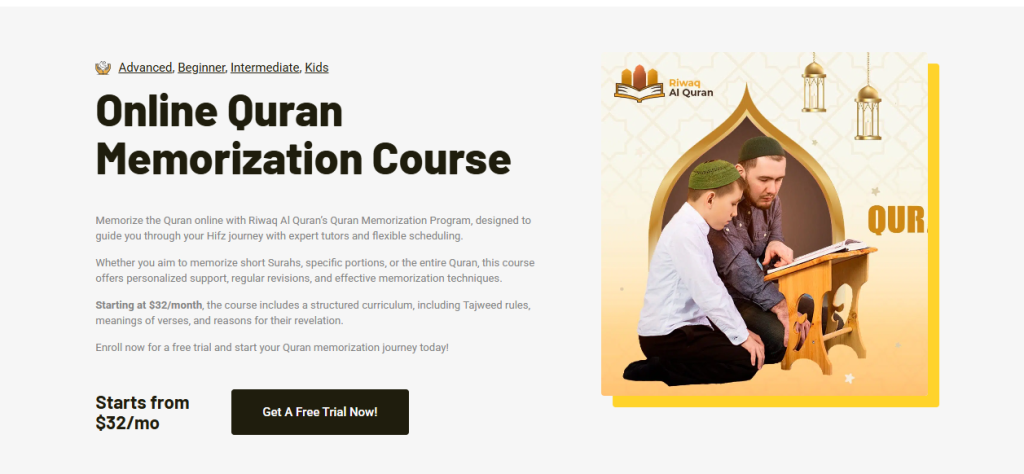
- Quran Memorization Online Course: Memorize the Quran effectively with our specialized online memorization course.
- Online Qirat Course: Explore diverse Qirat styles with our comprehensive online Qirat course.
- Online Quran Classes for Kids: Nurture a love for the Quran in kids through interactive online classes.


Conclusion:
In conclusion, the journey of memorizing the Quran without forgetting is a profound and deeply personal endeavor that holds immense spiritual significance for Muslims worldwide. Through the practical techniques and strategies outlined in this guide, individuals can navigate this sacred path with purpose and determination.
By renewing intentions, setting clear goals, maintaining consistent schedules, and seeking guidance from knowledgeable sources, memorization becomes not only achievable but also a deeply enriching experience. The importance of regular review, incorporating technology, and fostering a spiritual connection with the Quran further enhances the memorization journey.
Ultimately, while memorizing the Quran is not obligatory for every Muslim, engaging with its teachings is a fundamental aspect of Islamic practice. By approaching memorization with sincerity, humility, and a steadfast commitment to deepen one’s connection with the Divine Word, individuals can embark on a transformative journey of spiritual growth and enlightenment.
May this guide serve as a source of inspiration and guidance for all those striving to commit the Quran to memory, fostering a deeper understanding and appreciation of its timeless wisdom and profound beauty.