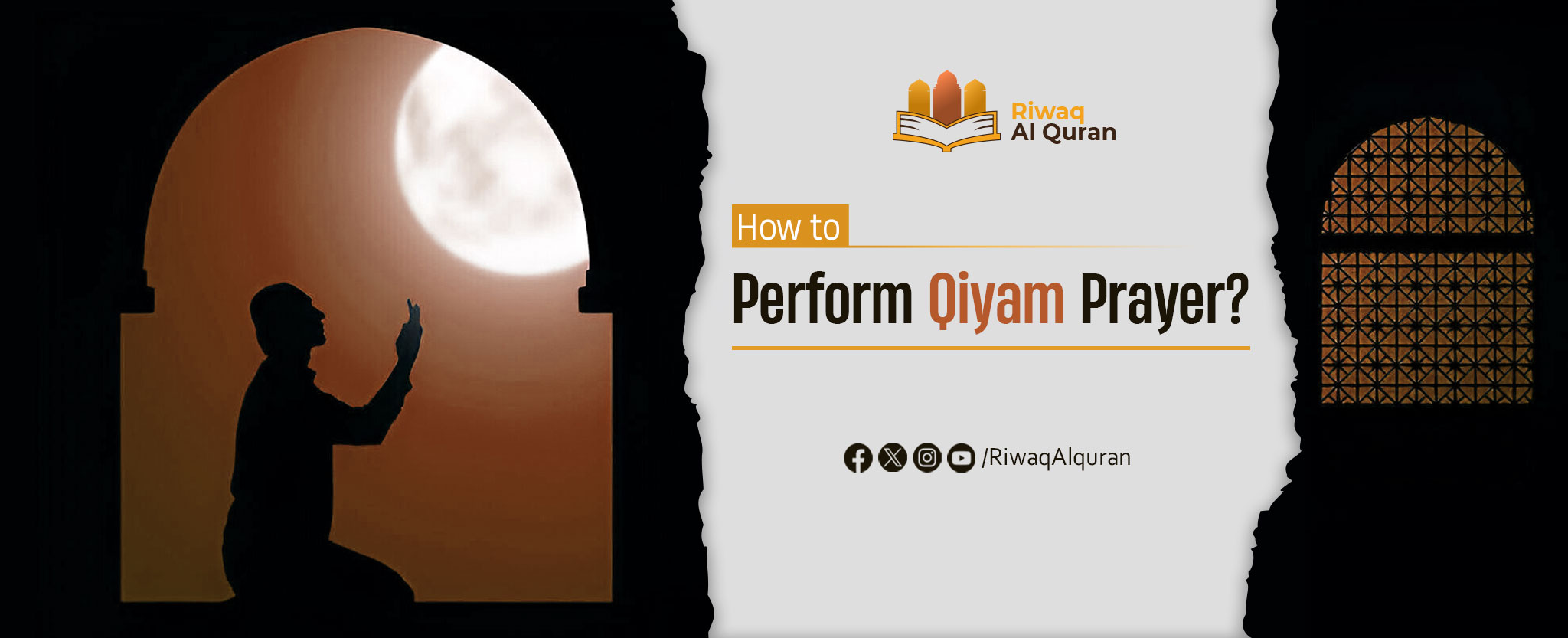
Qiyam Al Layl is the voluntary night prayer that Prophet Muhammad ﷺ prayed consistently, standing before Allah in the stillest hours while the rest of the world slept. It is one of the most rewarding acts of worship in Islam precisely because it is hard: you leave a warm bed, alone and unseen, for the sake of Allah.
This guide explains what Qiyam al-Layl is, when to pray it, how many rakats to pray, and exactly how to perform it step by step. You will also find the authentic verses and hadith with their sources and meaning explained, the night-prayer duas, and the mistakes that quietly ruin the habit.
Whether you have never prayed it or you want to make it consistent, everything you need to start tonight is below.
What you’ll learn in this article
- What Qiyam al-Layl means and its best time.
- The difference between Qiyam al-Layl, Tahajjud, and Witr.
- How many rakats to pray and how to pray them step by step.
- The authentic verses and hadith on the night prayer, explained with sources.
- The common mistakes that break the habit — and how to avoid them.
Table of Contents
What is Qiyam Al Layl?
Qiyam al-Layl is a voluntary (nafl) prayer performed any time after the Isha prayer until the Fajr adhan, dedicated to standing in prayer during the night. The word “Qiyam” means “standing,” and while it centers on prayer, it can also include Quran recitation, dhikr, and dua in those hours.
Unlike the five daily prayers, Qiyam al-Layl is not obligatory. Yet the Prophet ﷺ never abandoned it, and Allah opened His revelation by commanding it — optional in ruling, beloved in practice, which is what makes it a mark of sincere worshippers.
Allah addressed His Messenger ﷺ in one of the earliest revealed passages:
(يَٰٓأَيُّهَا ٱلْمُزَّمِّلُ قُمِ ٱلَّيْلَ إِلَّا قَلِيلًا نِّصْفَهُۥٓ أَوِ ٱنقُصْ مِنْهُ قَلِيلًا أَوْ زِدْ عَلَيْهِ وَرَتِّلِ ٱلْقُرْءَانَ تَرْتِيلًا)
“O you who wraps himself [in clothing], stand [in prayer] all night, except a little — half of it, or a little less, or add to it, and recite the Quran with measured recitation.” — Surah Al-Muzzammil (73:1–4)
These were among the first verses revealed, before most of the laws of Islam. That Allah began by commanding the night prayer shows it was the training ground that prepared the Prophet ﷺ for the weight of his mission — a signal that Qiyam al-Layl builds the spiritual strength a believer needs before anything else.
The righteous are described by this very habit, so that the night prayer becomes a defining trait rather than an occasional act:
(كَانُوا۟ قَلِيلًا مِّنَ ٱلَّيْلِ مَا يَهْجَعُونَ وَبِٱلْأَسْحَارِ هُمْ يَسْتَغْفِرُونَ)
“They used to sleep but little of the night, and in the hours before dawn they would seek forgiveness.” — Surah Adh-Dhariyat (51:17–18)
Allah praises them not for a single heroic night but for a consistent pattern — sleeping little and seeking forgiveness before dawn. The lesson for anyone starting Qiyam al-Layl is that steadiness, not intensity, is what earns this description.
What is the best time for Qiyam al-Layl?
The best time for Qiyam al-Layl is the last third of the night, just before Fajr. The window itself opens right after the Isha prayer and closes at the Fajr adhan, so any prayer in that span counts — but the final third carries the greatest reward.
The Prophet ﷺ explained why that hour is special:
يَنْزِلُ رَبُّنَا تَبَارَكَ وَتَعَالَى كُلَّ لَيْلَةٍ إِلَى السَّمَاءِ الدُّنْيَا حِينَ يَبْقَى ثُلُثُ اللَّيْلِ الْآخِرُ، يَقُولُ: مَنْ يَدْعُونِي فَأَسْتَجِيبَ لَهُ، مَنْ يَسْأَلُنِي فَأُعْطِيَهُ، مَنْ يَسْتَغْفِرُنِي فَأَغْفِرَ لَهُ
“Our Lord descends every night to the lowest heaven when the last third of the night remains and says: Who is calling upon Me that I may answer him? Who is asking Me that I may give him? Who is seeking My forgiveness that I may forgive him?” — Sahih al-Bukhari 1145
This hadith is the strongest reason to aim for the last third specifically. Allah Himself invites the worshipper to ask in that hour, so the night prayer becomes less about effort and more about answering a direct call.
To find your own last third, take the hours between Isha and Fajr and divide by three. If Isha is at 8:00 pm and Fajr is at 4:00 am, that is eight hours; the last third runs roughly from 1:20 am until Fajr — set your alarm inside that window.
The difference between Qiyam al-Layl and Tahajjud
Tahajjud is a specific form of Qiyam al-Layl: it is the night prayer offered after you have slept and then woken up. All Tahajjud is Qiyam al-Layl, but not all Qiyam al-Layl is Tahajjud — praying voluntarily right after Isha, before sleeping, is Qiyam but not Tahajjud.
Allah singled out Tahajjud as a special honor for His Prophet ﷺ:
(وَمِنَ ٱلَّيْلِ فَتَهَجَّدْ بِهِۦ نَافِلَةً لَّكَ عَسَىٰٓ أَن يَبْعَثَكَ رَبُّكَ مَقَامًا مَّحْمُودًا)
“And rise at night to pray Tahajjud, as an extra offering for you; it may be that your Lord will raise you to a praised station.” — Surah Al-Isra (17:79)
The “praised station” (al-Maqam al-Mahmud) is understood by many scholars as the great intercession granted to the Prophet ﷺ on the Day of Judgment. Allah ties that honor to Tahajjud, showing how directly the night prayer is linked to elevated rank.
If you are just starting, praying two rakats after Isha still earns the reward of Qiyam; reaching the sleep-then-rise pattern of Tahajjud is the goal to grow into.
Benefits of Qiyam Al Layl
Qiyam al-Layl reshapes the worshipper, not just the night. Because it is prayed alone and unseen, it trains a sincerity that public worship cannot, and its rewards spill into every other act of faith.
The Prophet ﷺ ranked the night prayer above all other voluntary prayer:
(أَفْضَلُ الصِّيَامِ بَعْدَ رَمَضَانَ شَهْرُ اللَّهِ الْمُحَرَّمُ، وَأَفْضَلُ الصَّلَاةِ بَعْدَ الْفَرِيضَةِ صَلَاةُ اللَّيْلِ)
“The best fasting after Ramadan is in Allah’s month of Muharram, and the best prayer after the obligatory prayers is the night prayer.” — Sahih Muslim 1163
Out of every optional prayer a Muslim can offer, the Prophet ﷺ named the night prayer the best. That single ranking is why generations of scholars and worshippers prioritized Qiyam al-Layl above other nawafil. Its concrete benefits include:
- Completes and repairs the shortcomings in your obligatory prayers.
- Strengthens your connection with Allah in the hours He answers.
- Cultivates sincerity, since only Allah witnesses it.
- Keeps you steady on the deen and makes obedience easier.
- Is a prime time to ask Allah for this life and the next.
- Is a means of repentance and forgiveness of sins.
- Is an act of gratitude for Allah’s countless blessings.
That last benefit — gratitude — was the Prophet’s own reason for standing so long:
(كَانَ يَقُومُ مِنَ اللَّيْلِ حَتَّى تَتَفَطَّرَ قَدَمَاهُ، فَقِيلَ لَهُ: أَتَصْنَعُ هَذَا وَقَدْ غُفِرَ لَكَ مَا تَقَدَّمَ مِنْ ذَنْبِكَ وَمَا تَأَخَّرَ؟ قَالَ: أَفَلَا أَكُونُ عَبْدًا شَكُورًا)
“He would stand in prayer at night until his feet became swollen. He was asked, ‘Do you do this when Allah has already forgiven your past and future sins?’ He said, ‘Should I not be a grateful servant?'” — Sahih al-Bukhari 1130
This reframes Qiyam al-Layl entirely. The Prophet ﷺ did not pray at night to earn forgiveness he already had — he prayed out of gratitude. It teaches that the night prayer is a response to Allah’s blessings, not merely a transaction for reward.
Qiyam al-Layl is also where your relationship with the Quran deepens. You do not merely recite — you pause at the verses, ask Allah for the good He mentions, and seek refuge from the punishments He describes.
If you want to recite with correct Tajweed during these long standings, structured lessons with a qualified teacher shorten the path considerably.
Before you build the habit, it helps to reconnect with the why behind it. Watch this short reflection on the purpose of worship:
How many Rakats Are in Qiyam al-Layl?
The Sunnah number for Qiyam al-Layl is eleven rakats: eight prayed in pairs, followed by three of Witr. Aishah (may Allah be pleased with her) described the Prophet’s night prayer:
(مَا كَانَ رَسُولُ اللَّهِ صَلَّى اللَّهُ عَلَيْهِ وَسَلَّمَ يَزِيدُ فِي رَمَضَانَ وَلَا فِي غَيْرِهِ عَلَى إِحْدَى عَشْرَةَ رَكْعَةً)
“The Messenger of Allah ﷺ did not pray more than eleven rakats, in Ramadan or otherwise.” — Sahih al-Bukhari 1147
This is the clearest evidence for the eleven-rakat pattern, and note it applied year-round, not only in Ramadan. Still, the count is not a strict obligation. Qiyam al-Layl has no fixed maximum, and the minimum can be as little as two rakats plus one Witr.
Pray according to your ability, your time, and your sincerity — presence outweighs numbers.
Praying Qiyam Al Layl step by step
Qiyam al-Layl is prayed in pairs of two rakats, exactly like your regular voluntary prayers, with longer, more reflective recitation. You continue in twos until you have prayed your intended number, then seal the session with Witr.
Follow these steps:
- Make the intention (niyyah): Intend in your heart to pray Qiyam Al Layl seeking nearness to Allah. The intention is held silently, not spoken aloud.
- Purify and prepare: Ensure you have wudu, wear clean clothing, and choose a quiet, clean spot where you can focus without interruption.
- Begin facing the qiblah: Stand facing the qiblah, raise your hands, and say “Allahu Akbar” to enter the prayer.
- Recite Surah Al-Fatihah, then more Quran: In each rakat, recite Al-Fatihah followed by any portion of the Quran. Slow, measured recitation is the Sunnah — reflect on the meanings as you go.
- Pray in pairs of two: Complete the two rakats with ruku and sujud, then sit for the Tashahhud after the second rakat.
- Recite the Tashahhud: Praise Allah and send blessings upon the Prophet Muhammad ﷺ while seated.
- End with Tasleem: Turn your head to the right saying “Assalamu Alaikum wa Rahmatullah,” concluding that pair.
- Repeat the cycle: Stand again for the next two rakats and continue until you reach your intended number, commonly eight.
- Seal with Witr: After your paired rakats, pray Witr as one or three rakats to make the night’s total odd.
- Close with dua: Finish with a sincere supplication, asking Allah for forgiveness, guidance, and whatever you need.
Praying Qiyam Al Layl at home
Home is the recommended place for Qiyam al-Layl, and praying it there is identical to the steps above — the difference is the setting you create for yourself. The Prophet ﷺ made his voluntary night prayer at home, away from onlookers.
Choose a room where you can pray alone so your heart stays fixed on the prayer. Recite in a moderate voice — neither loud nor silent — following the guidance:
(وَلَا تَجْهَرْ بِصَلَاتِكَ وَلَا تُخَافِتْ بِهَا وَٱبْتَغِ بَيْنَ ذَٰلِكَ سَبِيلًا)
“And do not recite too loudly in your prayer, nor too quietly, but seek a way between that.” — Surah Al-Isra (17:110)
This verse gives a practical rule for praying alone at night: a middle volume you can hear yourself in keeps you focused and awake without disturbing others in the house. If you have not memorized long passages yet, it is permissible to read from the Mushaf during voluntary night prayer — you can even read the Quran from trusted websites — while you build your memorized portion over time.

Authentic verses and hadith on Qiyam Al Layl, explained
Beyond the evidence woven through this guide, these two narrations shape how a believer should approach the night prayer — one on consistency, one on Ramadan.
On never abandoning it once you begin, the Prophet ﷺ warned a companion by name:
(يَا عَبْدَ اللَّهِ، لَا تَكُنْ مِثْلَ فُلَانٍ، كَانَ يَقُومُ اللَّيْلَ فَتَرَكَ قِيَامَ اللَّيْلِ)
“O Abdullah, do not be like so-and-so; he used to pray at night and then abandoned the night prayer.” — Sahih al-Bukhari 1152
This is a direct caution against starting big and quitting. It is better to pray a small amount you can keep than to launch into long nights and stop — which is exactly why the beginner ladder below matters.
On the reward of Qiyam Al Layl in Ramadan specifically:
(مَنْ قَامَ رَمَضَانَ إِيمَانًا وَاحْتِسَابًا غُفِرَ لَهُ مَا تَقَدَّمَ مِنْ ذَنْبِهِ)
“Whoever prays during the nights of Ramadan out of faith and seeking reward will have his past sins forgiven.” — Sahih al-Bukhari 37
Taraweeh is Qiyam al-Layl performed in congregation during Ramadan, and this hadith attaches complete forgiveness of past sins to it — provided it is done with sincerity (iman) and seeking Allah’s reward (ihtisab), not habit or show. Ramadan is the ideal month to build the habit you then carry through the year.
The Best Duas for Qiyam Al Layl
Qiyam al-Layl is one of the finest times for dua, and the last third of the night is when Allah invites His servants to ask. Below are authentic supplications you can memorize, followed by your own personal requests.
A dua for pardon:
اللَّهُمَّ إِنَّكَ عَفُوٌّ تُحِبُّ الْعَفْوَ فَاعْفُ عَنَّا
“O Allah, You are Most Pardoning and You love to pardon, so pardon us.” — Jami’ at-Tirmidhi 3513
Asking for all good:
(اللَّهُمَّ إِنِّي أَسْأَلُكَ مِنَ الْخَيْرِ كُلِّهِ عَاجِلِهِ وَآجِلِهِ مَا عَلِمْتُ مِنْهُ وَمَا لَمْ أَعْلَمْ)
“O Allah, I ask You for all good — that which is near and that which is far, what I know of it and what I do not know.”
Seeking refuge from all evil:
(اللَّهُمَّ إِنِّي أَعُوذُ بِكَ مِنَ الشَّرِّ كُلِّهِ عَاجِلِهِ وَآجِلِهِ مَا عَلِمْتُ مِنْهُ وَمَا لَمْ أَعْلَمْ)
“O Allah, I seek refuge in You from all evil — that which is near and that which is far, what I know of it and what I do not know.”
If you struggle to read these duas in Arabic, that skill is very learnable with the right teacher. A structured Noorani Qaida course builds your reading from the letters up, so you can recite your duas — and your Quran — with confidence. You can also memorize a set of duas for memorizing the Quran to use in these hours.
The Dua of Qunut in Witr
In the final rakat of Witr, after rising from ruku, it is Sunnah to raise your hands and make the dua of Qunut:
(للَّهُمَّ اهْدِنِي فِيمَنْ هَدَيْتَ، وَعَافِنِي فِيمَنْ عَافَيْتَ، (وَتَوَلَّنِي فِيمَنْ تَوَلَّيْتَ، وَبَارِكْ لِي فِيمَا أَعْطَيْتَ، وَقِنِي شَرَّ مَا قَضَيْتَ، فَإِنَّكَ تَقْضِي وَلَا يُقْضَىٰ عَلَيْكَ، وَإِنَّهُ لَا يَذِلُّ مَنْ وَالَيْتَ، وَلَا يَعِزُّ مَنْ عَادَيْتَ، تَبَارَكْتَ رَبَّنَا وَتَعَالَيْتَ
“O Allah, guide me among those You have guided, grant me well-being among those You have granted well-being, take me into Your care among those You have taken into Your care, bless me in what You have given, and protect me from the evil You have decreed.
Surely You decree and none decrees over You. None whom You support is humiliated, and none whom You oppose is honored. Blessed are You, our Lord, and Exalted.” — Jami’ at-Tirmidhi 464
This is the dua the Prophet ﷺ taught his grandson Al-Hasan for Witr, which is why it is the most widely used Qunut. After completing Witr, it is recommended to say “Subhan al-Malik al-Quddus” three times. For more options, see these Witr salah duas.
What is Witr and why it seals Qiyam al-Layl?
Witr is the odd-numbered prayer that concludes the night prayer, offered as either one or three rakats. The word “Witr” means “odd,” and it is the seal that makes the night’s voluntary rakats add up to an odd total.
The Prophet ﷺ said:
(إِنَّ اللَّهَ وِتْرٌ يُحِبُّ الْوِتْرَ، فَأَوْتِرُوا يَا أَهْلَ الْقُرْآنِ)
“Indeed Allah is Witr (One) and loves what is odd, so pray Witr, O people of the Quran.” — Jami’ at-Tirmidhi 453
Calling on the “people of the Quran” links Witr directly to those who recite and live by the Book, making it a defining practice of the committed worshipper. Practically: if you fear you may not wake in the last third, pray Witr before sleeping; if you are confident you will rise, delay it to seal your Tahajjud.
Qiyam al-Layl, Tahajjud, Witr, and Taraweeh compared
These four terms overlap, which is why they are so often confused. The table below shows exactly how each relates to Qiyam al-Layl.
| Prayer | What it is | Timing | Ruling |
|---|---|---|---|
| Qiyam al-Layl | The general voluntary night prayer | Any time from after Isha to Fajr | Voluntary (Sunnah) |
| Tahajjud | Qiyam prayed after sleeping and waking | The later part of the night | Voluntary (Sunnah) |
| Witr | The odd prayer that seals the night | After Isha, ideally last before sleep or after Tahajjud | Strongly emphasized Sunnah |
| Taraweeh | Congregational Qiyam specific to Ramadan | After Isha on Ramadan nights | Sunnah, in Ramadan only |
Taraweeh is Qiyam al-Layl performed in congregation during Ramadan, Tahajjud is Qiyam performed after sleep, and Witr closes any of them.
The Three-Step Night Prayer Ladder For Beginners
Most people who quit Qiyam al-Layl quit because they started at the top of the ladder instead of the bottom. The Prophet ﷺ described the ideal model — the prayer of Dawud (peace be upon him):
(أَحَبُّ الصَّلَاةِ إِلَى اللَّهِ صَلَاةُ دَاوُدَ، وَأَحَبُّ الصِّيَامِ إِلَى اللَّهِ صِيَامُ دَاوُدَ، كَانَ يَنَامُ نِصْفَ اللَّيْلِ وَيَقُومُ ثُلُثَهُ وَيَنَامُ سُدُسَهُ)
“The most beloved prayer to Allah is the prayer of Dawud, and the most beloved fasting to Allah is the fasting of Dawud. He would sleep half the night, pray a third of it, and sleep a sixth of it.” — Sahih al-Bukhari 1131
Notice the balance: Dawud (peace be upon him) rested his body for two-thirds of the night and prayed the middle-to-last third. Reaching that level is a destination, not a starting line. Climb these three steps in order:
Step one — pray after Isha before sleep: Add two voluntary rakats right after Isha. This requires no alarm and builds the habit first.
Step two — sleep, then wake before Fajr: Once step one is steady, set an alarm for the last third and pray after rising. This is where Qiyam becomes Tahajjud.
Step three — split the night: Pray part of your Qiyam after Isha without Witr, sleep, then wake before Fajr to pray again and seal with Witr. This mirrors the prayer of Dawud and is the highest form.
Advance only when the current step feels easy. Jumping straight to step three is the fastest way to burn out — exactly the outcome the Prophet ﷺ warned against.
Common Mistakes That Break The Qiyam al-Layl Habit
Knowing how to pray Qiyam al-Layl is easy; sustaining it is the real work. These are the errors that quietly end the habit for most people.
- Praying so long you miss Fajr: The night prayer must never cost you an obligatory prayer. Pray a length you can repeat tomorrow, and protect your Fajr above your voluntary rakats.
- Skipping Witr entirely: Many people pray their rakats and forget the seal. If you might sleep through the last third, pray Witr before bed so the night is never left without it.
- Chasing quantity over presence: Eight rushed rakats with a wandering heart are worth less than two unhurried rakats with full attention. Slow, reflective recitation is the point.
- Starting at the hardest level and quitting: Demanding full Tahajjud from night one almost always ends in giving up — the very pattern the Prophet ﷺ cautioned Abdullah against. Begin small and consistent; Allah loves the deeds done regularly, even if few.
Start your Qiyam al-Layl journey with confident recitation
The heart of Qiyam al-Layl is standing long in prayer and reciting the Quran with meaning. If your recitation is shaky, those long standings feel discouraging — and that is exactly where most beginners lose momentum.
Riwaq Al Quran pairs you with native-speaking teachers who correct your Tajweed live and help you build the memorized portions that make night prayer flow. Learn from home, at your own pace, and turn your Qiyam into a recitation you look forward to. Book your free trial of our online Quran classes today and pray your next Qiyam with confidence.

Learn Quran, Arabic, and Islamic Studies online with Riwaq Al Quran
Riwaq Al Quran offers structured, one-to-one online classes for all ages and levels.
Beyond Tajweed and memorization, you can:
- Deepen your understanding with an online Tafseer course.
- Refine your Quran recitation.
- Study the ten Qira’at.
Adults can also:
- Take online Arabic classes.
- Pursue an Ijazah.
While younger learners can start with:
You can also browse all our courses in one place.
See what confident, beautiful recitation sounds like — and how our teachers help you get there:
Conclusion
Qiyam al-Layl is the voluntary night prayer that turns the quietest hours into the most valuable ones — you rise while others sleep, unseen by anyone but Allah, and stand to speak with Him. It is optional in ruling yet central in the life of every sincere worshipper, which is why the Prophet ﷺ never abandoned it.
The essentials are simple: pray in pairs of two rakats, seal the night with Witr, and aim for the last third of the night when Allah invites His servants to ask. Follow the eleven-rakat Sunnah as a guide, not a burden — and remember that any prayer after Isha is Qiyam al-Layl, while the portion prayed after waking from sleep is Tahajjud, the higher form.
The one takeaway is this: consistency beats intensity. Start with two rakats after Isha, protect your Fajr, and climb one step at a time. Begin tonight — give Allah the best part of your night, and Qiyam al-Layl becomes the part of your day you guard most.
Frequently asked questions about Qiyam Al Layl
Below are the most common questions about Qiyam al-Layl prayer, answered directly:
What is Qiyam al-Layl in simple terms?
Qiyam al-Layl is the voluntary night prayer offered any time between Isha and Fajr. It centers on standing in prayer during the night and can also include Quran recitation, dhikr, and dua. It is Sunnah, not obligatory.
Is Qiyam al-Layl the same as Tahajjud?
No — Tahajjud is one type of Qiyam al-Layl, specifically the prayer offered after you sleep and then wake up. Praying voluntarily right after Isha before sleeping is Qiyam al-Layl but not Tahajjud.
What is the minimum number of rakats for Qiyam al-Layl?
The minimum is two rakats plus one Witr. Qiyam al-Layl has no fixed maximum, though the Sunnah pattern the Prophet ﷺ kept was eleven rakats: eight followed by three of Witr.
When is the best time to pray Qiyam al-Layl?
The best time is the last third of the night, just before Fajr, because Allah descends to the lowest heaven then and answers those who call on Him. Divide the hours between Isha and Fajr by three to find your window.
Can I read from the Mushaf during Qiyam al-Layl?
Yes, you may hold and read from the Mushaf during voluntary night prayer if you have not memorized enough Quran. Building your memorized portion over time lets you eventually pray without holding the book.