| Key Takeaways |
| The Quran contains 604 pages across 30 Juz’; finishing it in 30 days requires reading 20 pages — approximately one Juz’ — daily. |
| Splitting daily reading into two sessions of 10 pages each (morning and evening) dramatically increases consistency for working adults and students. |
| Tracking progress by Juz’ completion — not page count alone — provides stronger psychological momentum and prevents mid-month dropout. |
| Students with a structured one-on-one tutor finish the Quran in 30 days at a significantly higher rate than those who attempt it without accountability. |
Finishing the Quran in 30 days is not an ambitious dream reserved for full-time students of knowledge — it is a mathematically achievable, spiritually transformative goal for any committed Muslim.
The Quran contains 604 pages divided into 30 Juz’, which means completing one Juz’ every single day brings you to the finish line in exactly one month.
What separates those who reach that goal from those who abandon it by day ten is not willpower alone — it is structure.
With the right daily schedule, a realistic page breakdown, and an understanding of where most readers lose momentum, finishing the Quran in 30 days becomes not just possible but repeatable. This guide gives you everything you need.
Table of Contents
1. Know How Many Pages Do You Need to Read Each Day to Finish the Quran in 30 Days
To finish the Quran in 30 days, you must complete 20 pages per day, which equals one full Juz’ daily across the Quran’s 604 pages.
This target is non-negotiable — falling short even three or four days without making up the deficit will push completion beyond the month. Consistency with this daily number is the entire foundation of the plan.
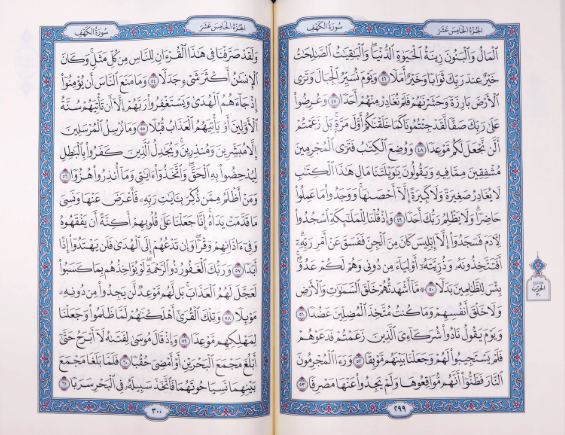
The standard Mushaf used in most Muslim households globally — the Medina Mushaf printed by the King Fahd Complex — is organized so that each Juz’ contains approximately 20 pages.
2. Allocate the Best Daily Time for Reading 20 Pages Without Burning Out
The most sustainable daily structure splits 20 pages across two sessions: 10 pages after Fajr and 10 pages after Maghrib or Isha. This two-session model reduces cognitive fatigue, fits around work and family schedules, and ensures that even if one session is missed, the second provides a recovery window.
At a moderate, Tajweed-observant reading pace, 10 pages typically takes between 25 and 40 minutes depending on the reader’s fluency level.
A complete beginner may need slightly longer. A student who has completed a structured Tajweed course will read more smoothly and closer to the 25-minute end.
| Session | Time of Day | Pages | Estimated Duration |
| Session 1 | After Fajr | 10 pages (half Juz’) | 25–40 minutes |
| Session 2 | After Maghrib or Isha | 10 pages (half Juz’) | 25–40 minutes |
| Daily Total | — | 20 pages (1 Juz’) | 50–80 minutes |
Use this table as your anchor point. Every other adjustment in your plan should protect these two sessions first.
Experience Riwaq Al Quran Classes
Watch real moments from our live sessions at Riwaq Al Quran and see how we bring learning to life. These clips highlight our interactive, student-focused approach designed to keep learners engaged, motivated, and actively involved in every step of their educational journey.
3. Prepare The Complete 30-Day Quran Reading Schedule by Juz’
Each Juz’ has its own character — some are longer in terms of reading density, others flow quickly. Below is your complete Juz’-by-Juz’ roadmap. Follow it exactly, completing one Juz’ per day.
| Day | Juz’ | Key Surahs Covered |
| 1 | Juz’ 1 | Al-Baqarah (1–141) |
| 2 | Juz’ 2 | Al-Baqarah (142–252) |
| 3 | Juz’ 3 | Al-Baqarah (253) – Aal Imran (91) |
| 4 | Juz’ 4 | Aal Imran (92) – An-Nisa (23) |
| 5 | Juz’ 5 | An-Nisa (24–147) |
| 6 | Juz’ 6 | An-Nisa (148) – Al-Ma’idah (81) |
| 7 | Juz’ 7 | Al-Ma’idah (82) – Al-An’am (110) |
| 8–15 | Juz’ 8–15 | Al-An’am through Al-Isra |
| 16–22 | Juz’ 16–22 | Al-Kahf through Ya-Sin |
| 23–29 | Juz’ 23–29 | Az-Zumar through Al-Mulk |
| 30 | Juz’ 30 | An-Naba – An-Nas |
Juz’ 1 and 2 (Al-Baqarah) are the heaviest reading days of the month. If you sustain the discipline through the first five days, the momentum compounds as the Surahs become shorter and more familiar in the final Juz’.
Riwaq Al Quran has observed that students in our Recitation Course achieve much higher completion rates for intensive plans when they actively monitor their daily progress through Juz’ tracking.
Book Your Free Session in Riwaq’s Recitation Course

4. Prepare Before Day One So You Don’t Lose the First Week
Starting without preparation costs most readers three to five days of the month before the plan even stabilizes. Preparation is not optional — it is part of the 30-day plan itself.
A. Secure your Mushaf early
Use a standard 15-line Medina Mushaf where each page has 15 lines and each Juz’ is exactly 20 pages. Non-standard printings will break your page-count calculations.
B. Audit your current reading speed
Open to Surah Al-Baqarah and time how long it takes you to read one page with basic Tajweed applied. Multiply by 20 — that is your current daily time commitment. If it exceeds 90 minutes total, begin with 10 days of daily reading practice before starting the 30-day plan.
C. Clear the schedule intentionally
Identify the two daily time slots you will protect for 30 consecutive days. Write them down. Communicate them to your household.
5. Handle the Days You Fall Behind Without Abandoning the 30-Day Quran Reading Plan
Missing a day does not mean the plan is broken — how you respond to a missed day determines whether you finish. The rule is simple: never carry more than one day’s debt forward. If you miss Day 7, Day 8 becomes a 40-page day (two Juz’). Attempting to make up two or more missed days simultaneously is the most reliable way to quit.
In our experience at Riwaq Al Quran, the students who successfully complete 30-day reading goals are not the ones who never miss a day — they are the ones who have a pre-committed recovery protocol. Decide before Day 1 exactly how you will respond to a missed session.
If a full makeup day (40 pages) feels unrealistic given your schedule, split it across two days at 30 pages each. The adjusted schedule:
- Makeup Day 1: 30 pages (1.5 Juz’)
- Makeup Day 2: 30 pages (1.5 Juz’)
- Resume normal 20-page schedule from Day 3
6. Apply Tajweed Rules While Trying to Finish the Quran in 30 Days
Yes — applying core Tajweed rules while reading for completion is not only recommended, it is more accurate to the obligation of recitation. The Quran explicitly commands measured, careful recitation:
وَرَتِّلِ ٱلْقُرْءَانَ تَرْتِيلًا
“And recite the Qur’an with measured recitation.” (Al-Muzzammil 73:4)
This does not mean you must read at a slow, study-mode pace for all 20 pages. It means the foundational rules — Ghunnah, Madd al-Muttasil, Idgham, and correct stopping points (Waqf) — should remain active even during faster recitation. Reading speed and Tajweed accuracy are not in conflict once the rules are internalized.
Readers who have not yet studied these rules formally will benefit from reviewing our guide to Tajweed rules and their applications before beginning their 30-day plan.
Even a basic familiarity with Noon Sakinah and Meem Sakinah rules adds clarity and confidence to daily recitation.


7. Track Your Progress to Stay Motivated Through All 30 Days
Tracking by Juz’ is more motivating than tracking by page count alone — because completing a full Juz’ is a meaningful unit with a beginning and an end, not an abstract number. Use this tracking method:
Daily: Mark the completed Juz’ in your Mushaf or a simple notebook. Write the date next to it.
Weekly: Assess whether you are on track, one day ahead, or behind. Week 1 check-in should be Juz’ 7 complete. Week 2 should be Juz’ 14. Week 3 should be Juz’ 21. Week 4 complete is Juz’ 30.
Visual momentum: Some students find it helpful to use a printed 30-day grid and physically mark each completed Juz’. The visual chain of completed days creates psychological resistance to breaking the streak — a well-documented principle in habit formation.
What Are the Most Common Reasons People Fail to Finish the Quran in 30 Days?
Most 30-day Quran plans collapse for predictable, avoidable reasons. Understanding them before you start gives you the structural advantage to avoid them.
Reason 1 — No fixed daily time slot
Reading “whenever I have time” guarantees inconsistency. Time must be fixed and protected like a prayer appointment.
Reason 2 — Starting with Juz’ 1’s density and expecting all Juz’ to feel the same
Juz’ 1 and 2 are the longest and densest pages in the Mushaf. Many readers lose motivation assuming the whole month will feel that heavy. It becomes significantly lighter from Juz’ 10 onward.
Reason 3 — No accountability structure
In our sessions at Riwaq Al Quran, students who read alongside a tutor or an accountability partner complete the Quran at a rate dramatically higher than solo readers.
Consider pairing this schedule with our Online Quran Memorization Course, where Azhari-certified instructors provide the consistent structure and accountability that solo reading cannot replicate.
Start your Hifz journey with a Free Trial

Reason 4 — Treating a skipped session as a failure rather than a recoverable event.
One skipped session is a data point. Two skipped sessions in a row is a pattern. Address the pattern immediately
How Does Finishing the Quran in 30 Days Connect to Deeper Quran Study?
Completing the Quran in 30 days is a recitation accomplishment — it is not Tafsir, Hifz, or deep linguistic study, and it should not be confused with those. Its value is profound on its own terms: it creates a continuous relationship with the entire text of the Quran, fulfills the Sunnah of completing the Quran in a month, and builds reading fluency that supports deeper study.
The Prophet ﷺ tied Quran recitation directly to rank in the next life:
“The one who is proficient in the recitation of the Qur’an will be with the honourable and obedient scribes (angels), and he who recites the Qur’an and finds it difficult, stuttering and struggling over it, will have two rewards.” (Sahih Muslim 798)
Once you have completed the Quran in 30 days, the natural progression is to pair recitation with understanding.
Our Online Quran Tafseer Course allows students to move from fluent reading into genuine comprehension — studying the meaning, context, and scholarly interpretation of the verses you now recite with confidence.
Understanding what you recite deepens both worship and connection to the Quran in ways that recitation alone cannot.
For those interested in the broader Islamic intellectual tradition alongside Quran study, our Best Islamic Studies Online Course provides structured learning in Aqeedah, Fiqh, and Seerah — the knowledge framework that gives recitation its fullest meaning.
You can also explore what Islamic Studies encompasses as a field of learning before deciding which direction to take your studies.
Read Also: How to Complete the Quran in Ramadan?
Why Students Love Learning with Riwaq Al Quran
Hear directly from our students about how Riwaq Al Quran Academy has transformed their connection with the Book of Allah. Their experiences reflect the dedication, care, and quality that guide every step of our teaching.
Start Your 30-Day Quran Journey with Riwaq Al Quran
Finishing the Quran in 30 days is achievable — and significantly more likely with expert guidance alongside you.
At Riwaq Al Quran, our Azhari-certified tutors work one-on-one with students across every level, from beginners establishing reading fluency to advanced students combining daily recitation with Tafsir and memorization. Every course offers:
- Personalized one-on-one sessions with Al-Azhar University graduates
- 24/7 scheduling to fit any time zone or daily routine
- Two free trial classes — no commitment required
- 100% Money-Back Guarantee
- Plans starting from $32/month
We offer courses in Online Quran & Tajweed Classes, Arabic Language, and Islamic Studies.
- Online Quran Memorization Course
- Recitation Course
- Tafseer Course
- Tajweed Classes
- Online Quran Classes for Kids.
- Ijazah Program.
- Qirat Course.
- Arabic Language Classes.
- Islamic Studies Courses.
Enroll now for 2 Free Trial Classes
Conclusion
Finishing the Quran in 30 days is built on one simple foundation: 20 pages a day, protected across two daily sessions, with a clear recovery plan for the days life intervenes. The structure is simple — sustaining it is the real practice.
What makes the difference over 30 days is not perfection. It is the discipline of returning to the plan after a disruption, the habit of treating each session as an act of worship rather than a task to complete, and the understanding that this goal, repeated month after month, is among the most consistent ways a Muslim can maintain a living relationship with the Quran.
Begin with sincerity, protect your two daily sessions, and trust the structure. Insha’Allah, Day 30 arrives sooner than you expect.
Read Also: How to Complete the Quran in 10 Days?
Frequently Asked Questions About Finishing the Quran in 30 Days
How long does it take to read 20 pages of the Quran each day?
At a moderate, Tajweed-observant pace, 20 pages takes between 50 and 80 minutes daily, split across two sessions of 10 pages each. Beginners may need slightly longer. Fluent readers who have completed a Tajweed course typically read 10 pages in 25–30 minutes, making the daily commitment manageable even with a full work or school schedule.
Is it permissible to finish the Quran in less than 30 days?
According to classical Islamic scholarship, the minimum time for completing the Quran is three days — this is based on authentic narrations from the Sunnah. Reading in less than three days is generally discouraged as it may compromise proper reflection and Tajweed. Thirty days is considered an ideal pace, balancing completion with thoughtful recitation.
Can beginners finish the Quran in 30 days?
Beginners who can read Arabic script fluently — even slowly — can complete the Quran in 30 days with structured effort. Those still learning to decode Arabic letters should first complete a foundational Noorani Qaida course before attempting a 30-day reading plan. Attempting it too early leads to frustration rather than accomplishment.
What is the best Mushaf to use for a 30-day Quran reading plan?
The Medina Mushaf (15-line format, published by the King Fahd Complex) is the standard recommendation for a 30-day plan. Its structure — exactly 20 pages per Juz’ — aligns perfectly with the one-Juz’-per-day schedule. Other printings with different line counts will not match this page-per-day calculation and can cause confusion in tracking.
How is finishing the Quran in 30 days different from Quran memorization?
Finishing the Quran in 30 days is a recitation goal — reading each verse with correct pronunciation across all 604 pages. Quran memorization (Hifz) requires committing verses to memory with perfect accuracy and the ability to recite them without the Mushaf. Both are valuable, distinct practices. Explore our Quran memorization techniques guide to understand what Hifz requires beyond daily recitation.