| Key Takeaways |
| Reading 4 pages after each of the 5 daily prayers completes the entire Quran in exactly 30 days. |
| The Quran contains 604 pages and 30 Juz’, averaging approximately 20 pages per Juz’ for scheduling purposes. |
| Finishing the Quran in 7 days requires reciting approximately 86 pages daily — sustainable only with strong Tajweed foundations. |
| Consistent short daily sessions outperform irregular long ones for both speed and retention across all completion timelines. |
| Reading speed without Tajweed accuracy is discouraged by scholars; quality recitation and pace must develop together. |
Many Muslims set the goal of finishing the Quran but never build a system that makes it happen consistently. The gap between intention and completion usually comes down to one thing: the absence of a clear, realistic daily structure tied to the Quran’s actual page count.
The Quran contains 604 pages divided into 30 Juz’. Once you understand that simple structure, finishing it quickly becomes a scheduling problem — not a spiritual impossibility. The plans below give you every number you need, organized around your actual daily life.
Table of Contents
1. Understand the Quran’s Structure Before You Build Any Schedule
To finish the Quran quickly, you need to know exactly what you are dividing. The Quran consists of 604 pages, 30 Juz’, 114 Surahs, and approximately 6,236 verses. Each Juz’ averages 20 pages, though this varies slightly across the Mus-haf.
This structure is your scheduling framework. Every plan below is built directly from these numbers — not estimates.
2. Choose a Realistic Completion Timeline That Fits Your Life
You can finish the Quran in 7 days, 30 days, 3 months, or 1 year — each timeline is valid and has scholarly precedent. The right choice depends on your daily available time, recitation fluency, and current commitments.
The following table maps each timeline to its daily page requirement:
| Completion Goal | Daily Pages Required |
| 7 days | ~86 pages/day |
| 30 days | ~20 pages/day |
| 3 months (~90 days) | ~7 pages/day |
| 1 year (365 days) | ~1.6 pages/day |
The 30-day plan is the most widely practiced and the most sustainable for consistent learners. It maps perfectly to the Prophet’s ﷺ recitation practice of completing one Juz’ daily.
For those seeking a structured approach to building both speed and accuracy together, our Quran memorization techniques guide provides a deeper framework for daily practice.
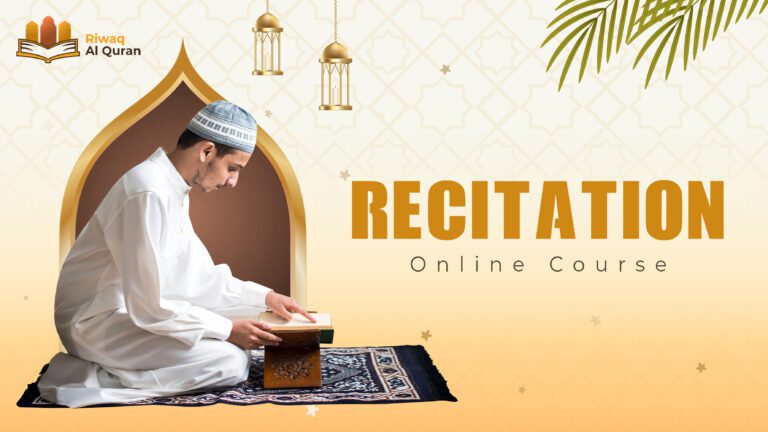
Riwaq Al Quran has noted that students enrolled in our Recitation Course demonstrate significantly better completion rates for intensive schedules when they utilize Juz’ tracking to monitor their daily advancement.
Book Your Free Session in Riwaq’s Recitation Course

3. Apply the 5-Prayer Distribution Method for the 30-Day Plan
The most practical way to finish the Quran in 30 days is distributing 4 pages after each of the 5 daily prayers. This produces exactly 20 pages daily — one complete Juz’ — without requiring a single long uninterrupted session.
This method works because it attaches Quran recitation to an existing daily habit: Salah. You are not adding a new routine from scratch — you are extending one you already perform five times a day.
The 5-Prayer Distribution:
- Fajr → 4 pages
- Dhuhr → 4 pages
- Asr → 4 pages
- Maghrib → 4 pages
- Isha → 4 pages
At an average recitation speed of 1.5 pages per minute, each session takes approximately 2–3 minutes. The entire daily portion requires under 15 minutes total.
At Riwaq Al Quran, this is the method our tutors recommend first to students asking how to finish the Quran fast — because it eliminates the scheduling obstacle entirely.

4. Use This Proven Juz’ Completion Schedule for the 30-Day Plan
Below is a structured 30-day Juz’ schedule. Each row represents one day and one complete Juz’:
| Day | Juz’ | Key Surahs Covered | Approx. Pages |
| 1 | Juz’ 1 | Al-Fatiha, Al-Baqarah (1–141) | 20 |
| 2 | Juz’ 2 | Al-Baqarah (142–252) | 20 |
| 3 | Juz’ 3 | Al-Baqarah (253–end), Al-Imran (1–91) | 20 |
| 4–10 | Juz’ 4–10 | Al-Imran through Al-A’raf | 20/day |
| 11–20 | Juz’ 11–20 | Al-Tawbah through Al-Naml | 20/day |
| 21–29 | Juz’ 21–29 | Al-Ankabut through Al-Mursalat | 20/day |
| 30 | Juz’ 30 | An-Naba’ through An-Nas | ~20 |
Track completion daily. A missed day does not invalidate the plan — simply distribute the missed pages across the next two days without abandoning the schedule entirely.
Experience Riwaq Al Quran Classes
Watch real moments from our live sessions at Riwaq Al Quran and see how we bring learning to life. These clips highlight our interactive, student-focused approach designed to keep learners engaged, motivated, and actively involved in every step of their educational journey.
5. Build Your 7-Day Quran Completion Plan with Accurate Daily Targets
Finishing the Quran in 7 days requires reciting approximately 86 pages per day — roughly 4.3 Juz’ daily. This is a demanding but achievable target for those with strong fluency and dedicated time blocks.
Scholars have historically completed the Quran in 3, 7, and 10 days. Ibn Taymiyyah and others from the Salaf recorded completing it weekly during Ramadan.
However, the Prophet ﷺ discouraged reciting the entire Quran in fewer than 3 days, as reported in Sunan Abu Dawud 1394, cautioning that excessive speed compromises understanding and reflection.
7-Day Daily Block Schedule:
| Time Block | Pages | Juz’ Portion |
| After Fajr (60 min) | ~25 pages | 1.25 Juz’ |
| Morning session (45 min) | ~20 pages | 1 Juz’ |
| After Dhuhr (30 min) | ~15 pages | 0.75 Juz’ |
| Evening session (30 min) | ~15 pages | 0.75 Juz’ |
| After Isha (20 min) | ~11 pages | 0.5 Juz’ |
Before attempting this plan, ensure your Tajweed foundations are stable enough that speed does not produce consistent errors in the core rules of recitation.
6. Track Your Progress with a Weekly Completion Audit
A completion goal without tracking is simply an intention. Use a weekly audit to stay accountable and catch slippage before it accumulates into a week of missed pages.
The Quran memorization schedule guide at Riwaq Al Quran provides printable tracking frameworks. For a fast completion plan, a simple weekly audit looks like this:
| Week | Target Juz’ Completed | Actual Juz’ Completed | Gap |
| Week 1 | Juz’ 1–7 | __ | __ |
| Week 2 | Juz’ 8–15 | __ | __ |
| Week 3 | Juz’ 16–22 | __ | __ |
| Week 4 | Juz’ 23–30 | __ | __ |
If your gap at Week 2 exceeds 2 Juz’, redistribute the shortfall across the remaining days — do not attempt to cover it all in one session, as that approach degrades recitation quality significantly.
Is Reading the Quran Fast Haram?
Reciting the Quran quickly is not inherently haram, but it becomes problematic when speed causes errors in pronunciation, distorts the meaning of words, or merges letters incorrectly. The obligation to observe Tajweed rules applies regardless of pace.
The Quran commands measured recitation clearly:
وَرَتِّلِ ٱلْقُرْءَانَ تَرْتِيلًا
Wa rattil il-Qur’ana tartīlā
“And recite the Qur’an with measured recitation.” (Al-Muzzammil 73:4)
Classical scholars distinguished between Hadr (fast recitation), Tadwir (moderate pace), and Tarteel (slow, deliberate recitation).
All three are permissible according to mainstream Tajweed scholarship, provided letters are not swallowed, elongations are maintained, and stopping rules are observed. Speed that produces no errors is permitted; speed that produces errors is not.
At Riwaq Al Quran, our Azhari-certified tutors consistently identify the same pattern: students attempting fast recitation who have not yet solidified their makhraj (articulation points) tend to merge similar-sounding letters — particularly ح with ه, and ذ with ز.
These errors compound silently until they become deeply ingrained habits. Understanding the benefits of Tajweed makes clear why pace and accuracy must develop together.
How to Finish the Quran in One Year for Absolute Beginners?
Finishing the Quran in one year requires reciting approximately 1.65 pages per day — less than 2 minutes of recitation daily at an average pace. This is the most accessible plan for absolute beginners and those with extremely limited daily time.
The yearly plan works best when divided into weekly Juz’ targets rather than daily page counts. Completing one Juz’ every 12 days produces a full Khatm in approximately one year.
For beginners still learning to read Arabic script, starting with our Noorani Qaida Online Course before beginning a reading schedule ensures the foundation is solid enough to sustain the practice.
Enroll Now in Riwaq’s Noorani Qaida Online Course with a FREE trial

How to Recite Quran for Beginners Before Starting Any Completion Plan?
Before any completion plan, a beginner must establish three non-negotiable foundations: correct letter pronunciation (makhraj), basic Tajweed rules, and reading fluency without constant hesitation.
A student who cannot read a page without stopping to decode letters cannot sustain a 20-page daily target — and should not attempt to.
Our Quran Recitation Course at Riwaq Al Quran is specifically designed for non-Arabic speaking adults and children to move from letter recognition to confident page-level recitation — building the fluency that makes fast completion plans achievable.
Why Students Love Learning with Riwaq Al Quran
Hear directly from our students about how Riwaq Al Quran Academy has transformed their connection with the Book of Allah. Their experiences reflect the dedication, care, and quality that guide every step of our teaching.
Start Your Quran Completion Goal with Riwaq Al Quran
The plan is in your hands — the right guidance makes it achievable. At Riwaq Al Quran, our Azhari-certified tutors have helped thousands of non-Arabic speaking Muslims establish consistent Quran reading habits with measurable results.
What you get with Riwaq Al Quran:
- One-on-one sessions with Al-Azhar University graduates
- Personalised completion schedules matched to your recitation level
- 24/7 flexible scheduling for busy Western Muslim lifestyles
- 2 Free Trial Classes — no commitment required
- 100% Money-Back Guarantee
We offer courses in Online Quran & Tajweed Classes, Arabic Language, and Islamic Studies.
- Online Quran Memorization Course
- Recitation Course
- Tafseer Course
- Tajweed Classes
- Online Quran Classes for Kids.
- Ijazah Program.
- Qirat Course.
- Arabic Language Classes.
- Islamic Studies Courses.
Enroll now for 2 Free Trial Classes
Conclusion
Finishing the Quran quickly is entirely within reach when you work with the Quran’s actual structure rather than against it. 604 pages, 30 Juz’, five daily prayers — these are not obstacles, they are the scaffolding of every practical completion plan.
The 30-day model distributing 4 pages per prayer remains the most sustainable and historically grounded approach for most Muslims.
Whether your timeline is 7 days or one year, the principle does not change: consistent daily recitation, accurate pronunciation, and honest weekly tracking are what transform intention into completion. May Allah ﷻ make it easy. Ameen.
Frequently Asked Questions About How to Finish the Quran Quickly
What age should you finish the Quran?
There is no fixed age requirement for completing the Quran. Children as young as 5 or 6 begin Quran reading worldwide, and many complete their first Khatm between ages 7 and 12. Adults can complete it at any age. What matters is recitation quality, not age — a completion at 50 with proper Tajweed holds more value than one at 10 with errors.
How long does it take to finish the Quran?
The time required depends entirely on your chosen plan and daily recitation speed. With 20 pages daily, most readers finish in 30 days. At 7 pages daily, completion takes approximately 3 months. Beginners reciting 1–2 pages daily can complete the Quran in under one year. The Quran’s 604 pages make every timeline mathematically straightforward to plan.
How to finish the Quran in 7 days — is it really possible?
Yes — completing the Quran in 7 days is possible and has historical scholarly precedent. It requires approximately 86 pages daily across dedicated time blocks. However, it is only appropriate for those with established Tajweed fluency. Reciting at this pace without solid foundations risks systematic pronunciation errors. The Prophet ﷺ discouraged completing it in fewer than 3 days, as recorded in Sunan Abu Dawud 1394.
Is reading the Quran fast haram?
Fast recitation — known in Tajweed scholarship as Hadr — is not haram when letters are pronounced correctly and obligatory rules are observed. It becomes impermissible when speed causes errors that distort word meanings or violate clear Tajweed rules. Scholars permit all three speeds: Tarteel (slow), Tadwir (moderate), and Hadr (fast), provided recitation accuracy is maintained throughout.