| Key Takeaways |
| The Mushaf contains over 15 distinct symbols guiding readers on stopping, pausing, pronunciation, and recitation rules. |
| Waqf signs instruct reciters precisely where to stop, pause, or continue without breaking breath. |
| The Sajdah symbol appears 15 times in the Quran, marking obligatory or recommended prostration positions during recitation. |
| Muqatta’at letters appear at the opening of 29 Surahs and carry deep scholarly discussion regarding their precise meaning. |
| Understanding these symbols is foundational for accurate Tajweed application and proper recitation with a qualified teacher. |
Every time you open the Mushaf, you encounter a precise visual system — small symbols, dotted markers, and letter indicators that carry specific recitation instructions. These signs are not decorative; they encode centuries of scholarly precision into every page of the Quran.
Each marker corresponds to a Tajweed principle or a stopping rule, and recognizing them correctly means you’re honoring the Quran as it was transmitted through unbroken chains of oral tradition.
Table of Contents
What Are the Waqf (Stopping) Signs in the Quran?
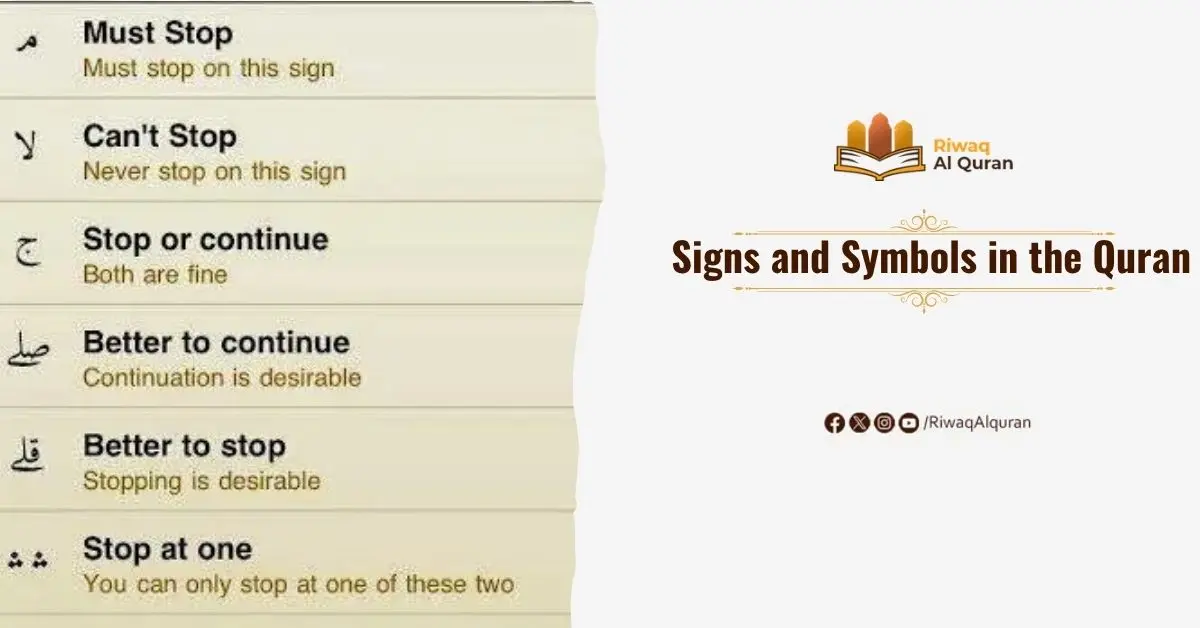
The Quran contains seven primary Waqf signs that guide readers on whether to stop, continue, or choose between the two. These symbols were codified by classical scholars to preserve meaning during recitation.
Misreading them — especially confusing Waqf Lazim with optional stops — can alter the theological meaning of a verse entirely.
What Does the Waqf Lazim Sign (مـ) Mean?
Waqf Lazim (مـ) marks a mandatory stop. Continuing past this point without pausing would produce a meaning that contradicts the intended Quranic message.
Classical Tajweed scholarship treats this as the most critically important stopping sign in the Mushaf.
The sign appears in Allah’s words:
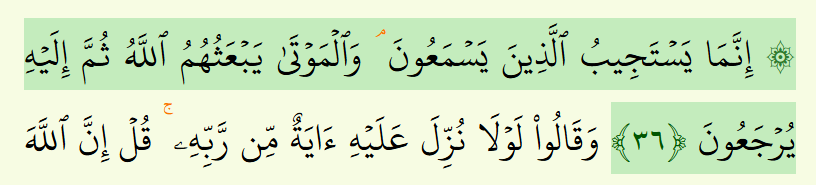
′innamaˉyastajıˉbul−ladhıˉnayasma′uˉn(a)ۘ wal−mawtaˉyab′athuhumullaˉh
“Only those who hear will respond. And the dead — Allah will resurrect them.” (Al-An’am 6:36)
Without the stop, the verse could be misread to imply the dead also respond — a meaning fundamentally at odds with the Aqeedah.


What Does the Waqf Mamnu’ Sign (لا) Mean?
Waqf Mamnu’ (لا) prohibits both stopping at that point and beginning from what follows it. This sign appears where breaking the flow would sever an inseparable grammatical or theological connection between two phrases.
It appears in:
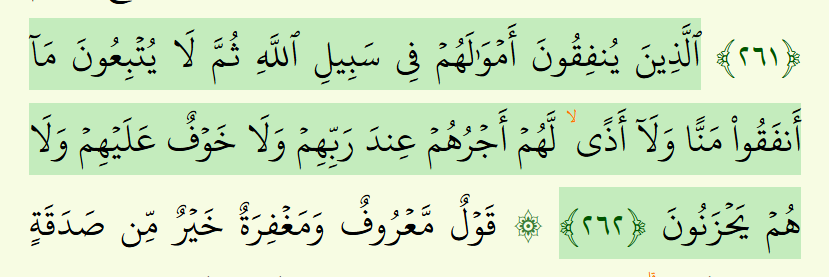
alladhıˉnayunfiquˉnaamwaˉlahumfıˉsabıˉlillaˉhithummalaˉyutbi′uˉnamaˉanfaquˉmannanwalaˉadhanۙlahumajruhum
“Those who spend their wealth in the way of Allah and then do not follow up what they have spent with reminders [of it] or [other] injury will have their reward with their Lord, and there will be no fear concerning them, nor will they grieve.” (Al-Baqarah 2:262)
What Does the (صلي) Sign Mean?
Wasl Awla (صلي) indicates that continuing without stopping is preferable, though stopping is permitted. It signals a minor grammatical connection where the text flows better uninterrupted.
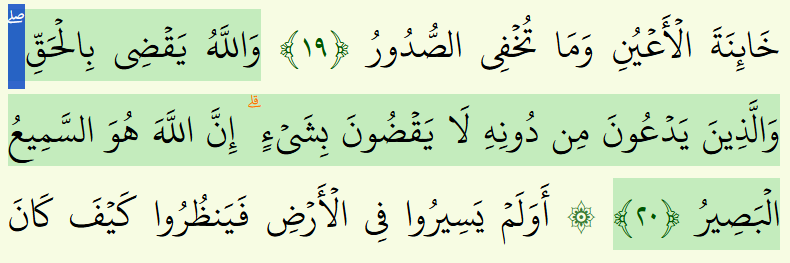
Wallahu yaqdee bilhaqqi wallatheena yad’oona min doonihi la yaqdoona bishayin
“And Allah judges with truth, while those they invoke besides Him judge not with anything.” (Ghafir, 40:20)
What Does the (قلي) Sign Mean?
Waqf Awla (قلي) indicates that stopping is preferable, though continuing is permitted. Scholars placed this sign where pausing reflects the stronger reading according to meaning and grammar.
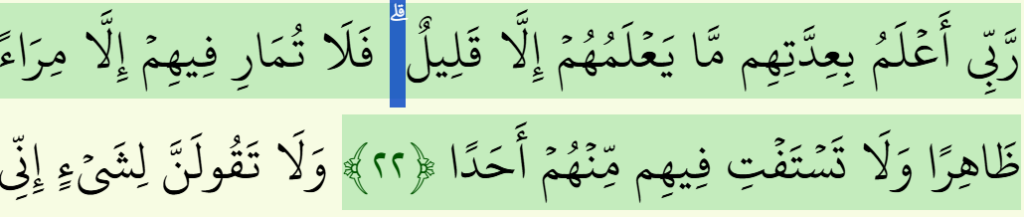
qulrabbıˉa′lamubi′iddatihimmaˉya′lamuhumillaˉqalıˉl(un)ۗ falaˉtumaˉrifıˉhim
“Say, ‘My Lord is most knowing of their number. None knows them except a few.’ ۗ So do not argue about them” (Surah Al-Kahf, 18:22)
What Does the (ج) Sign Mean?
Waqf Ja’iz (ج) indicates a permitted stop with no clear preference either way. Both stopping and continuing are acceptable, and the reader may choose based on breath requirements or recitation style.
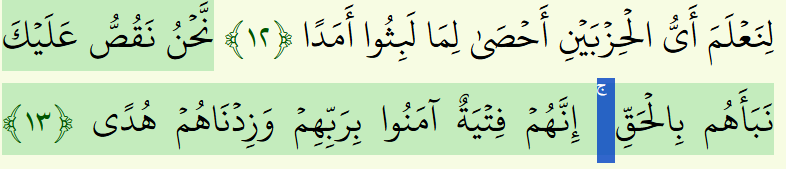
Nahnu naqussu ‘alayka naba’ahum bilhaqqi innahum fityatun amanoo birabbihim
“It is We who relate to you, [O Muhammad], their story in truth. Indeed, they were youths who believed in their Lord…” (Surah Al-Kahf, 18:13)
Experience Riwaq Al Quran Classes
Watch real moments from our live sessions at Riwaq Al Quran and see how we bring learning to life. These clips highlight our interactive, student-focused approach designed to keep learners engaged, motivated, and actively involved in every step of their educational journey.
What Is the Waqf Mu’anaqah (Triple Dots) Sign?
Waqf Mu’anaqah — marked by three dots (∴) appearing at two locations within the same verse — permits stopping at one of the two marked positions but not both. Stopping at the first position means you must continue past the second, and vice versa.
This sign safeguards the complete theological meaning by ensuring both halves of the statement remain intact.
It appears in the opening of Surah Al-Baqarah:

dhaˉlikal−kitaˉbulaˉraybaۛfıˉh(i)ۛhudanlil−muttaqıˉn
“This is the Book about which there is no doubt, a guidance for those conscious of Allah.” (Surah Al-Baqarah, 2:2)
The Most Important Waqf Symbols Chart
| Waqf Sign | Symbol | Meaning | Stop Permitted? |
| Waqf Lazim | مـ | Mandatory stop | Required |
| Waqf Mamnu’ | لا | Prohibited stop | Forbidden |
| Waqf Awla Wasl | صلي | Continuing preferred | Optional |
| Waqf Awla | قلي | Stopping preferred | Optional |
| Waqf Ja’iz | ج | Equal permission | Optional |
| Waqf Mu’anaqah | ∴ … ∴ | Stop at one point only | One of two |
Understanding these six signs is a prerequisite for reciting with proper Tajweed. Students at Riwaq Al Quranworking through our Online Tajweed Coursestudy Waqf rules as a dedicated module — because stopping incorrectly is among the most common recitation errors our Azhari tutors correct.
Enroll Now in the Best Online Tajweed Classes
What Are the Pronunciation Symbols in the Quran?
Beyond stopping signs, the Mushaf contains a precise set of pronunciation markers. These symbols guide readers on exactly how each letter or sound should be articulated — silently, fully, or with specific phonetic qualities.
What Does the Small Circle (ْ) Above a Letter Indicate?
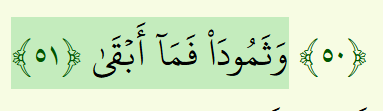
A small circle above a letter indicates that the letter is extra in the written script and must never be pronounced — whether in connection or when stopping. It does not represent sukoon (stillness). It signals a ziyada (addition) in the Rasm that carries no sound.
Examples include:
- وَثَمُودَاْ فَمَا أَبْقَى (An-Najm 53:51)
- أُوْلَئِكَ — the Waw carries this marker, indicating silent status
What Does a Small Dot Below a Letter Mean?
A small dot placed beneath a letter marks it as extra in the written form but only silent during connected recitation (Wasl). When stopping on that letter, it may be sounded according to the rules of Waqf.
This appears in:
لَكِنَّا هُوَ اللَّهُ (Al-Kahf 18:38)

The Alif in “لَكِنَّا” is silent in Wasl.
What Does the (•) Symbol Indicate in the Mushaf?
A small filled circle above a letter marks Tas-heel — the softening or facilitation of a Hamza. Instead of pronouncing a full glottal stop, the reader produces a softened, intermediate sound between the Hamza and the vowel that follows it.
This appears in:
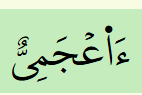
What Does the (◊) Symbol Above a Letter Mean?
A diamond shape above a letter signals Ishmam — a subtle rounding of the lips during a stop to indicate the presence of a Dammah vowel, without fully vocalizing it. This is an advanced Tajweed feature appearing in a specific location in Surah Yusuf:
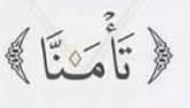
What Does the (◊) Symbol Below a Letter Mean?
A diamond shape beneath a letter signals Imalah — a phonetic inclination of the Fatha toward a Kasrah sound. This reading is specific to the Hafs ‘an ‘Asim narration in particular positions and appears in:
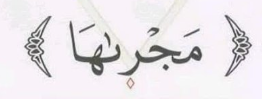
In our sessions at Riwaq Al Quran, students often encounter Ishmam and Imalah for the first time with significant confusion — they’ve memorized rules for Ghunnah and Madd, but these subtler symbols were never explained.
Our Online Quran Memorization Courseaddresses these markers directly, ensuring students recite with full command of the Mushaf’s complete symbol system.
Start your Hifz journey with a Free Trial
What Are the Tajweed Application Symbols in the Mushaf?
Several symbols in the Mushaf communicate active Tajweed rules — moments where a specific phonetic transformation is required.
What Does the Small (م) Symbol Indicate?
A small standalone Meem above or beside a letter marks the position of Iqlab — the transformation of Noon Sakinah or Tanween into a Meem sound when followed by the letter Baa. The nasal resonance (Ghunnah) is maintained for two counts.
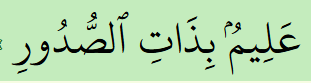
The Meem marker alerts readers that the Tanween of “عَلِيمٌ” transforms into a nasal Meem before “بِذَاتِ.”
What Do Double Vowel Signs Without Shadda Indicate?
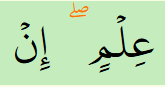
When Tanween signs appear without a Shadda following them, the specific positioning indicates whether Izhar (clear pronunciation) applies. The Tanween must be pronounced with full clarity — no merging, no concealment — into the following letter.
مَا لَهُمْ بِذَلِكَ مِنْ عِلْمٍ إِنْ هُمْ (Az-Zukhruf 43:20)
What Do the Small Letters (ا), (و), (ي) Mean in the Mushaf?
When Alif, Waw, or Ya appear in reduced, smaller form within the text, they indicate that these letters carry Madd (prolongation) and must be recited as if full-sized. The reader elongates the sound for the appropriate number of counts — typically two, four, or six — based on the Madd category that applies.
Example:
- Small Waw: دَاوُودَ — the Waw of prolongation is present and must be sounded

| Symbol | Name | Tajweed Rule Activated |
| Small م | Iqlab marker | Noon/Tanween → Meem before Baa |
| Small ا / و / ي | Madd letters | Obligatory prolongation |
| Tanwin without merger | Izhar | Clear Tanween before throat letters |
| • (filled dot) | Tas-heel | Softened Hamza articulation |
| ◊ above | Ishmam | Lip-rounding signal on Waqf |
| ◊ below | Imalah | Fatha inclined toward Kasrah |
How Many Sajdah Signs Are in the Quran?
The Quran contains 15 positions of Sujood al-Tilawah (prostration of recitation), marked in the Mushaf with a distinct Sajdah symbol — typically a small decorative marker or the word سجدة written above the relevant verse.
When a reciter reaches one of these verses — whether in prayer or outside it — prostration becomes either recommended or, according to some scholars, obligatory.
Where Are Sajdah Signs Located in the Mushaf?
The 15 Sajdah positions are found in the following Surahs:
- Al-A’raf (7:206)
- Ar-Ra’d (13:15)
- An-Nahl (16:50)
- Al-Isra’ (17:109)
- Maryam (19:58)
- Al-Hajj (22:18)
- Al-Hajj (22:77) — noted: Surah Al-Hajj contains two Sajdah positions
- Al-Furqan (25:60)
- An-Naml (27:26)
- As-Sajdah (32:15)
- Sad (38:24) — this is classified by Imam Ash-Shafi’i as a Sajdah of Shukr (gratitude), not recitation
- Fussilat (41:38)
- An-Najm (53:62)
- Al-Inshiqaq (84:21)
- Al-‘Alaq (96:19)
Scholarly positions differ slightly on the Sajdah in Surah Sad (38:24). The Hanafi and Maliki schools count it as a Sajdah of recitation, while the Shafi’i school classifies it differently. A student who learns Tajweed rules with an Azhari-certified tutor will receive clear guidance on which madhab’s ruling applies to their practice.
For students using our Online Quran Tafseer Course, understanding the scholarly difference between Sajdah Tilawah positions deepens both recitation and comprehension simultaneously.
Enroll Now in Riwaq’s Tafseer Course with a FREE trial

How Many Huroof Muqatta’at in the Quran?
Huroof Muqatta’at in the Quran appear at the beginning of 29 Surahs out of 114, comprising 14 unique Arabic letters in various combinations.
The Huroof Muqatta’at (الحروف المقطعة) — often called the “disjointed letters” or “mysterious letters” — are combinations of Arabic letters placed at the openings of certain Surahs, recited as individual letter names rather than as words.
Their meaning is among the most discussed questions in classical Tafsir. The scholarly position of the vast majority of Mufassireen — including Ibn Katheer and Al-Tabari — is that their precise meaning is known only to Allah ﷻ, though many interpretations have been offered.
Prominent Examples and Locations of Huroof Muqatta’at in the Quran
- الٓمٓ (Alif-Lam-Meem): Surahs Al-Baqarah, Aal-Imran, Al-‘Ankabut, Ar-Rum, Luqman, As-Sajdah
- يٰسٓ (Ya-Seen): Surah Ya-Seen (36)
- طٰهٰ (Ta-Ha): Surah Ta-Ha (20)
- حٰمٓ (Ha-Meem): Seven consecutive Surahs (40–46), known collectively as the “Ha-Meem Surahs”
- كٓهيٰعٓصٓ (Kaf-Ha-Ya-‘Ain-Sad): Surah Maryam (19) — the longest Muqatta’at combination
From a Tajweed perspective, every letter of the Muqatta’at is recited by its full name. The letter Lam (ل) in “Alif-Lam-Meem” carries a Madd Lazim of 6 counts because its full pronunciation — Lam-Alif-Meem — contains a Madd letter followed by a permanent sukoon.
Enrolling in Riwaq Al Quran’s Best Islamic Studies Online Course provides structured access to classical Tafsir positions on these letters, taught by Azhari-certified instructors who present the scholarly tradition with full academic integrity.
Begin your Islamic Studies with a FREE trial lesson

What Are the Madd Signs in the Quran?
Madd signs are elongation markers indicating that a vowel sound must be stretched beyond its natural count. In the Hafs ‘an ‘Asim recitation — the most widely used narration globally — Madd extensions range from 2 to 6 counts depending on the type.
The Mushaf uses the Madd symbol (ـٰ or the elongated alif stroke) alongside context-based rules to indicate which type of Madd applies.
How Many Madd Signs in the Quran?
There is no single universally agreed number of Madd types, as scholars classify them differently. However, the most established classifications recognized in mainstream Tajweed scholarship include:
Primary Madd Categories and Their Counts
| Madd Type | Arabic Name | Count (Harakas) | Trigger |
| Natural Madd | Madd Tabee’i | 2 | Madd letter with no hamzah or sukoon following |
| Connected Madd | Madd Muttasil | 4–5 (obligatory) | Madd letter followed by hamzah in same word |
| Disconnected Madd | Madd Munfasil | 4–5 (permissible) | Madd letter followed by hamzah in next word |
| Sukoon Madd | Madd ‘Aarid lil-Sukoon | 2, 4, or 6 | Natural Madd followed by a letter receiving sukoon at stop |
| Emphatic Madd | Madd Lazim | 6 (obligatory) | Madd letter followed by permanent sukoon or shaddah |
The Madd Lazim — carrying a mandatory 6-count elongation — appears in specific locations throughout the Quran, most notably within the Huroof Muqatta’at such as the Alif-Lam-Meem (الٓمٓ) at the opening of Surah Al-Baqarah, where the Lam and Meem each carry a Madd Lazim.
Hoe Many Ruku’ in the Quran?
In Mushafs in some regions, the Quran is divided into 558 Ruku’at (sections) — the correct Arabic term, as opposed to regional terminology.
What Are the Ruku’ Markers in the Quran?
A Ruku’ is a thematic unit of verses grouped by connected subject matter. The marker typically appears as the Arabic letter ع (Ain) in the margin beside the verse where a Ruku’ concludes.
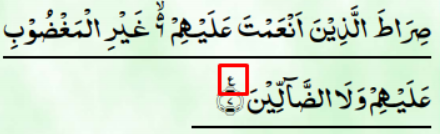
These divisions are particularly prominent in the Indian subcontinent printing tradition, where they were historically used to organize recitation portions for Tarawih prayers — completing one Ruku’ per Rak’ah to finish the Quran over 27 nights.
In Hafs ‘an ‘Asim Mushafs commonly used in Arab countries, Ruku’ markers may be less prominent or formatted differently.
Why Students Love Learning with Riwaq Al Quran
Hear directly from our students about how Riwaq Al Quran Academy has transformed their connection with the Book of Allah. Their experiences reflect the dedication, care, and quality that guide every step of our teaching.
Start Reciting the Quran With Full Mastery at Riwaq Al Quran
Knowing these symbols is only the beginning — applying them accurately in live recitation requires trained, consistent feedback from a certified instructor.
At Riwaq Al Quran, our Azhari-certified tutors have guided thousands of non-Arabic speaking students since 2017 to read the Mushaf with full command of every marker, symbol, and stopping sign.
We offer courses in Online Quran & Tajweed Classes, Arabic Language, and Islamic Studies.
- Online Quran Memorization Course
- Tafseer Course
- Tajweed Classes
- Online Quran Classes for Kids.
- Ijazah Program.
- Qirat Course.
- Arabic Language Classes.
- Islamic Studies Courses.
Enroll now for 2 Free Trial Classes

Conclusion
The signs and symbols of the Mushaf represent a living transmission system — one that connects today’s reader to centuries of precise oral scholarship. Each marker carries a specific instruction that, when followed correctly, ensures the Quran is recited as it was revealed.
Familiarity with these symbols is not advanced study; it is the foundation of proper recitation.
Whether you’re beginning your Quran memorization or refining your Tajweed rules, understanding what each symbol commands is what separates recitation that is technically present from recitation that is spiritually sound. Insha’Allah, this guide gives you the clarity to read with both.
Read Also: How Many Times Is Muhammad Mentioned in the Quran?
Frequently Asked Questions About Quran Signs and Symbols
How many Waqf signs are in the Quran?
The Mushaf contains approximately seven primary Waqf signs: Waqf Lazim (مـ), Waqf Mamnu’ (لا), Waqf Awla Wasl (صلي), Waqf Awla (قلي), Waqf Ja’iz (ج), Waqf Mu’anaqah (triple dots), and the end-of-verse circle. Each carries a distinct ruling — from mandatory stopping to absolute prohibition of stopping.
How many Sajdah positions are in the Quran?
There are 15 Sajdah positions according to the majority scholarly view, and 14 according to the Hanafi school. The difference centers on one of the two positions in Surah Al-Hajj (22:77). Each position is marked in the Mushaf with a dedicated prostration symbol beside the relevant verse.
How many Huroof Muqatta’at are in the Quran?
The Huroof Muqatta’at appear at the openings of 29 Surahs. They consist of 14 distinct Arabic letters used in various combinations. Their meaning is among the mutashabihat — matters whose precise interpretation is known fully only to Allah, though classical scholars have documented numerous scholarly positions on their significance.
How many Ruku’at are in the Quran?
The Quran contains 558 Ruku’at — thematic sections marked in the Mushaf margin with the letter ع. These divisions were historically used to organize recitation in Tarawih prayers and are most prominent in Mushafs printed in the Indian subcontinent tradition.
Why is it important to learn Quran symbols from a qualified teacher?
Many symbols — particularly Ishmam, Imalah, Tas-heel, and Waqf Mu’anaqah — require live demonstration to apply correctly. Reading their definitions does not produce correct recitation. A certified instructor can identify errors in real time, which is why learning from a qualified teacher remains the scholarly and traditional standard for Quran recitation. Explore the benefits of Tajweed to understand why structured guidance matters.