| Key Takeaways |
| The Quran began its revelation in the Cave of Hira on Jabal al-Nour, located near Makkah, in 610 CE. |
| The first revealed verses were the opening five ayat of Surah Al-Alaq, delivered by Angel Jibreel (AS) to the Prophet ﷺ. |
| Jabal al-Nour means “Mountain of Light” — named for the divine illumination that descended upon it that night. |
| The Quran was not revealed in a single event; its full revelation spanned approximately 23 years across multiple locations. |
The question of where the Quran was first revealed points to one of the most sacred moments in human history.
In a small cave carved into the side of a mountain outside Makkah, the divine word descended upon the Prophet Muhammad ﷺ — changing the course of humanity forever.
Table of Contents
Where Was the Quran First Revealed?
The Quran was first revealed in the Cave of Hira (Ghar Hira), located on Jabal al-Nour — the Mountain of Light — approximately 3 kilometers northeast of the Masjid al-Haram in Makkah al-Mukarramah.
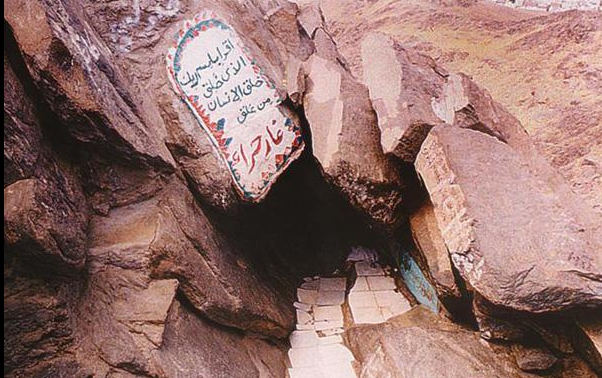
This occurred in the year 610 CE, during the blessed month of Ramadan, when the Prophet Muhammad ﷺ was approximately 40 years old and in a state of spiritual retreat.
This is established by authentic hadith. Sayyidah Aisha (RA) narrated the account of the first revelation in detail, recorded in Sahih al-Bukhari 3, describing how Angel Jibreel (AS) came to the Prophet ﷺ inside the cave and commanded him: “Iqra'” — “Read” or “Recite.”
The Prophet ﷺ replied that he could not read.
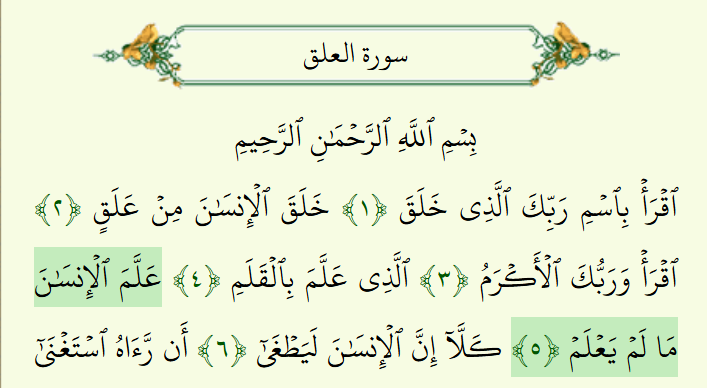
Jibreel (AS) embraced him tightly three times, then recited:
اقْرَأْ بِاسْمِ رَبِّكَ الَّذِي خَلَقَ خَلَقَ الْإِنسَانَ مِنْ عَلَقٍ اقْرَأْ وَرَبُّكَ الْأَكْرَمُ الَّذِي عَلَّمَ بِالْقَلَمِ عَلَّمَ الْإِنسَانَ مَا لَمْ يَعْلَمْ
Iqra’ bismi rabbika alladhī khalaq. Khalaqa al-insāna min ‘alaq. Iqra’ wa rabbuka al-akram. Alladhī ‘allama bil-qalam. ‘Allamal-insāna mā lam ya’lam.
“Recite in the name of your Lord who created — created man from a clinging substance. Recite, and your Lord is the most Generous — Who taught by the pen — taught man that which he knew not.” (Al-Alaq 96:1–5)
These five verses are the first words of the Quran ever revealed to mankind.
Experience Riwaq Al Quran Classes
Watch real moments from our live sessions at Riwaq Al Quran and see how we bring learning to life. These clips highlight our interactive, student-focused approach designed to keep learners engaged, motivated, and actively involved in every step of their educational journey.
On Which Mountain Was the Quran First Revealed?
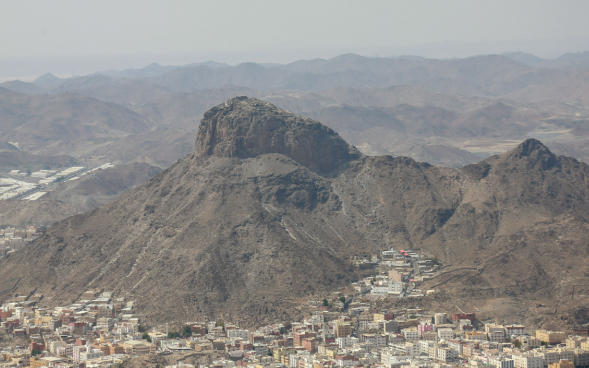
The Quran was first revealed on Jabal al-Nour — the Mountain of Light — located approximately 3 kilometers from the Masjid al-Haram in Makkah. Specifically, the revelation occurred inside Ghar Hira, a cave at the mountain’s peak.
The Prophet ﷺ received the first five verses of Surah Al-Alaq there in 610 CE from Angel Jibreel (AS).
What Is Jabal al-Nour?
Jabal al-Nour — Arabic for “Mountain of Light” — is a rocky mountain rising approximately 642 meters above sea level near Makkah. Its name reflects the light of divine revelation that descended upon it. At its peak sits Ghar Hira, a narrow cave measuring roughly 3.7 meters in length and 1.6 meters in width — barely enough space for a small group to stand.
The Prophet ﷺ used to retreat to this cave regularly before his prophethood, spending days and nights in worship, contemplation, and seclusion from the polytheism that surrounded Makkah.
Classical scholars of Seerah, including Ibn Hisham in Al-Seerah al-Nabawiyyah, document that the Prophet ﷺ would carry provisions to Hira and remain there for extended periods in tahannuth — a form of devotional seclusion.
At Riwaq Al Quran, our instructors — all Al-Azhar University graduates — integrate these historical and geographic contexts into lessons, helping students understand not just how to recite the Quran, but why each portion was revealed.
Connect with our Azhari tutors to learn more about the Quran

Was the Quran Revealed Only in Makkah?
The Quran was revealed across two primary cities — Makkah al-Mukarramah and Madinah al-Munawwarah — over approximately 23 years. Scholars of Quranic sciences (Uloom al-Quran) categorize the entire Quran accordingly:
| Category | Term | Period | Approximate Surahs |
| Revealed in Makkah | Makki | Before Hijrah (610–622 CE) | ~86 Surahs |
| Revealed in Madinah | Madani | After Hijrah (622–632 CE) | ~28 Surahs |
Makki surahs generally focus on Tawhid (the oneness of Allah), the afterlife, prophethood, and moral foundations. They tend to have shorter, more rhythmically powerful verses — precisely because they were addressing a community being called away from deeply entrenched polytheism.
Madani surahs tend to address the detailed legislation of the Muslim community — social law, family matters, interfaith relations, and governance. These were revealed as the Muslim state was being established in Madinah.
Scholars also document specific revelations connected to precise locations and occasions — for example, certain verses of Surah Al-Tawbah were revealed during the expedition of Tabuk, and parts of Surah Al-Baqarah were among the last verses revealed near the end of the Prophet’s life ﷺ.
If you want to study the Quran with this depth, explore our Online Quran Tafseer Course designed for non-Arabic speakers.
Enroll Now in Riwaq’s Tafseer Course with a FREE trial
Why Does the Location of Revelation Matter for Quran Students?
Knowing where and how the Quran was revealed strengthens a student’s connection to what they are memorizing and reciting. This is not merely historical interest — it has direct implications for understanding the Quran word by word and grasping the meaning behind its verses.
In our online Hifz classes at Riwaq Al Quran, students who understand the context of revelation — where a surah was revealed, to whom, and under what circumstances — retain its meaning more deeply and recite it with greater awareness.
A student reciting Surah Al-Alaq who knows those words first fell in the silence of Ghar Hira brings a different quality of presence to their recitation.
Start your Hifz journey with a Free Trial
This awareness also directly supports Tajweed — the rules governing proper Quranic recitation. Students who feel connected to the Quran’s origins tend to approach its rules with reverence rather than mechanical compliance.
The benefits of Tajweed extend beyond pronunciation; they deepen the act of worship itself.
For those actively working on Hifz, grounding your memorization in the Quran’s revealed context is a proven pedagogical method. Pairing it with a structured plan — as outlined in our Quran memorization techniques guide — accelerates both retention and comprehension.
Read Also: The Revelation of the Quran for Kids
Why Students Love Learning with Riwaq Al Quran
Hear directly from our students about how Riwaq Al Quran Academy has transformed their connection with the Book of Allah. Their experiences reflect the dedication, care, and quality that guide every step of our teaching.
Read Also: The 400 Most Common Words in the Quran
Begin Your Quran Study with Riwaq Al Quran
The Quran descended from the highest heavens to a cave in Makkah — and it now reaches students around the world through dedicated, structured learning. At Riwaq Al Quran, our Azhari-certified tutors bring that same spirit of knowledge to every one-on-one session.
Our unique strengths:
- Al-Azhar University-certified instructors with 9+ years teaching non-Arabic speakers
- One-on-one sessions with 24/7 scheduling flexibility
- Courses covering Tajweed, Hifz, Tafseer, Qirat, and Islamic Studies
- 2 Free Trial Classes — no commitment required
- 100% Money-Back Guarantee
Explore our Online Quran Memorization Course or register for your free trial today. Insha’Allah, your connection to the Quran deepens with every session.
We offer courses in Online Quran & Tajweed Classes, Arabic Language, and Islamic Studies.
- Online Quran Memorization Course
- Recitation Course
- Tafseer Course
- Tajweed Classes
- Online Quran Classes for Kids.
- Ijazah Program.
- Qira’at Course.
- Arabic Language Classes.
- Islamic Studies Courses.
Enroll now for 2 Free Trial Classes
Conclusion
The Quran was revealed where the Prophet ﷺ sought God in solitude — a narrow cave on a mountain of light, outside the city of Makkah. That first command, Iqra’, did not just begin a scripture; it initiated a 23-year revelation that spoke to every human condition across every era.
Frequently Asked Questions About Where the Quran Was Revealed
What Were the First Words of the Quran Revealed?
The first revealed words were the opening five verses of Surah Al-Alaq (96:1–5), beginning with “Iqra’ bismi rabbika alladhī khalaq” — “Recite in the name of your Lord who created.” These verses were delivered by Angel Jibreel (AS) to the Prophet ﷺ inside the Cave of Hira on Jabal al-Nour during Ramadan, 610 CE.
Was the Entire Quran Revealed in Makkah?
No. The Quran was revealed across approximately 23 years in two cities. Surahs revealed before the Hijrah are classified as Makki (around 86 surahs), and those revealed after are Madani (around 28 surahs). Makki chapters emphasize Tawhid and the afterlife; Madani chapters address detailed Islamic legislation for the Muslim community.
What Is the Significance of Laylat al-Qadr in Quran Revelation?
Laylat al-Qadr — the Night of Decree in Ramadan — marks when the Quran was sent in its entirety from the Preserved Tablet to the lowest heaven. Allah (SWT) states this explicitly in Surah Al-Qadr (97:1). Gradual revelation to the Prophet ﷺ then continued over 23 years. Classical scholars including Imam Ibn Kathir confirm this two-stage understanding.
How Does Knowing the Place of Revelation Help Quran Students?
Understanding where and when each portion of the Quran was revealed — known as Asbab al-Nuzul (occasions of revelation) — deepens comprehension, strengthens memorization retention, and enhances recitation quality. Students who connect verses to their historical and geographical context recite with greater awareness and absorb Tafsir more effectively, as documented in traditional Quranic pedagogy.