
Juz Amma is the thirtieth and final juz of the Quran, and the question of how many surahs are in Juz Amma comes up constantly among new Hifz students and their parents. The answer shapes how a student plans their memorization calendar, so it’s worth getting exactly right before you start.
Juz Amma contains 37 surahs — more than any other juz in the Quran — running from Surah An-Naba (chapter 78) to Surah An-Nas (chapter 114). Despite being the final juz, it is the shortest in total length while carrying the highest surah count, which is exactly what makes it the standard entry point for Hifz worldwide, from a seven-year-old in Cairo to an adult beginner in London.
This guide gives you the full list of all 37 surahs with their details, the Quranic verses and an authentic hadith that explain why this juz holds the place it does in Islamic learning, the Tajweed rules you’ll meet most often while reciting it, and why it became the universal starting point for memorization.
What you’ll learn in this article
- The exact number of surahs in Juz Amma and where they fall in the Mushaf.
- The full list of all 37 surahs with chapter number, verse count, and revelation type.
- Why Juz 30 is called “Juz Amma” and where the name comes from.
- The core Tajweed rules you’ll apply constantly while reciting this juz.
- The Quranic themes that repeat across these surahs, with ayahs and an authentic hadith cited directly.
- Why Hifz programs sequence memorization starting here, not from Juz 1.
Table of Contents
How Many Surahs Are in Juz 30 Amma?
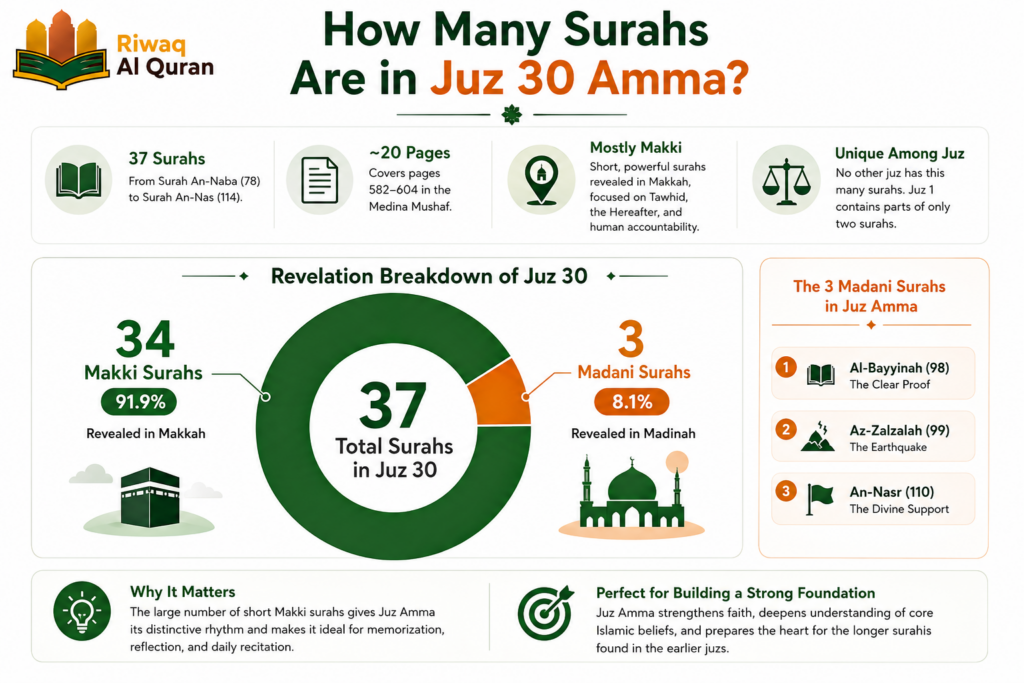
Juz 30 contains exactly 37 surahs, beginning with Surah An-Naba (chapter 78) and ending with Surah An-Nas (chapter 114). These 37 surahs span approximately 20 pages of the standard Medina Mushaf (pages 582–604).
No other juz comes close to this count. Juz 1, by comparison, contains portions of only two surahs — Al-Fatihah and the opening of Al-Baqarah. This gap exists because Juz Amma is made up almost entirely of short Makki surahs, while the early juzs contain long Madani surahs like Al-Baqarah and Aal-Imran, which alone span multiple juzs.
Of the 37 surahs in Juz Amma, 34 are Makki (revealed in Makkah) and 3 are Madani (revealed in Madinah): Al-Bayyinah, Az-Zalzalah, and An-Nasr. This overwhelmingly Makki character explains the rhythm of the juz — short, forceful verses centered on Tawhid, the Day of Judgment, and human accountability, which is the standard rhetorical style of early Makki revelation.
What Are the Surahs in Juz 30 Amma?
The table below lists all 37 surahs in order, with chapter number, verse count, and revelation type, so you can plan a memorization schedule against it directly.
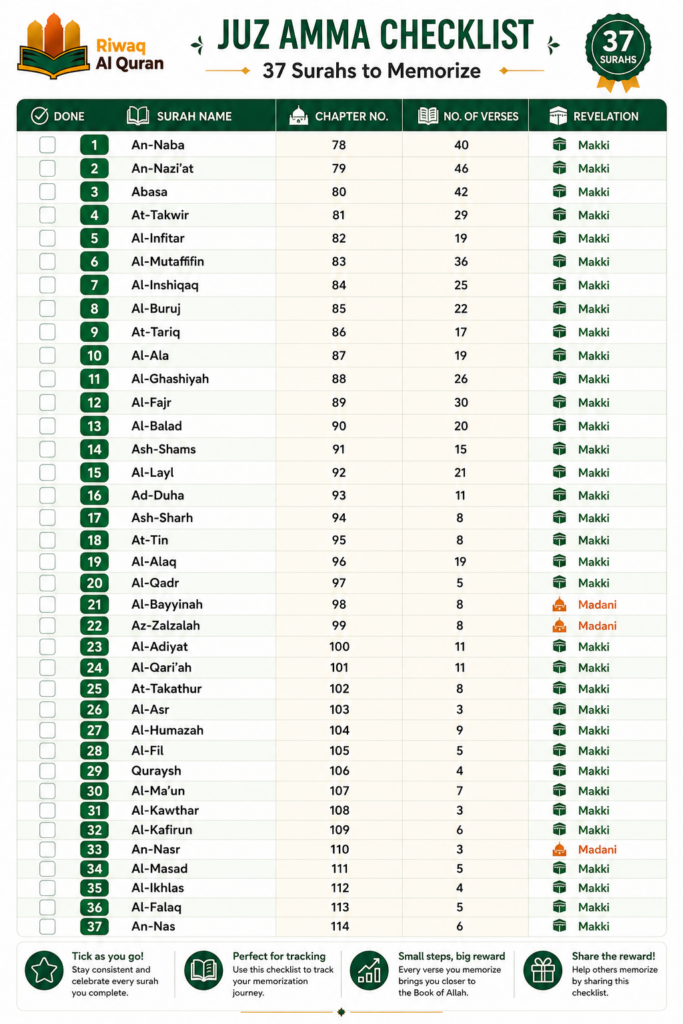
| # | Surah Name | Chapter No. | No. of Verses | Revelation |
|---|---|---|---|---|
| 1 | An-Naba | 78 | 40 | Makki |
| 2 | An-Nazi’at | 79 | 46 | Makki |
| 3 | Abasa | 80 | 42 | Makki |
| 4 | At-Takwir | 81 | 29 | Makki |
| 5 | Al-Infitar | 82 | 19 | Makki |
| 6 | Al-Mutaffifin | 83 | 36 | Makki |
| 7 | Al-Inshiqaq | 84 | 25 | Makki |
| 8 | Al-Buruj | 85 | 22 | Makki |
| 9 | At-Tariq | 86 | 17 | Makki |
| 10 | Al-Ala | 87 | 19 | Makki |
| 11 | Al-Ghashiyah | 88 | 26 | Makki |
| 12 | Al-Fajr | 89 | 30 | Makki |
| 13 | Al-Balad | 90 | 20 | Makki |
| 14 | Ash-Shams | 91 | 15 | Makki |
| 15 | Al-Layl | 92 | 21 | Makki |
| 16 | Ad-Duha | 93 | 11 | Makki |
| 17 | Ash-Sharh | 94 | 8 | Makki |
| 18 | At-Tin | 95 | 8 | Makki |
| 19 | Al-Alaq | 96 | 19 | Makki |
| 20 | Al-Qadr | 97 | 5 | Makki |
| 21 | Al-Bayyinah | 98 | 8 | Madani |
| 22 | Az-Zalzalah | 99 | 8 | Madani |
| 23 | Al-Adiyat | 100 | 11 | Makki |
| 24 | Al-Qari’ah | 101 | 11 | Makki |
| 25 | At-Takathur | 102 | 8 | Makki |
| 26 | Al-Asr | 103 | 3 | Makki |
| 27 | Al-Humazah | 104 | 9 | Makki |
| 28 | Al-Fil | 105 | 5 | Makki |
| 29 | Quraysh | 106 | 4 | Makki |
| 30 | Al-Ma’un | 107 | 7 | Makki |
| 31 | Al-Kawthar | 108 | 3 | Makki |
| 32 | Al-Kafirun | 109 | 6 | Makki |
| 33 | An-Nasr | 110 | 3 | Madani |
| 34 | Al-Masad | 111 | 5 | Makki |
| 35 | Al-Ikhlas | 112 | 4 | Makki |
| 36 | Al-Falaq | 113 | 5 | Makki |
| 37 | An-Nas | 114 | 6 | Makki |
A practical planning note that most Juz Amma guides skip: verse count alone doesn’t predict memorization difficulty. Surah An-Nazi’at has 46 verses but flows in a repetitive rhetorical pattern that most students memorize faster than the 8-verse Al-Bayyinah, which has denser, less rhythmic prose.
When you build a memorization schedule, weight it by rhyme structure and phrase repetition, not just verse count — a distinction covered in more depth in Riwaq Al Quran’s Online Quran Memorization Course.
Watch real moments from our live sessions at Riwaq Al Quran and see how we bring learning to life:
Why Is Juz 30 Called “Juz Amma”?
Juz 30 takes its popular name from the opening word of its first surah, An-Naba. The juz begins with the Arabic word عَمَّ (Amma), meaning “about what.”
“عَمَّ يَتَسَاءَلُونَ“
“Amma yatasa’aloon”“About what are they asking one another?”— Surah An-Naba 78:1
This naming convention follows a standard practice in Islamic scholarship — several ajza are informally named after their opening words for ease of reference among students and teachers.
The formal designation in every printed Mushaf remains “Juz 30,” but “Juz Amma” is the name universally recognized across the Muslim world, from traditional Kuttab schools to modern online academies.
What Are the Themes of the Surahs in Juz Amma?
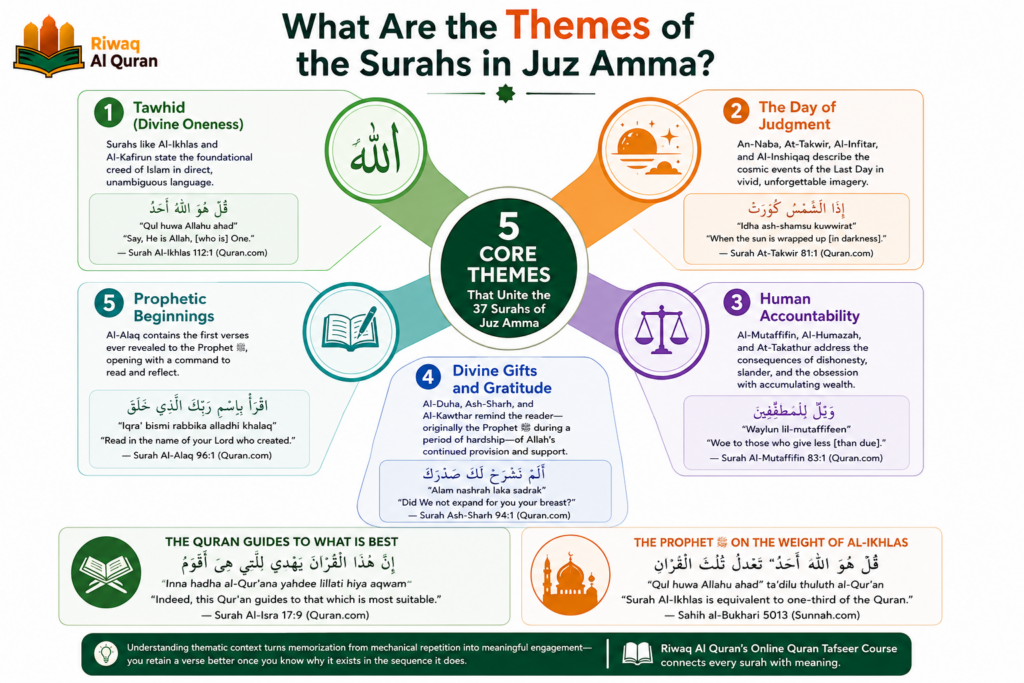
The 37 surahs of Juz Amma share a unified theological framework despite covering different events and stories. Recognizing these themes before memorizing helps a student connect verses to meaning, which measurably improves retention — a principle applied consistently at Riwaq Al Quran in our Online Quran Memorization Course. The five recurring themes are outlined below.
1. Tawhid (Divine Oneness)
Surahs like Al-Ikhlas and Al-Kafirun state the foundational creed of Islam in direct, unambiguous language.
“قُلْ هُوَ اللَّهُ أَحَدٌ““Qul huwa Allahu ahad”“Say, He is Allah, [who is] One.”— Surah Al-Ikhlas 112:1
This single verse is the reason Al-Ikhlas is often the second surah a beginner memorizes after Al-Fatihah — it states the entire creed of Tawhid in four short ayahs, which is why the Prophet ﷺ described it as equal in weight to a third of the Quran, a hadith cited later in this guide.
2. The Day of Judgment
An-Naba, At-Takwir, Al-Infitar, and Al-Inshiqaq describe the cosmic events of the Last Day in vivid, deliberately unforgettable imagery.
“إِذَا الشَّمْسُ كُوِّرَتْ“
“Idha ash-shamsu kuwwirat”“When the sun is wrapped up [in darkness].”— Surah At-Takwir 81:1
3. Human accountability
Al-Mutaffifin, Al-Humazah, and At-Takathur address the consequences of dishonesty, slander, and the obsession with accumulating wealth.
“وَيْلٌ لِّلْمُطَفِّفِينَ“
“Waylun lil-mutaffifeen”“Woe to those who give less [than due].”— Surah Al-Mutaffifin 83:1
4. Divine gifts and gratitude
Ad-Duha, Ash-Sharh, and Al-Kawthar remind the reader — originally the Prophet ﷺ during a period of hardship — of Allah’s continued provision and support.
“أَلَمْ نَشْرَحْ لَكَ صَدْرَكَ“
“Alam nashrah laka sadrak”“Did We not expand for you your breast?”— Surah Ash-Sharh 94:1
5. Prophetic beginnings
Al-Alaq contains the first verses ever revealed to the Prophet ﷺ, opening with a command to read and reflect.
“اقْرَأْ بِاسْمِ رَبِّكَ الَّذِي خَلَقَ““Iqra’ bismi rabbika alladhi khalaq”“Read in the name of your Lord who created.”— Surah Al-Alaq 96:1
The Quran describes its own function directly:
“إِنَّ هٰذَا الْقُرْآنَ يَهْدِي لِلَّتِي هِيَ أَقْوَمُ“
“Inna hadha al-Qur’ana yahdee lillati hiya aqwam”“Indeed, this Qur’an guides to that which is most suitable.”— Surah Al-Isra 17:9
The Prophet ﷺ himself pointed to the weight of one of Juz Amma’s shortest surahs directly. Companions asked him whether a person is capable of reciting a third of the Quran in one night, and he answered:
“قُل هو اللهُ أحَدٌ” تعدلُ ثُلُثَ القرآنِ“
“Qul huwa Allahu ahad” ta’dilu thuluth al-Qur’an“”Surah Al-Ikhlas is equivalent to one-third of the Quran.”— Sahih al-Bukhari 5013
This is one of the reasons Al-Ikhlas carries disproportionate teaching weight relative to its four-verse length — the hadith gives students a concrete reason to recite it often, not just to memorize it once and move on. Riwaq Al Quran’s Online Quran Tafseer Course walks through exactly this kind of context for every surah in Juz Amma, so memorization is paired with understanding rather than repetition alone.
Understanding thematic context turns memorization from mechanical repetition into meaningful engagement — you retain a verse better once you know why it exists in the sequence it does.
Start your Hifz journey with a Free Trial at Riwaq Al Quran.
Detailed Overview of Each Surah in Juz Amma
Each entry below gives the core subject of the surah in one to two lines, so you can preview meaning before you memorize.
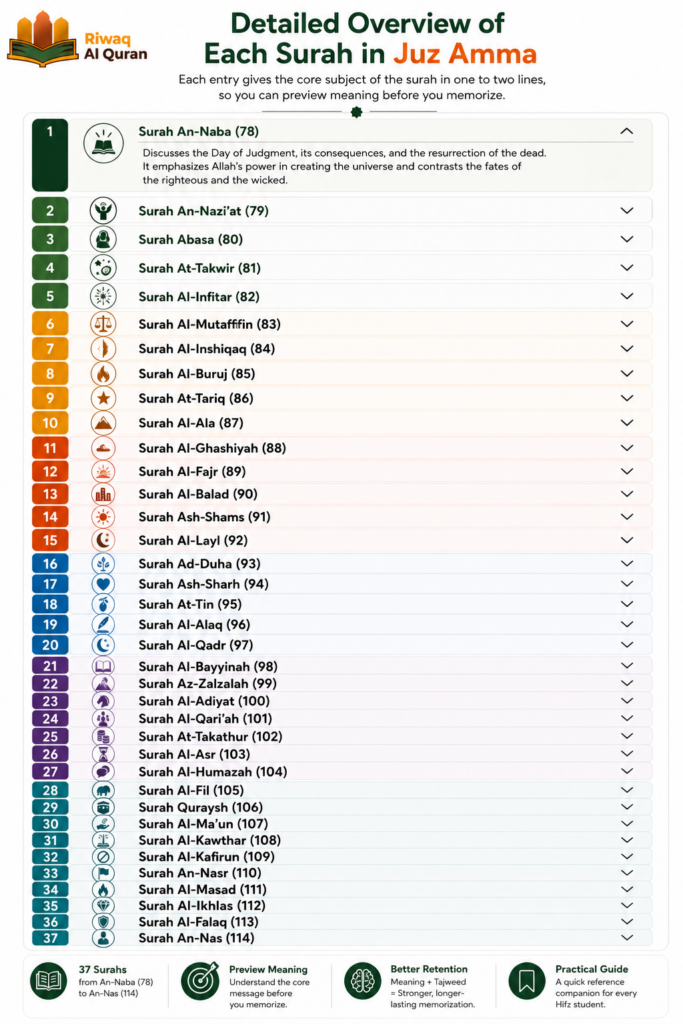
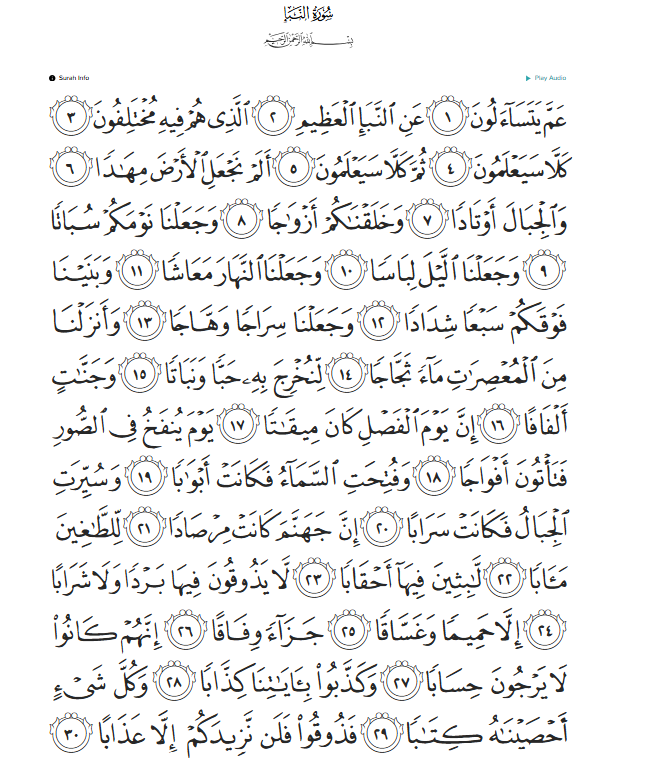
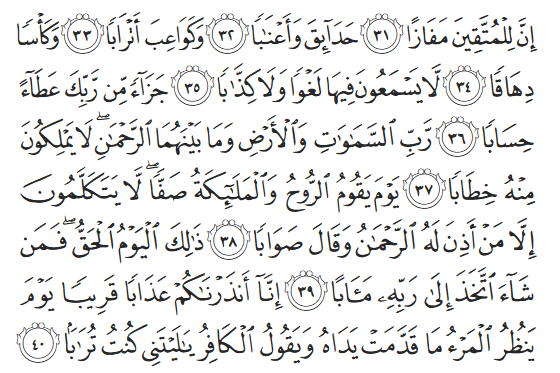
Surah An-Naba (78)
Surah An-Naba discusses the Day of Judgment, its consequences, and the resurrection of the dead. It emphasizes the power and wisdom of Allah in creating the universe and highlights the stark contrast between the fates of the righteous and the wicked.
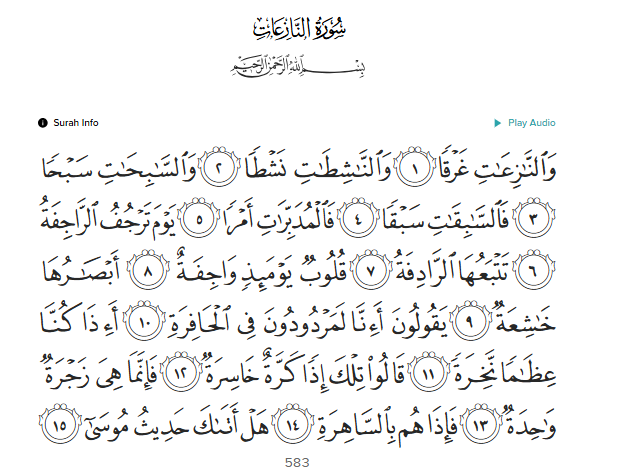
Surah An-Nazi’at (79)
Surah An-Nazi’at speaks about the angels who take the souls of the deceased. It describes scenes from the Day of Resurrection and recounts the story of Pharaoh’s arrogance and punishment, urging reflection on the consequences of disbelief.
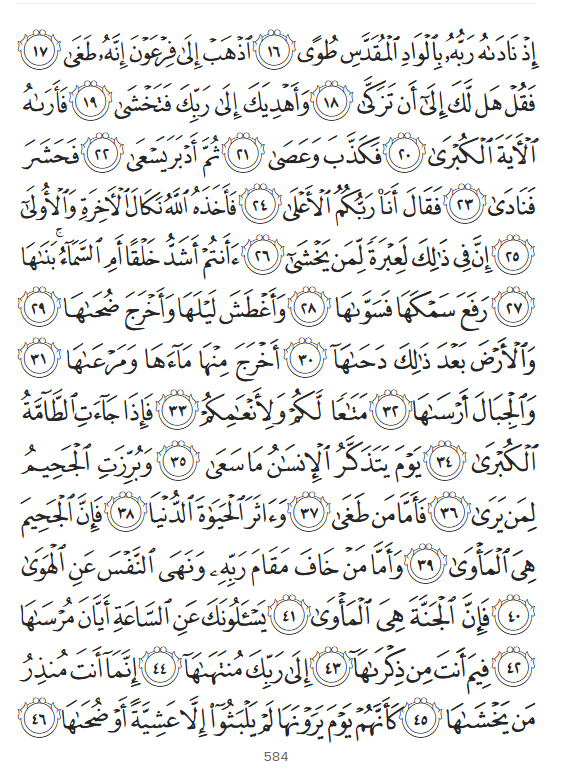
Surah Abasa (80)
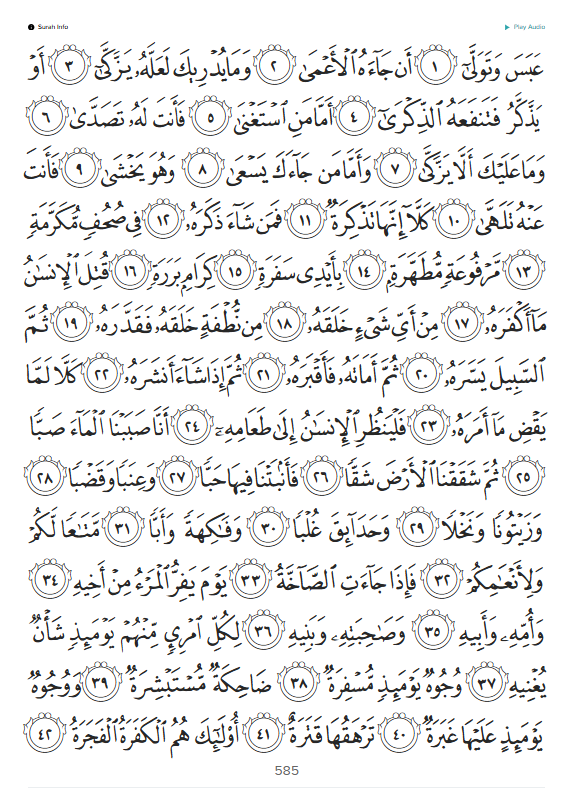
Surah Abasa narrates an incident where the Prophet Muhammad (PBUH) frowned and turned away from a blind man wo kept asking him too many questions while he was busy trying to make people believe in Allah and have Iman. It emphasizes the importance of treating all seekers of knowledge with respect and highlights the Quran’s guidance for those who wish to be purified.
Surah At-Takwir (81)
Surah At-Takwir vividly describes the events of the Day of Judgment, including the sun’s folding, stars falling, and mountains moving. It underscores the inevitability of the end times and the significance of the Quran as divine guidance.
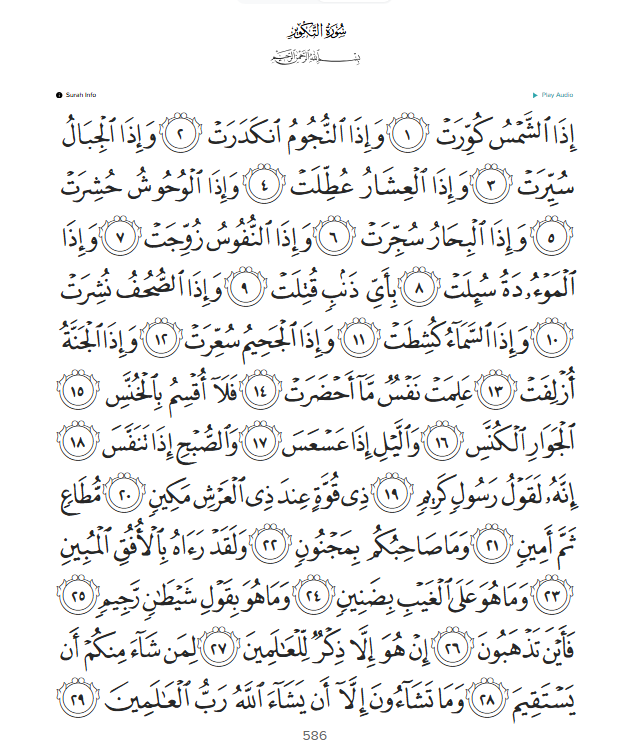
Surah Al-Infitar (82)
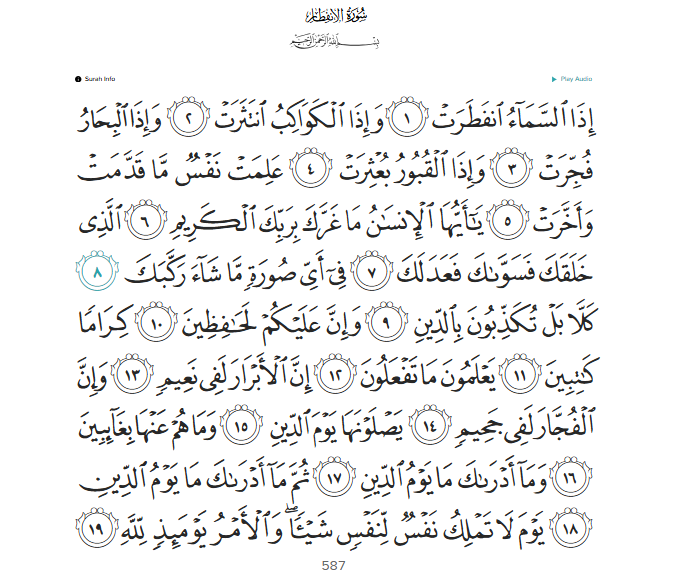
Surah Al-Infitar describes the cataclysmic events that will occur at the end of the world. It emphasizes the recording of human deeds by angels and warns of the consequences for the righteous and the wicked in the afterlife.
Connect with our Azhari tutors to start memorizing Juz Amma Surahs

Surah Al-Mutaffifin (83)
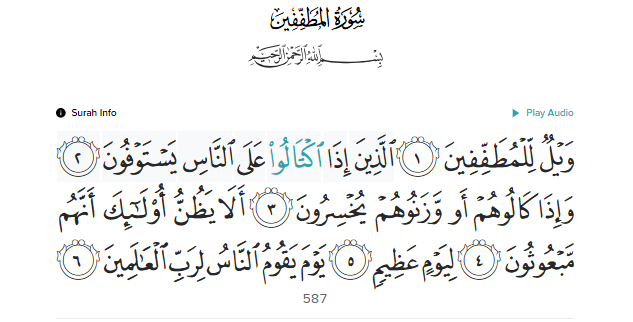
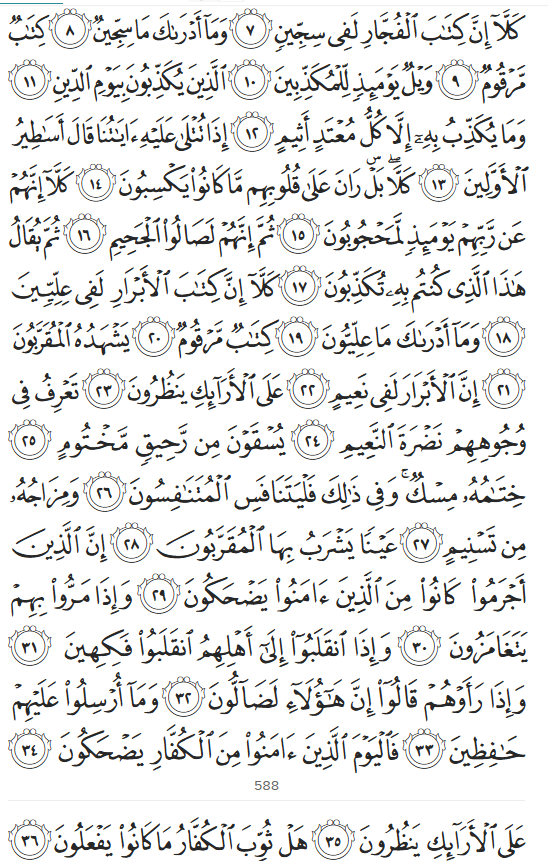
Surah Al-Mutaffifin condemns those who give less than due when measuring or weighing. It highlights the consequences of dishonesty and deceit, contrasting the fate of the righteous with that of the sinful in the hereafter.
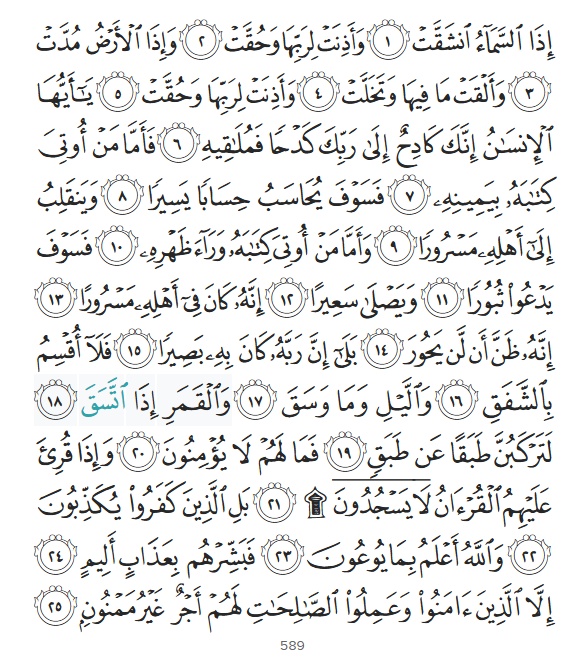
Surah Al-Inshiqaq (84)
Surah Al-Inshiqaq portrays the splitting of the sky and the earth on the Day of Judgment. It describes the two groups of people—those who receive their records in their right hands and those in their left, symbolizing their eternal fate.
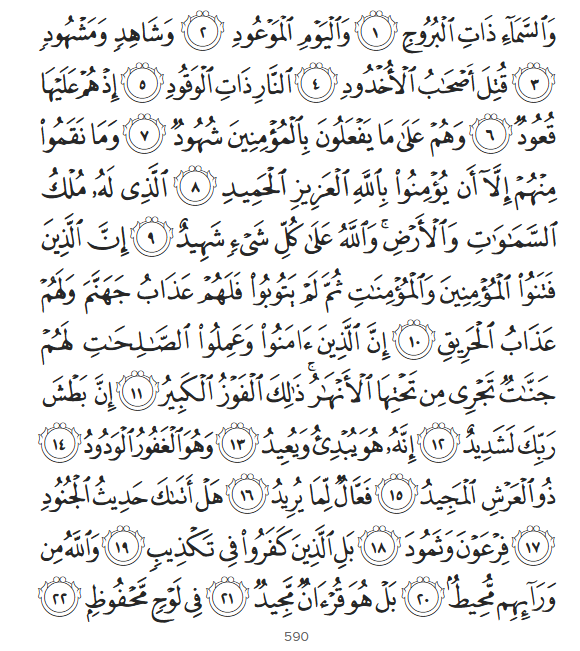
Surah Al-Buruj (85)
Surah Al-Buruj recounts the story of the persecution of believers in ancient times. It emphasizes the ultimate victory of faith over tyranny and assures that Allah’s retribution will befall the oppressors.
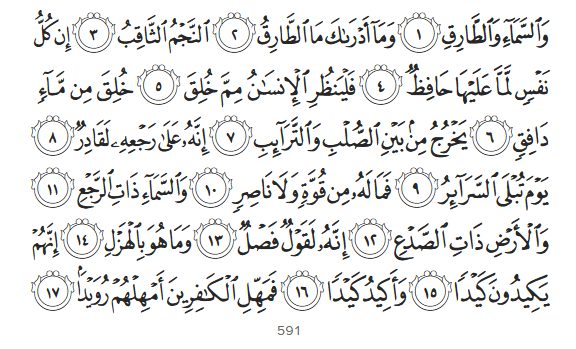
Surah At-Tariq (86)
Surah At-Tariq highlights the wonders of creation, particularly the stars. It emphasizes Allah’s knowledge of every soul’s actions and the inevitability of the Day of Judgment, urging reflection on one’s deeds and faith.


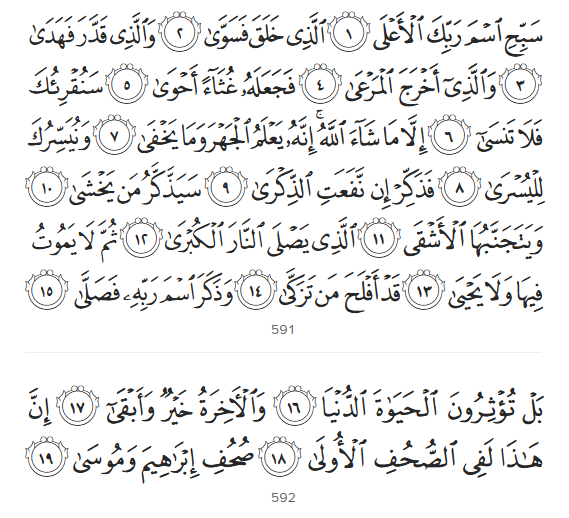
Surah Al-A’la (87)
Surah Al-A’la glorifies Allah’s perfection in creation and revelation. It reminds believers of the importance of purification, prayer, and remembering Allah. The surah contrasts the hereafter’s rewards with the temporary nature of worldly life.
Surah Al-Ghashiyah (88)
Surah Al-Ghashiyah describes scenes from the Day of Judgment, portraying the contrasting destinies of the righteous and the wicked. It calls for reflection on the signs of Allah in creation and the importance of faith and righteous deeds.
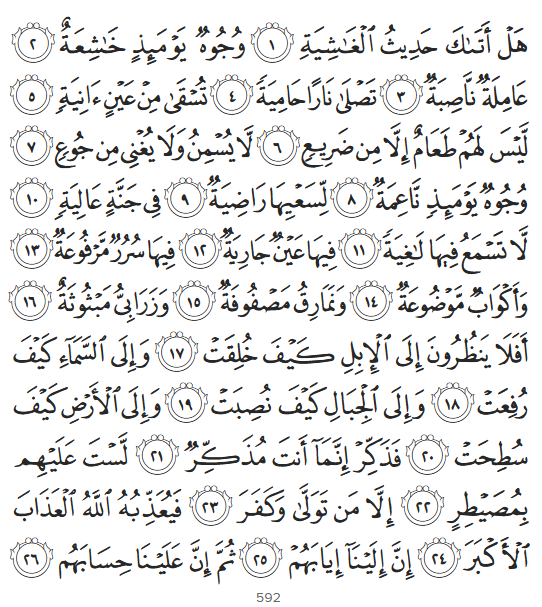
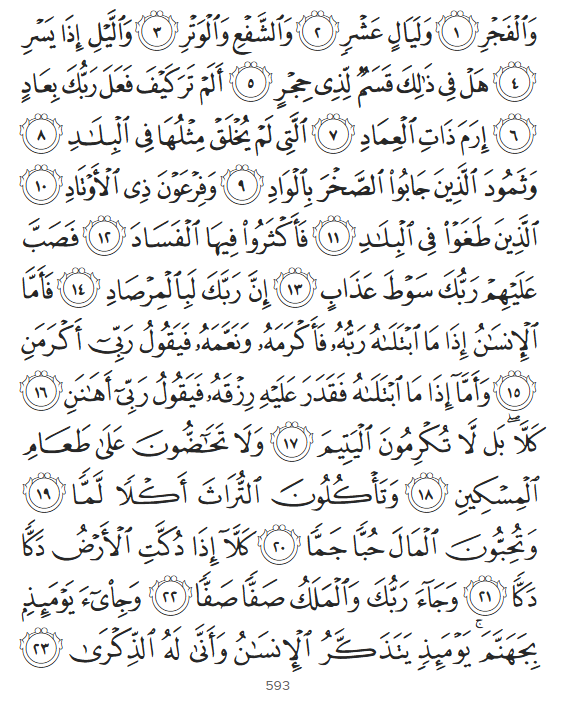
Surah Al-Fajr (89)
Surah Al-Fajr emphasizes the consequences of disobedience through historical examples of destroyed nations. It highlights the test of wealth and power and urges believers to be mindful of their ultimate return to Allah for judgment.
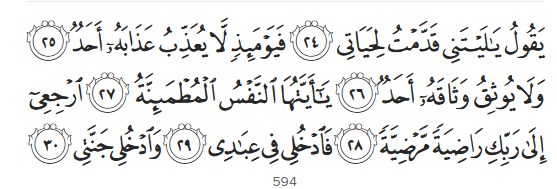
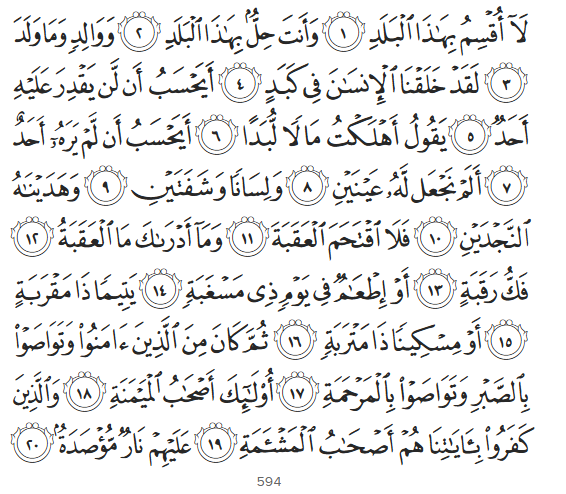
Surah Al-Balad (90)
Surah Al-Balad speaks about the hardships of life and the moral choices individuals must make. It emphasizes the importance of righteousness, helping the needy, and striving in the path of Allah to attain success in the hereafter.
Surah Ash-Shams (91)
Surah Ash-Shams emphasizes the contrast between the soul’s purity and corruption. It highlights the fate of the people of Thamud, who rejected their prophet’s warnings, underscoring the consequences of disobedience and the reward for those who purify their souls.
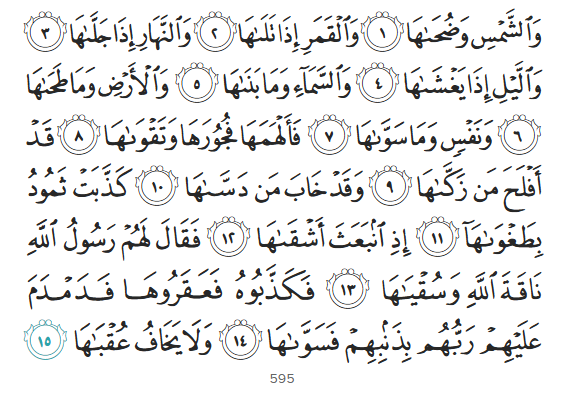


Surah Al-Layl (92)
Surah Al-Layl contrasts the paths of the righteous and the wicked. It emphasizes the importance of charity, piety, and sincerity in faith, assuring that Allah guides those who strive for goodness and warns of the consequences of selfishness.
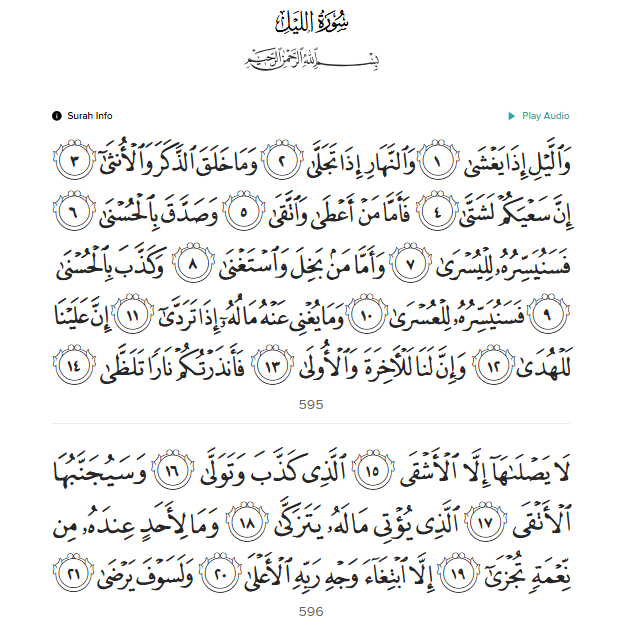
Surah Ad-Duha (93)
Surah Ad-Duha consoles the Prophet Muhammad (PBUH) during a period of distress. It reassures him of Allah’s continued support and blessings, urging gratitude and care for orphans and the needy, while highlighting the promise of future joy.
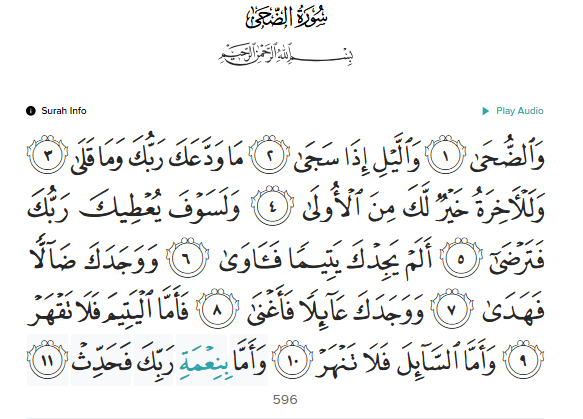
Surah Ash-Sharh (94)
Surah Ash-Sharh provides comfort to the Prophet Muhammad (PBUH) by reminding him of Allah’s favor and relief after hardship. It encourages patience and perseverance, assuring that ease follows difficulty and urging continuous devotion to Allah.
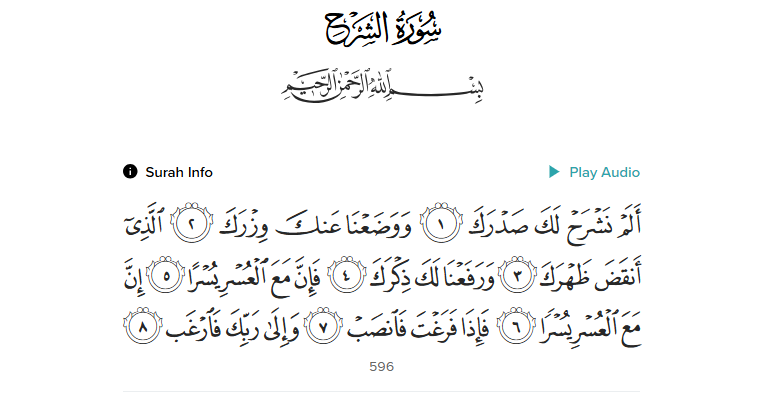
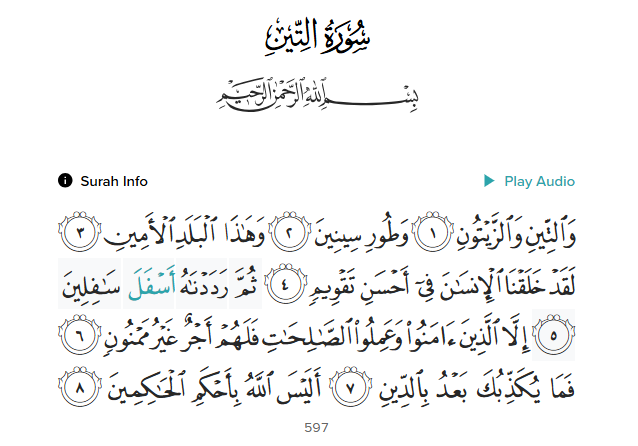
Surah At-Tin (95)
Surah At-Tin highlights the nobility of human creation and the importance of faith and righteous deeds. It contrasts the fate of the faithful and the disbelievers, emphasizing the divine judgment and the necessity of upholding moral integrity.
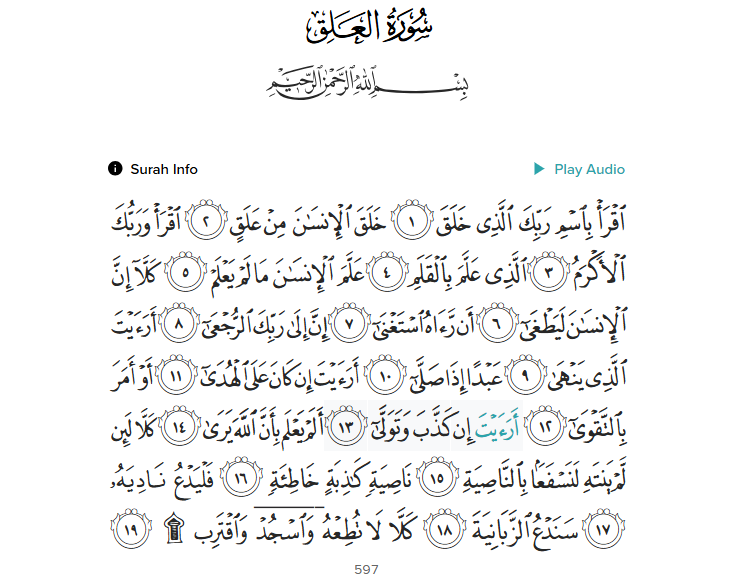
Surah Al-Alaq (96)
Surah Al-Alaq, the first revelation to the Prophet Muhammad (PBUH), emphasizes the importance of knowledge and learning. It speaks about the creation of humans from a clot and warns against arrogance and heedlessness of divine guidance.
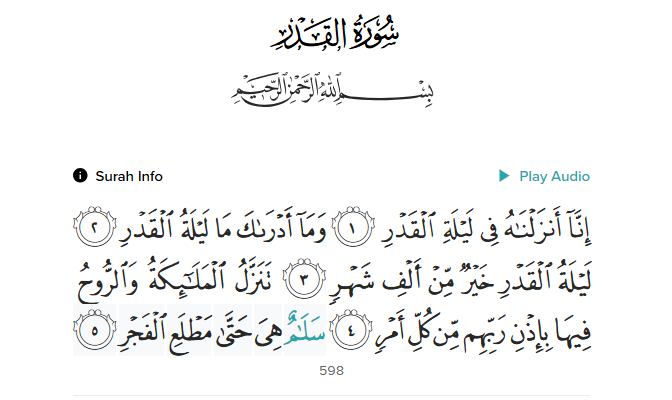
Surah Al-Qadr (97)
Surah Al-Qadr highlights the significance of the Night of Decree (Laylat al-Qadr), during which the Quran was revealed. It emphasizes the blessings and mercy associated with this night, which is better than a thousand months, urging worship and supplication.
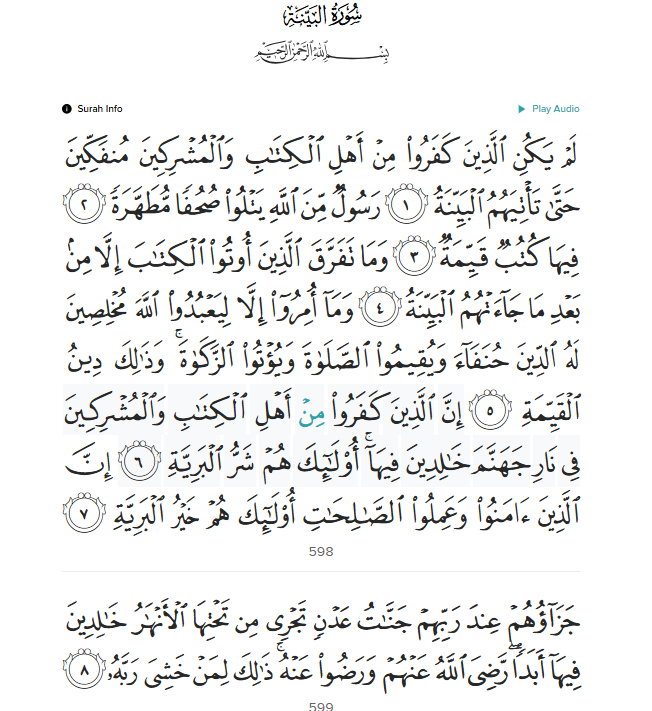
Surah Al-Bayyinah (98)
Surah Al-Bayyinah emphasizes the clear evidence brought by the Prophet Muhammad (PBUH) through the Quran. It contrasts the believers and the disbelievers, highlighting the eternal rewards for those who have faith and do righteous deeds.
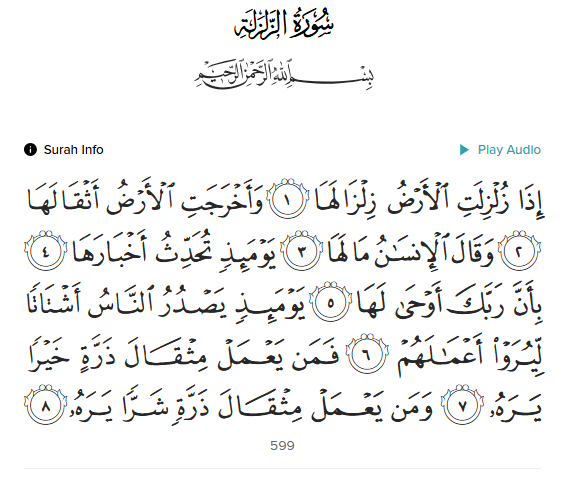
Surah Az-Zalzalah (99)
Surah Az-Zalzalah describes the final earthquake on the Day of Judgment, causing the earth to reveal its burdens. It emphasizes that everyone will be shown their deeds, however small, and will be justly rewarded or punished accordingly.
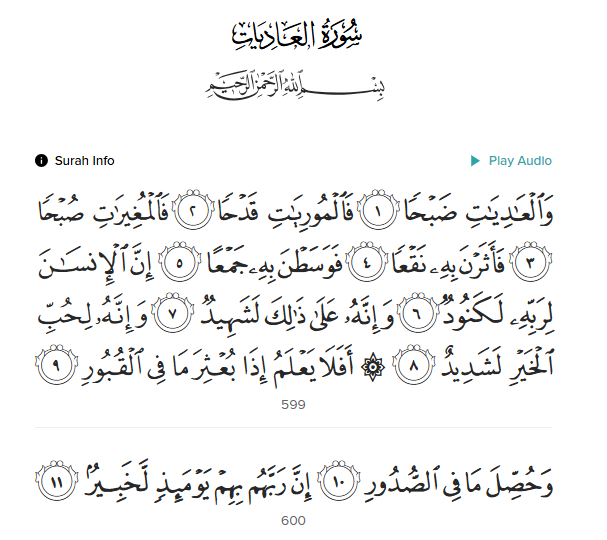
Surah Al-Adiyat (100)
Surah Al-Adiyat depicts the charging horses of warriors, emphasizing human ingratitude and love for wealth. It serves as a reminder of the Day of Resurrection, when all secrets will be exposed, and urges mindfulness of one’s deeds.
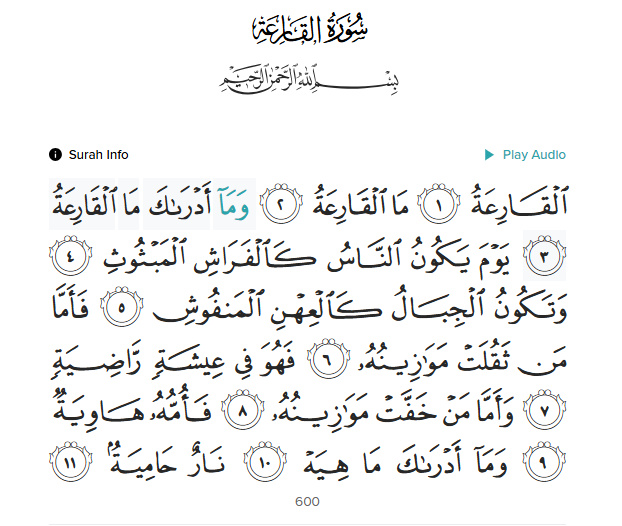
Surah Al-Qari’ah (101)
Surah Al-Qari’ah describes the Day of Judgment, portraying it as a catastrophic event. It emphasizes the weighing of deeds, where heavy scales signify salvation and light scales denote ruin, urging preparation for this inevitable day.
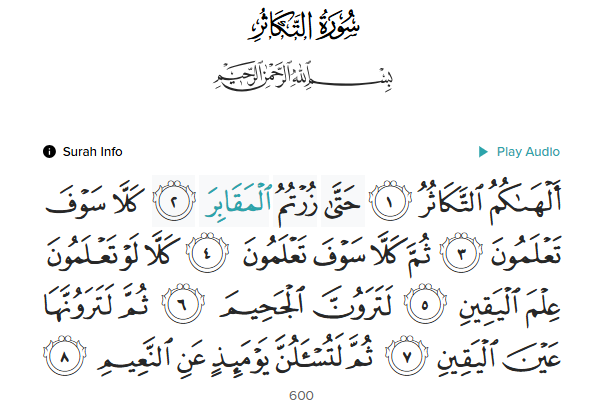
Surah At-Takathur (102)
Surah At-Takathur warns against the distraction of worldly competition and amassing wealth. It emphasizes the reality of the grave and the Hereafter, urging reflection on the ultimate purpose of life and the importance of righteous deeds.
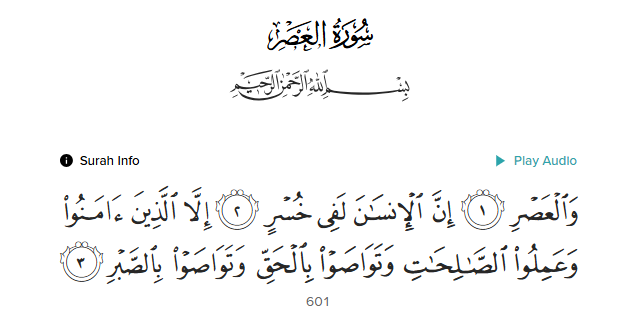
Surah Al-Asr (103)
Surah Al-Asr underscores the importance of time and the human tendency towards loss. It emphasizes the salvation found in faith, righteous deeds, enjoining truth, and patience, providing a concise yet profound summary of a successful life.
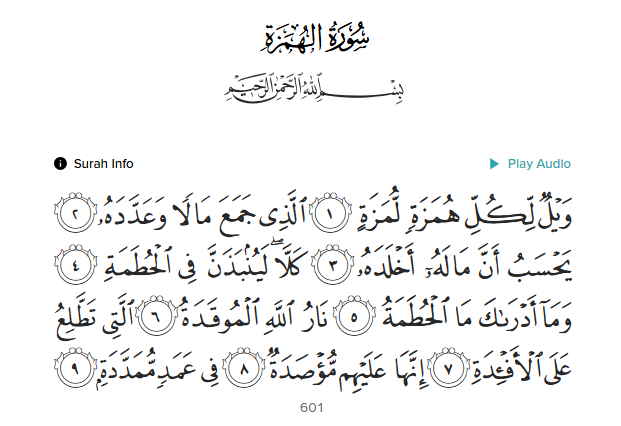
Surah Al-Humazah (104)
Surah Al-Humazah condemns those who slander and backbite, amassing wealth without regard for others. It warns of the consequences in the afterlife, portraying the torment of the crushing fire prepared for such individuals.
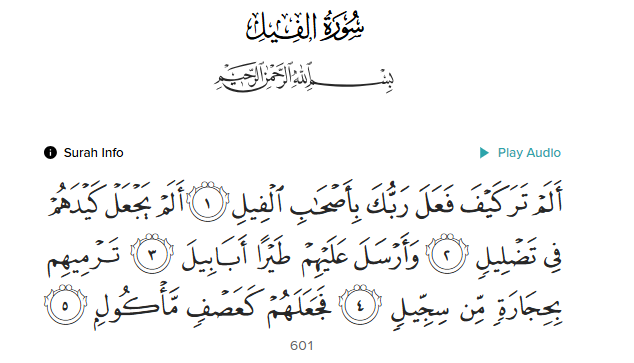
Surah Al-Fil (105)
Surah Al-Fil recounts the event of the Elephant Army’s destruction, led by Abraha, who attempted to attack the Kaaba. It highlights Allah’s protection of the sacred house and serves as a reminder of His power and intervention.
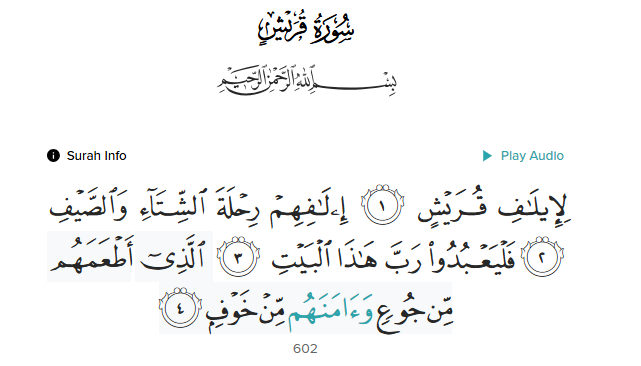
Surah Quraysh (106)
Surah Quraysh emphasizes the blessings bestowed upon the tribe of Quraysh, including their safety and prosperity. It calls them to worship the Lord of the Kaaba, who provided them with sustenance and security, urging gratitude and devotion.
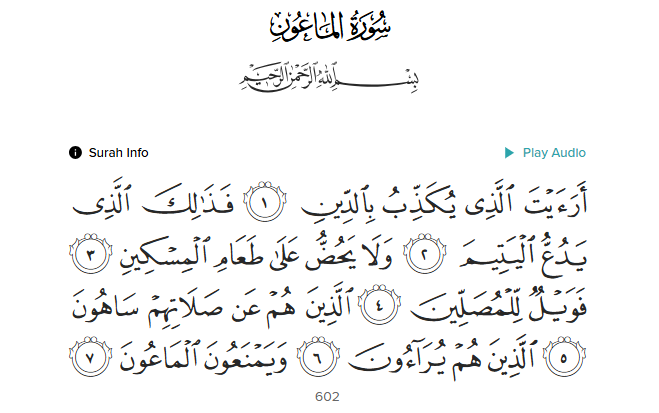
Surah Al-Ma’un (107)
Surah Al-Ma’un criticizes those who deny the Day of Judgment, neglect the orphans, and refuse to help the needy. It emphasizes the importance of sincere prayer and charity, highlighting the hypocrisy of those who only perform outward acts of piety.
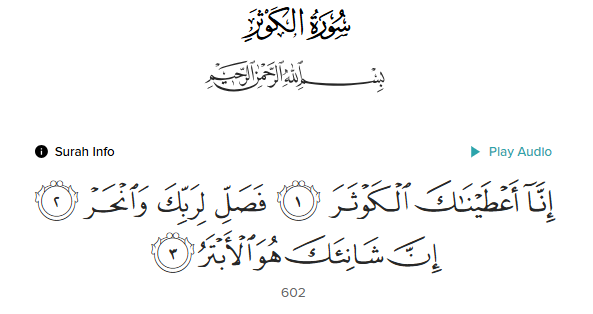
Surah Al-Kawthar (108)
Surah Al-Kawthar assures the Prophet Muhammad (PBUH) of the abundant blessings bestowed upon him, including a river in paradise. It encourages him to pray and offer sacrifices, while condemning his detractors who will be cut off from all good.
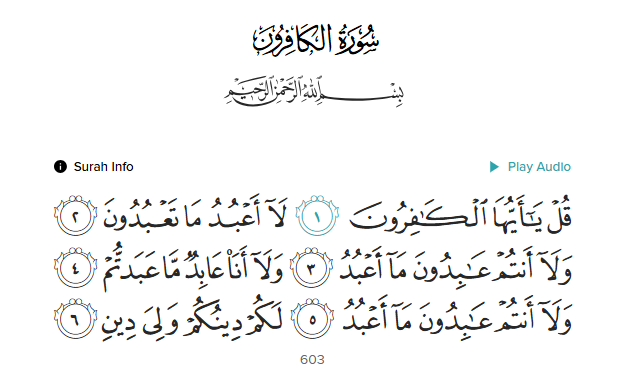
Surah Al-Kafirun (109)
Surah Al-Kafirun declares the separation between the faith of the Prophet Muhammad (PBUH) and the disbelievers. It emphasizes the principle of religious freedom, urging mutual respect and the acknowledgment that each group has its own beliefs.
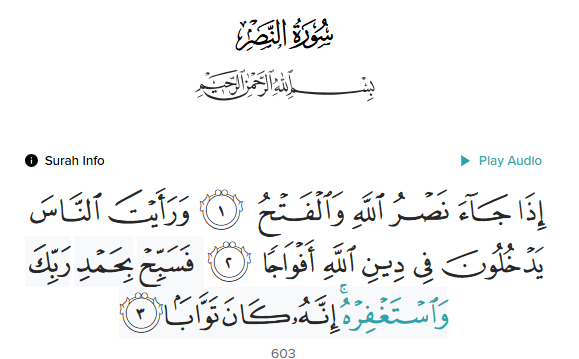
Surah An-Nasr (110)
Surah An-Nasr announces the imminent victory of Islam and the mass conversions to the faith. It instructs the Prophet Muhammad (PBUH) to glorify and seek forgiveness from Allah, emphasizing the importance of humility and gratitude at the moment of triumph.
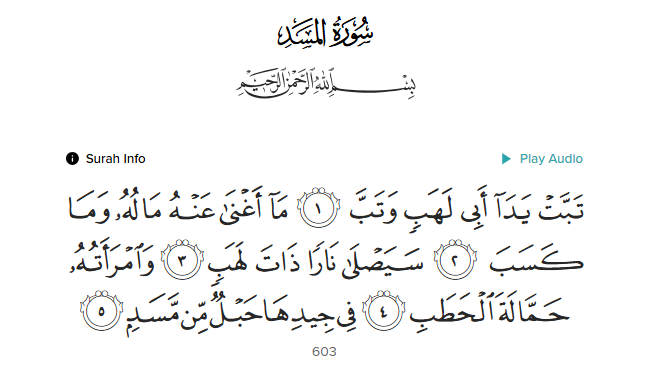
Surah Al-Masad (111)
Surah Al-Masad condemns Abu Lahab, an ardent opponent of the Prophet Muhammad (PBUH), and his wife. It foretells their punishment in the afterlife, emphasizing the consequences of hostility towards the message of Islam.
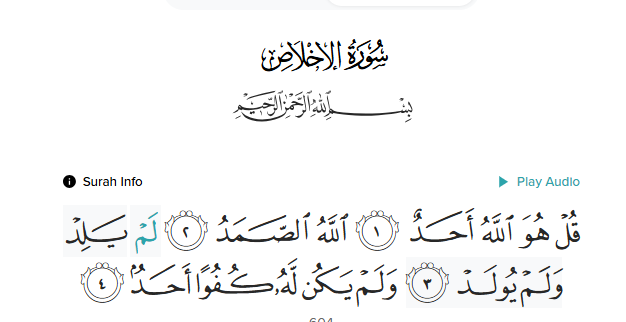
Surah Al-Ikhlas (112)
Surah Al-Ikhlas affirms the oneness and uniqueness of Allah, negating any form of polytheism or comparison. It is a concise declaration of monotheistic faith, emphasizing that Allah is eternal, self-sufficient, and incomparable.
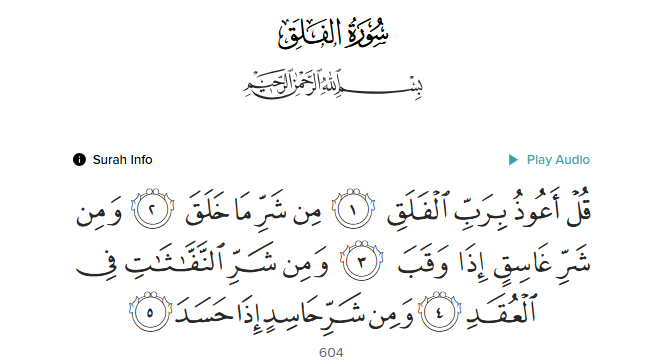
Surah Al-Falaq (113)
Surah Al-Falaq seeks protection from the evil of created things, darkness, witchcraft, and envy. It emphasizes the importance of seeking refuge in Allah from all forms of harm and malevolent forces.
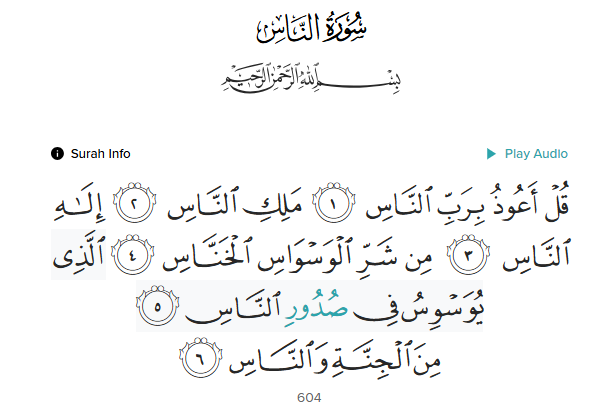
Surah An-Nas (114)
Surah An-Nas seeks protection from the evil of whispering temptations and harmful suggestions of both humans and jinn. It highlights Allah as the Lord, Sovereign, and God of mankind, emphasizing the need for divine refuge against all evil influences.
What Tajweed Rules Are Most Important for Reciting Juz Amma Correctly?
The Tajweed rules most critical for Juz Amma are Noon Sakinah rules (Ikhfa, Idgham, Iqlab, Izhar), Meem Sakinah rules, Qalqalah, and Madd (elongation). These rules appear with exceptionally high frequency across the 37 surahs, which makes Juz Amma a practical training ground for applying Tajweed rather than just studying it. The table below summarizes each rule and where it shows up most in this juz.
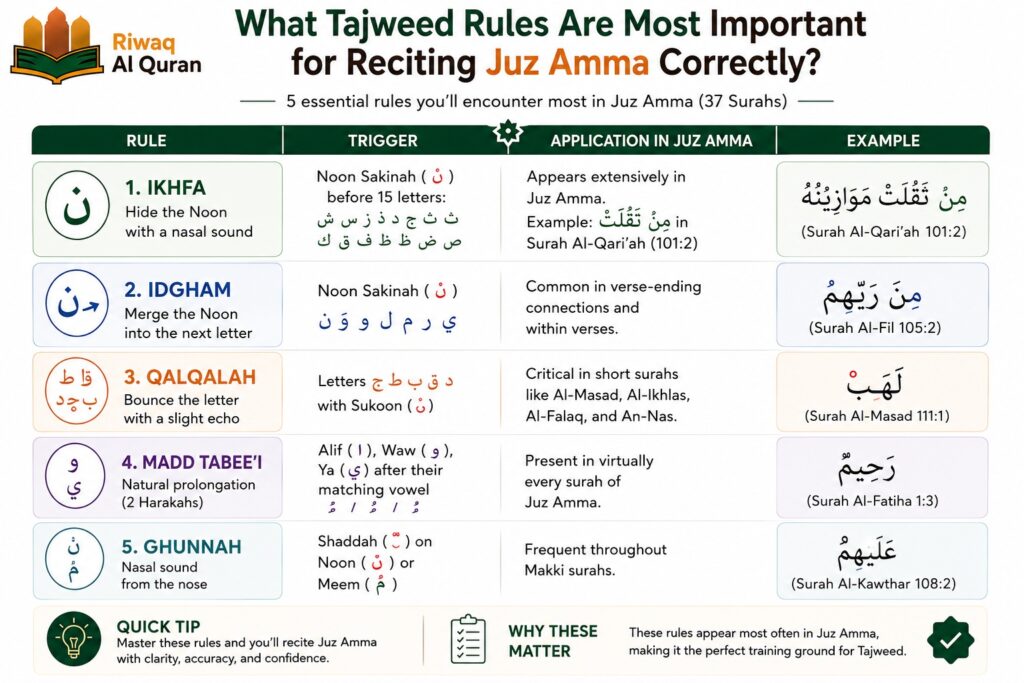
| Rule | Trigger | Application in Juz Amma |
|---|---|---|
| Ikhfa | Noon Sakinah before 15 letters | Appears extensively — e.g., مِن ثَقُلَت in Al-Qari’ah |
| Idgham | Noon Sakinah before ي ر م ل و ن | Common in verse-ending connections |
| Qalqalah | Letters ق ط ب ج د with Sukoon | Critical in surahs like Al-Masad and Al-Ikhlas |
| Madd Tabee’i | Alif, Waw, Ya after their matching vowel | Present in virtually every surah |
| Ghunnah | Shaddah on Noon or Meem | Frequent throughout Makki surahs |
The most consistent error non-Arabic-speaking adults make when beginning Juz Amma is treating Qalqalah letters as a hard stop. They suppress the echo entirely instead of releasing it.
The letters ق, ط, ب, ج, and د, when carrying Sukoon, require a released, bouncing sound rather than a flat stop. This single correction typically takes two to three dedicated sessions with a tutor before it becomes instinctive — it is rarely something a self-taught reader corrects on their own, since the error doesn’t sound obviously wrong to an untrained ear.
The Prophet ﷺ tied correct, deliberate recitation directly to reward, not just to accuracy:
“مَن قَرَأَ حَرْفًا مِن كِتَابِ اللَّهِ فَلَهُ بِهِ حَسَنَةٌ“
“Man qara’a harfan min kitabi Allahi fa lahu bihi hasanah”“Whoever reads a letter from the Book of Allah will have a reward.”— Sunan al-Tirmidhi 2910 (Sunnah.com)
This is worth pairing with the Qalqalah point above: precision in Tajweed isn’t a technicality layered on top of recitation — the hadith frames every correctly articulated letter as carrying its own reward, which is the actual reason tutors correct pronunciation letter by letter rather than waving through an approximate recitation.
Strengthening Tajweed alongside memorization, rather than after it, prevents this kind of error from becoming a fixed habit. For one-on-one correction with an Azhari-certified tutor, Riwaq Al Quran’s Online Quran & Tajweed Classes offer individualized sessions, with two free trial classes available.
Enroll now in the Best Online Tajweed Classes.
Why Do Students Begin Quran Memorization with Juz Amma?
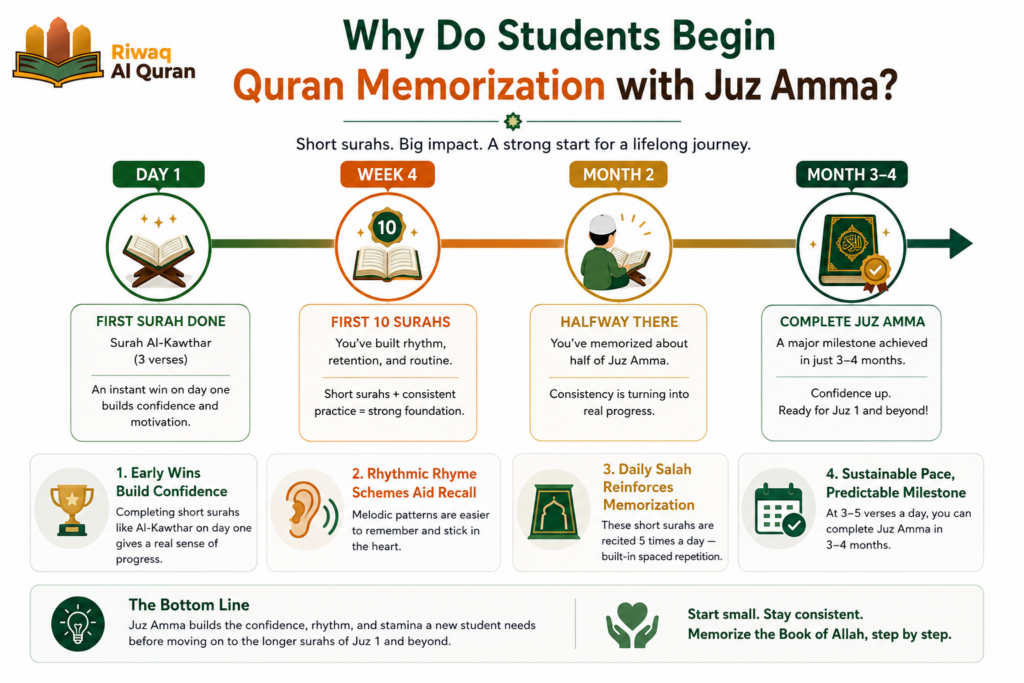
Hifz students worldwide begin with Juz Amma for four structural reasons, not tradition alone: the surahs are short, rhythmically consistent, thematically accessible, and already partially familiar through daily prayer.
Azhari-certified instructors at Riwaq Al Quran have observed one consistent pattern across hundreds of students: those who begin memorization from Juz 1 without prior Juz Amma experience struggle noticeably more with motivation in the first weeks. The longer verses in Juz 1 and Juz 2 demand more sustained focus than a total beginner has built up yet. Juz Amma builds that stamina first, before the student needs it for longer surahs.
The pedagogical advantages break down as follows:
- Early wins build confidence. Completing Surah Al-Kawthar — three verses — on day one gives a new student a real sense of progress, not a token one.
- Rhythmic rhyme schemes aid recall. The ear retains sound patterns that the mind alone struggles to hold, which is why these surahs feel “memorized” faster than their word count suggests.
- Daily Salah reinforces memorization for free. A student praying five times a day is repeating short Juz Amma surahs constantly, which functions as spaced repetition without any extra study time.
- A sustainable pace completes it in a predictable window. At three to five verses a day, a consistent student finishes Juz Amma in roughly three to four months — a realistic first milestone rather than an open-ended goal.
A decision rule worth applying here: if a student is losing motivation partway through Juz 1 or Juz 2 without ever having completed Juz Amma, the fix is usually not “study harder” — it’s switching the starting point to Juz Amma to rebuild consistency on shorter units first.
Start Memorizing Juz Amma with Expert Guidance at Riwaq Al Quran
Knowing the 37 surahs of Juz Amma is only the first step. Memorizing them with correct Tajweed and lasting retention takes structured, one-on-one correction — something self-study consistently misses, since Tajweed errors like flattened Qalqalah don’t sound wrong to an untrained ear.
Riwaq Al Quran gives you one-on-one sessions with Azhari-certified Hafiz tutors, on a schedule that works around your day rather than the other way around. Riwaq Al Quran is a comprehensive online platform offering personalized Quran, Arabic, and Islamic Studies classes for every age and background, and every student starts on the Online Quran Memorization Course, built specifically for non-Arabic speakers, with two free trial classes and no commitment required.
Take a closer look at authentic excerpts from our live classes. At Riwaq Al Quran, our instructors create a dynamic and supportive learning environment where students stay engaged, build confidence, and thrive in their studies:
If you want to go beyond memorization, Riwaq Al Quran also offers:
- Online Quran Tafseer Course — understand the meaning behind every surah you memorize
- Online Quran & Tajweed Classes — correct recitation with real-time feedback
- Ijazah Program — formal certification in Quran recitation
- Qirat Course — explore the different recitation styles of the Quran
- Arabic Language Classes — build the language foundation that makes memorization easier
- Best Islamic Studies Online Course — aqeedah, Seerah, and Quranic context
- Online Quran Classes for Kids — age-appropriate Hifz and Tajweed for younger learners
Conclusion
Juz 30 — Juz Amma — stands apart from every other section of the Quran through its unique combination of brevity, density, and accessibility. Its 37 surahs, almost entirely Makki in origin, carry the core themes of Islamic belief: divine oneness, human accountability, and the certainty of the Hereafter, as the Quranic ayahs and the authentic hadith cited throughout this guide show directly from the source texts.
For anyone beginning Hifz, this juz is not simply a convenient starting point — it’s the foundation the rest of the Quran is built on. Getting the exact count and content of Juz Amma right, and pairing memorization with real Tajweed correction rather than guesswork, is what separates fast early progress from stalled motivation a few weeks in.
Frequently Asked Questions About Juz 30 (Amma)
The questions below cover the details students and parents ask most often about Juz Amma, beyond the count itself.
How many surahs are in Juz 30 Amma exactly?
Juz 30, known as Juz Amma, contains exactly 37 surahs — from Surah An-Naba (chapter 78) to Surah An-Nas (chapter 114). This is the highest surah count of any single juz in the Quran, even though it is the shortest juz by total verse length, spanning roughly 20 pages of the standard Mushaf.
Which surah in Juz Amma has the most verses?
Surah An-Nazi’at (chapter 79) has 46 verses, making it the longest surah in Juz Amma by verse count. Surah An-Naba follows closely with 40 verses. Both center on resurrection and the Day of Judgment, using repeated rhetorical questions as their main structural device.
Is Juz Amma suitable for children to memorize first?
Yes — Juz Amma is the standard starting juz for children in nearly every Hifz curriculum. The surahs are short, rhythmically structured, and already familiar from daily prayer, which reinforces memorization passively. Riwaq Al Quran’s Online Quran Classes for Kids begin Hifz training here for exactly this reason.
What is the shortest surah in Juz Amma?
Three surahs share the shortest length in Juz Amma at three verses each: Al-Asr (103), Al-Kawthar (108), and An-Nasr (110). Despite the brevity, each carries significant theological weight — Al-Asr in particular is considered by classical scholars to summarize the entire message of Islam in three lines.
Why is Surah Al-Ikhlas given special weight even though it’s only four verses?
Surah Al-Ikhlas is described in an authentic hadith recorded by Bukhari as equivalent to one-third of the Quran in reward. This isn’t about verse count — it’s because the surah states the complete doctrine of Tawhid with no ambiguity, which is why it’s typically among the first surahs a new student memorizes.
Do all 37 surahs of Juz Amma need Tajweed to recite correctly?
Yes — Tajweed applies to every surah in the Quran, including all 37 in Juz Amma, without exception. Rules like Qalqalah, Ikhfa, Idgham, and Madd appear throughout this juz specifically. Reciting without Tajweed does not invalidate the prayer, but applying it is considered obligatory by the majority of classical scholars once a person has the ability to learn it.
Why is Juz 30 called “Juz Amma” instead of just “Juz 30”?
Juz Amma takes its name from عَمَّ (Amma), the opening word of Surah An-Naba, the first surah in the juz. Naming a juz after its opening word is a long-standing convention in Islamic scholarship used for ease of reference — the formal Mushaf designation remains “Juz 30,” but “Juz Amma” is the name used almost universally in teaching.
Sources
- Quran text and translations: Quran.com
- Hadith citations: Sunnah.com — Sahih al-Bukhari 5013; Sunan al-Tirmidhi 2910


























1 thought on “How Many Surahs Are in Juz Amma? Complete Guide to Juz 30”
Nice may Allah reword you abundantly