| Key Takeaways |
| The Quran is divided into 30 equal parts called Juz’, each containing approximately 20 pages of the standard Mushaf. |
| Each Juz’ is subdivided into two Hizbs, giving the Quran a total of 60 Hizbs across all 30 divisions. |
| Each Hizb is further divided into four quarters (Rub’), creating 240 equal portions for precise daily recitation tracking. |
When you open a standard Mushaf, those small markers in the margins — “Juz’ 1,” “Hizb 3,” the quarter symbols — are a precision-engineered system scholars built to help Muslims recite and review the Quran with structure and consistency across a lifetime of worship.
The difference between Juz and Hizb is straightforward but practically significant: a Juz’ is one-thirtieth of the Quran, while a Hizb is one-sixtieth — exactly half a Juz’.
Together with their quarter subdivisions, these divisions form a complete framework that every serious student of Quran recitation and Quran memorization needs to understand from the beginning.
Table of Contents
What Is a Juz’ in the Quran?
A Juz’ (جُزْء), plural Ajza’, is one of 30 equal divisions of the Quran. Each Juz’ contains approximately 20 pages in the standard 15-line Mushaf used across most of the Muslim world. The 30 Juz’ together account for the Quran’s full 604 pages.
This division allows a Muslim to complete the entire Quran in 30 days by reciting one Juz’ daily — a practice widely followed during Ramadan and throughout the year.
The Juz’ divisions do not always align with Surah boundaries. Juz’ 1 begins at Surah Al-Fatihah 1:1, but most Juz’ begin mid-Surah, which surprises many new students.
Scholars designed the divisions for equal length, not for thematic or structural Surah groupings.
It is important to note that the division into 30 Juz’ was introduced by Muslim scholars in the early Islamic period to facilitate recitation and review.
It is a scholarly organizational tool, not a division established directly by the Prophet ﷺ or by Quranic revelation itself.
What Is a Hizb in the Quran?
A Hizb (حِزْب), plural Ahzab, is exactly half of one Juz’. Since the Quran has 30 Juz’, it has 60 Hizbs in total. Each Hizb spans approximately 10 pages of the standard Mushaf. The Hizb system gives reciters a finer unit of measurement than the Juz’ alone, making it easier to plan shorter sessions or track progress within a single Juz’.
Each Hizb is further divided into four quarters called Rub’ al-Hizb (رُبُع الحِزْب). This means the Quran contains 240 Rub’s in total. In printed Mushafs, these quarter markers typically appear as a small symbol — often a circular or ornamental marker — in the margin or at the top of the page.
This layered system — Juz’ → Hizb → Rub’ — gives students three levels of granularity when planning recitation.
At Riwaq Al Quran, our Azhari-certified tutors use all three levels when building personalized Quran memorization schedules for students, depending on their pace and available daily time.
Connect with our Azhari tutors to learn and memorize the Quran

What Is the Structural Difference Between Juz and Hizb?
The Juz’ and Hizb differ in size, frequency, and practical application — but they belong to the same hierarchical division system. The table below clarifies the full structure:
| Division | Arabic Term | Total Count | Pages (approx.) | Relation to Juz’ |
| Juz’ | جُزْء | 30 | ~20 pages | Base unit |
| Hizb | حِزْب | 60 | ~10 pages | ½ of one Juz’ |
| Rub’ al-Hizb | رُبُع الحِزْب | 240 | ~2.5 pages | ¼ of one Hizb |
The Juz’ is the most widely recognized division in the Muslim world, particularly because it maps cleanly onto a 30-day Ramadan recitation cycle.
The Hizb is less commonly discussed in casual conversation but is equally established in classical Islamic scholarship and appears in every properly printed Mushaf.
Tracking by Hizb or Rub’ creates more frequent milestones, which supports consistency — a principle our tutors return to constantly in one-on-one sessions.
Experience Riwaq Al Quran Classes
Watch real moments from our live sessions at Riwaq Al Quran and see how we bring learning to life. These clips highlight our interactive, student-focused approach designed to keep learners engaged, motivated, and actively involved in every step of their educational journey.
How Do Juz’ and Hizb Markers Appear in the Mushaf?
Standard printed Mushafs include visual markers for all three division levels. Knowing how to read these markers helps students navigate independently between sessions.
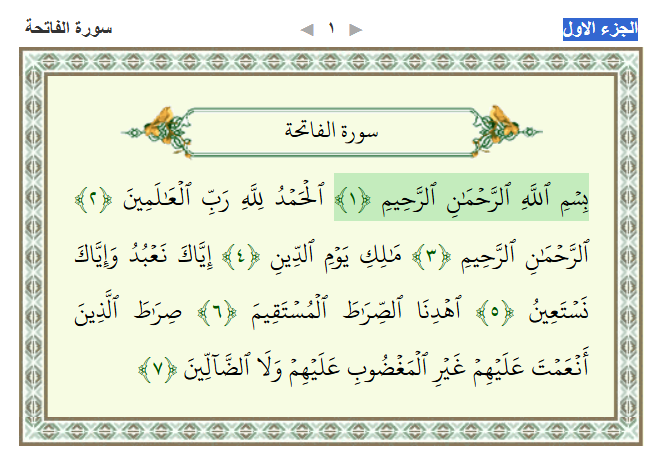
1. Juz’ marker in the Mushaf
Juz’ markers appear prominently at the top or margin of the page where a new Juz’ begins, typically labeled “الجزء الأول” (Al-Juz’ Al-Awwal) and so on.
2. Hizb marker in the Mushaf
Hizb markers appear as the Arabic word “الحزب” followed by its number, placed in the outer margin of the page.
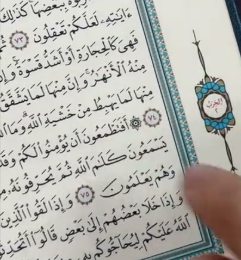
3. Rub’ marker in the Mushaf
Rub’ markers appear as small ornamental symbols — often a circular or floral design — within the text column or margin, indicating quarter-Hizb boundaries.
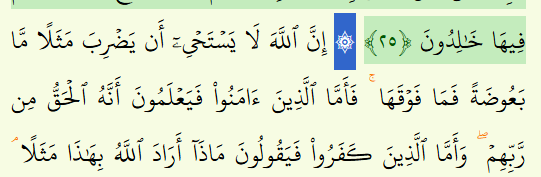
Students taking our Quran Recitation Course learn to use these markers actively during daily recitation tracking, not merely as decorative elements to skip over.
Familiarity with all three levels makes independent revision between classes significantly more effective.
Book Your Free Session in Riwaq’s Recitation Course

Why Did Scholars Introduce the Juz’ and Hizb Divisions?
Scholars introduced these divisions to help Muslims maintain consistent, structured engagement with the Quran. The underlying motivation is worship — specifically, the established Sunnah practice of completing the Quran regularly through systematic recitation.
The Prophet ﷺ encouraged consistent Quran recitation and guided companions on how to pace their recitation meaningfully.
Classical scholars codified the Juz’ and Hizb divisions during the early Islamic period, making the Mushaf’s organizational markers a standard feature of manuscript and print traditions.
These divisions appear consistently across all major printed Mushaf editions worldwide, including those published by the King Fahd Quran Printing Complex in Madinah.
Read Also: What Is Juz in the Quran?
How Are Juz’ and Hizb Used in Quran Memorization?
Both divisions serve as critical planning tools in Hifz — the memorization of the Quran. Knowing how to use each one strategically can be the difference between a sustainable memorization routine and one that collapses under its own ambiguity.
In practice, experienced memorization teachers structure sessions around these units as follows:
| Student Level | Recommended Daily Target | Division Used |
| Beginner (first 3 months) | ½ page to 1 page new + review | Rub’ al-Hizb sections |
| Intermediate (3–12 months) | 1–2 pages new + 5 pages review | Hizb tracking |
| Advanced (12+ months) | ½ Hizb new + full Juz’ review | Juz’ + Hizb combined |
In our sessions at Riwaq Al Quran, students who struggle with motivation during memorization almost always lack structured milestones. When we shift their tracking from vague page counts to named divisions — “today you complete the first Rub’ of Hizb 7” — their sense of progress becomes tangible. That specificity matters more than most students initially expect.
If you want a structured, milestone-driven approach to Hifz, our Online Quran Memorization Course pairs you with an Azhari-certified Hafiz tutor who will build your schedule around these exact divisions — with 24/7 scheduling and two free trial classes to begin.
Start your Hifz journey with a Free Trial
Read Also: What Is the Quran About?
Why Students Love Learning with Riwaq Al Quran
Hear directly from our students about how Riwaq Al Quran Academy has transformed their connection with the Book of Allah. Their experiences reflect the dedication, care, and quality that guide every step of our teaching.
Read Also: In What Order Was the Quran Revealed In?
Start Learning Quran with Proper Structure at Riwaq Al Quran
Understanding the Juz’ and Hizb system is the foundation of organized Quran study. But knowing the framework is only the beginning — applying it under expert guidance is where real progress happens.
Riwaq Al Quran offers one-on-one Quran instruction by Al-Azhar University-certified tutors with 9+ years of experience teaching non-Arabic speakers worldwide. Our students benefit from:
- Personalized memorization and recitation schedules built around Juz’ and Hizb divisions
- 24/7 session scheduling to fit any time zone
- Affordable plans starting from $32/month
- 100% Money-Back Guarantee
- 2 Free Trial Classes — no commitment required
Register for your free trial today and begin structured Quran learning with guidance that reflects authentic scholarship.
We offer courses in Online Quran & Tajweed Classes, Arabic Language, and Islamic Studies.
- Online Quran Memorization Course
- Recitation Course
- Tafseer Course
- Tajweed Classes
- Online Quran Classes for Kids.
- Ijazah Program.
- Qira’at Course.
- Arabic Language Classes.
- Islamic Studies Courses.
Enroll now for 2 Free Trial Classes

Conclusion
The Juz’ and Hizb are not bureaucratic footnotes in your Mushaf — they are a scholar-designed system built to make lifelong Quran engagement achievable and measurable. A Juz’ divides the Quran into 30 equal portions; a Hizb halves each Juz’ into 60 finer units; the Rub’ quarters each Hizb further still.
Grasping this structure changes how you plan recitation, measure memorization progress, and approach daily review.
Frequently Asked Questions About Juz’ and Hizb in the Quran
How many Hizbs are in one Juz’?
Each Juz’ contains exactly two Hizbs. Since the Quran has 30 Juz’, it contains 60 Hizbs in total. Each Hizb is approximately 10 pages in the standard 15-line Mushaf. This clean division makes the Hizb a practical daily recitation target for students who cannot complete a full Juz’ in a single sitting.
What is a Rub’ al-Hizb and how does it differ from a Hizb?
A Rub’ al-Hizb is one quarter of a Hizb, meaning one-eighth of a full Juz’. The Quran contains 240 Rub’s in total. Each Rub’ covers approximately 2.5 pages of the standard Mushaf. It is the smallest standard division used in printed Mushafs and serves as a useful milestone unit for beginner memorization students tracking daily progress.
Did the Prophet ﷺ establish the Juz’ divisions?
The 30 Juz’ divisions were introduced by Muslim scholars in the early Islamic period to support systematic recitation — they were not established by direct prophetic instruction. However, the practice of completing the Quran regularly is grounded in authentic Sunnah. The scholarly division into Juz’ and Hizb serves that established Sunnah practically and has been universally accepted across the Muslim world.
How should I use Juz’ and Hizb divisions in my memorization plan?
Use the Juz’ as your macro milestone — tracking how much of the Quran you have memorized overall. Use the Hizb and Rub’ as your daily session targets. Beginners typically work within a single Rub’ per new memorization session, while intermediate students aim for half a Hizb. A structured Quran memorization schedule built around these units produces more consistent results than unstructured page-by-page progress.
Is the Juz’ system the same in all printed Mushafs worldwide?
The 30 Juz’ and 60 Hizb divisions are standardized across all major Mushaf editions worldwide, including editions printed by the King Fahd Quran Printing Complex in Madinah. The starting points of each Juz’ and Hizb are consistent regardless of the print edition. Minor differences may appear in how markers are visually displayed, but the textual division points themselves are uniform across authentic Mushaf publications.